Showing posts with label word of mouth. Show all posts

Tuesday, May 5, 2015

CMOs, Digital and Ecomm Leaders: 3 Easy Steps to Harness the Power of UGC

As a digital marketing leader, you're challenged to position your brands to align with your consumer interests and needs, ensuring they remain engaged and buying into your brand. Some of the more 'progressive' brands today are trusting their customers to co-create their marketing content, and it's paying off with increased consumer engagement and loyalty. However, I can share their secret in three simple steps that will help you focus on building the right UGC strategy. As a graduate student of the Northwestern University, Medill IMC program, and a Client Strategy Director working with major global corporations to build and maximize their UGC content, I aim to help brands understand how critical UGC and word of mouth is to a marketing strategy. So below, I've provided two articles that outline the growth of UGC and its ever-present importance as well as the steps that any brand can take to harness it's power. 

The first article, "User Generated Content – Why Companies Will Make the Most of it in 2013" (and beyond), by Shreya Ashok explains the benefits of developing a strategy around collecting and displaying user generated content, as well as the different types of UGC and its power to influence purchase decisions, brand affinity and loyalty. Consumer content is a growing phenomenon with the explosion of social platforms allowing the consumer to express their opinions openly, and with a mass audience. Marketers can no longer afford to ignore the need to integrate UGC into their marketing mix.
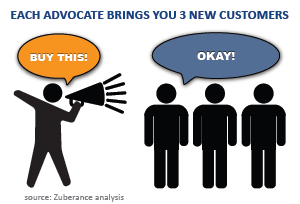


"UGC: 3 Tactics for Converting Customers into Brand Advocates," by Nicole Fallon discusses how the marketing landscape is changing, and the need to co-create your brand message with your customers is essential in remaining effective and top of mind. Today’s most progressive (and often most successful) brands are actively encouraging their customers to share their experiences, and transmitting it back out for others to see. Furthermore, if you consider your brand ahead of the curve, then possibly consider visual media to further grow engagement.  Consumers respond best to visual UGC, and a few methods to best integrate this into your plans are through product interaction, integration, and contests.

Now that you've read about the growing importance of UGC, I've listed 3 easy steps that I recommend my clients start in order to put a UGC strategy into practice. They are as follows: 
  • Ask – Develop and ongoing dialogue and proactively encourage your customers to provide their feedback and experiences about your brand. You won’t get the best content unless you pursue a strategy around building content volume.                            
  • Amplify – Once you’ve gathered the consumer content, magnify the strongest points for your brand out into the marketplace to influence others. “95% of consumers need social validation before making a purchase,” so amplify your positive content in all marketing platforms.                                                                                                          
  • Take Action - UGC is an opportunity for product/brand development. Your UGC is a 24/7 focus group, and you need to ensure you’re addressing your customers concerns.
So when you’re developing your brand’s annual plans and have to prioritize your marketing mix, please remember that almost all consumers need social validation before making a purchase. The more you can communicate the positive feedback you receive, the higher your conversions will be.

Amanda Sime is a graduate student in the Northwestern University, Integrated Marketing Communications (IMC) program. She currently lives in Austin, TX and works at Bazaarvoice as the Director, Client Strategy on Enterprise accounts and focuses on integrating WOM and UGC best practices into Account's marketing strategies in order to help drive business performance and consumer engagement. Feel free to comment, repost and follow her on Twitter: @asimetime 

Sunday, May 11, 2014

Sports Marketers: Differentiate Yourself


Social Media is signaling a change in the sports marketing industry, one that is forcing marketers to differentiate themselves.  As an undergraduate student at Northwestern University studying Integrated Marketing, I have been able to find two articles that highlight the importance of such differentiation.

Now, before we start, let’s clarify exactly what I mean by both Digital Marketing and the Sports Industry. According to James Perrin, in his article, "How Digital Marketing is Changing the Sports Industry," Digital Marketing is a term that encompasses modern marketing techniques used online, for example, Social Media, Blogging, Search Engine Optimization (SEO), Pay per Click Management (PPC), Branding, Content Marketing, Video Marketing and App creation. As for the Sports Industry, well, this really is as broad as it gets.

      With the explosion of social media platforms, the game has changed both on and off the court, or field, or rink.  Any brand, any athlete, any organization can promote themselves. More importantly, brands and athletes can combine to have a massive effect.  When the two combine, their message is instantly more memorable.  And in a world where thousands of messages are thrown at us per day, this is of the utmost importance.  The graph below displays how large an audience these athletes can bring to a brand on social media.


Forbes dove into all of this and more, and resurfaced with 5 ways that social media will change the sports marketing industry.  The following are their findings, written in their article, "5 Ways The Sports Marketing Industry Is About To Change Forever": (1) Endorsements and sponsorships will increasingly be handled online by online marketplaces, (2) Social marketing will enable influential people in sports to sell products directly to their fans, (3) We’ll soon be able to accurately measure athlete engagement and impact, (4) Sports influencers will work together to create a network effect, (5) Sports agents and managers will have more solutions to monetize their clients and their teams.    

Taking into account the aforementioned insights, I recommend the following three action items to those marketers in the sports industry:


1.  Market Your Expertise- It is a major issue that with social media, everyone (players, teams, etc.) can market themselves.  Thus, the challenge is for marketing entities in the sports industry to demonstrate why they are still extremely valuable.  Show your value, or get knocked right out of the game.

2.  Be Authentic- It is no secret that individuals trust the words of their peers significantly more than those of advertisements.  With social media, all they get is the former. Action needs to be taken to lessen the “advertisy” feel in marketing sports by linking with athletes, teams, etc. for authenticity.

3.  The “Stickiness” Factor- The rise of social media enables individuals to follow a game like never before should they not have access to TV at the moment.  Because so many people are following the live tweets from first whistle to last, it would behoove marketing entities to link their brands with certain sports programming to increase the “stickiness” of those brands.
The sports industry will change forever with social media.  That is a certainty.  What isn't?  Whether or not we can keep up.
 

     Mitchell Ostrower is a junior at Northwestern University.  He is studying Journalism at the Medill School, in addition to Integrated Marketing Communications and Business.  Looking to break into the sports industry, he has much valuable experience both with the USTA and Deep Focus, an exponentially growing digital marketing firm in New York City. Contact Mitchell on Twitter @MitchOstrower17.  

Friday, May 9, 2014

Execs, It's Time to Face Your Social Media Fears


It’s no secret—your employees are talking about your company, and they have been for years. Word of mouth is nothing new, but today’s digital and social tools magnify, for better or worse, the impact your employees can have. As a Master’s candidate at Northwestern University, I came across two articles recently that are must reads for executives who aren’t sure how to channel employees’ energy in the social media area.  

In a recent study, “Employees Rising: Seizing the Opportunity in Employee Activism,” Weber Shandwick found that half (50%) of employees share employer-related content on social media in the form of posts, pictures, or videos. The good news from this study:  20% of your workforce is likely acting on behalf of your company as “employee activists,” and another third have great potential to. The bad news, though: Only 42% of employees can actually describe to others what their company does, and even less can recount their company’s goals. So, while companies are eager to capitalize on this “employee activist movement,” as Weber Shandwick calls it, it seems abundantly clear that a huge portion of employees are unprepared for the brand ambassador job in this social era.  The idea of thousands of employees running around tweeting and posting inaccurate or unfavorable information for investors, customers, and prospects to see is indeed a scary prospect for any executive.


Source: http://www.brandingpersonality.com/category/social-media/social-media-restaurants


But the shift towards embracing employee use of social media is actually a good thing, as Weber Shandwick and others, including Rebecca Feldman of Linkedin, have noted.  Your employees represent major untapped source of brand-building power. Feldman recently shared several tips to help companies trying to make this shift. In order to begin leveraging the power of employees as social brand ambassadors, she stresses that companies need to create a corporate culture that is accepting and supportive of employee participation on social media.

Based on my own communications experience as well as insights from these two recent articles, I recommend the following three tips as a starting point for executives who are debating how to tackle the opportunities and fears of employee use of social media.


  •  Invest in Training Your Employees.  Chances are that your company is not exclusively comprised of Millennials that eat, sleep, and breathe social media. Be mindful that your employees, even Millennials, will have varying degrees of knowledge and comfort. If formal training isn’t in the realm of possibilities, identify a group of employees who naturally gravitate toward the subject and ask them to share tips with their teams through informal emails, team meetings or informal training sessions.
  • Make it Simple. As those unfortunate findings from both Weber Shandwick and Gallup demonstrate, your employees aren’t as knowledgeable about your company and its brand promise as you might hope, so one of the best defenses is to arm them with simple, approved content that can be shared. This can be as simple as sending an email that includes a few key messages about the latest initiative and suggested posts that they can simply copy and paste for Facebook, LinkedIn, and Twitter. This approach will help the company establish a consistent voice and eliminate any confusion about what’s appropriate to share.
  • Trust Them. While it may be necessary and wise for companies to have some kind of official policy regarding appropriate representation of the company on social media, those policies should not be the primary focus of your trainings or communications. Let go of that instinct to control, and manage from a position of trust, rather than fear. As long as you are clear with your employees about what is appropriate, they will rise to the occasion and act accordingly. And, on the off chance that an employee goes rogue, you can rely on one of those “employee activists” to help reinforce your corporate values.

As Weber Shandwick has shown, employees are already talking about their companies on social media, so it’s time for you to face your fears, execs, and embrace the potential of the situation at hand. By creating a positive social culture that seeks to proactively empower and educate employees, companies on the forefront of this movement stand to gain a considerable competitive advantage in this world where electronic world of mouth reigns as king.


Keri Garman is a marketing communications professional with expertise in strategic communications, content marketing, and digital social strategy. She is the former Marketing Director of Gallup’s Management Consulting Practice and is currently pursuing her Master’s in Integrated Marketing Communications at Northwestern University. 

Continue the conversation with Keri on Twitter @KeriEGarman.


Monday, May 6, 2013

CEOs - Relevance & Virality are Critical to Your Company's Social Persona


As a senior manager, it is imperative that you understand the most effective way to use content marketing to engage with audiences and potential customers online.  As a graduate student in the Northwestern Medill IMC program, I have pinned down two articles that directly address this challenge and offer insights into how to increase the chances of your content going viral.  


In the first article, “WhatMakes Content Go Viral”, Jonah Berger and Katherine L. Milkman of Wharton Business SchoolFollowing extensive experimentation, Milkman and Berger identify several characteristics of online content that make it conducive to social transmission.  By controlling for writing complexity, author gender, article length, appearance in the physical newspaper, location of appearance on the home page, the timing of the article’s release and the author’s fame, Milkman and Berger were able to determine that content that stimulates high emotional arousal is more likely to go viral than content that stimulates low emotional arousal.  Characteristics that stimulate high emotional arousal include awe, anger and anxiety, while an emotion that stimulates low emotional arousal is sadness. In addition, as a general rule, positive content was found to be more likely to go viral than negative content.  While these findings may seem obvious, they have powerful implications in the marketing context. Content may be informative and eloquent, but if it fails to stimulate the viewer emotionally it will have a lower probability of being shared.  The graphic below, taken from Berger and Milkman’s study, demonstrates this concept visually by showing his finding of the percent change in probability of being shared (via email list) for a one-standard-deviation increase in the emotional characteristic of an article. 


Here, Milkman and Berger explain these results in further detail:
“More broadly, our results suggest that while external drivers of attention (e.g., being prominently featured) shape what becomes viral, content characteristics are of similar importance (see Figure 2). For example, a one-standard- deviation increase in the amount of anger an article evokes increases the odds that it will make the most e-mailed list by 34%. This increase is equivalent to spending an additional 2.9 hours as the lead story on the New York Times website, which is nearly four times the average number of hours articles spend in that position. Similarly, a one-standard-deviation increase in awe increases the odds of making the most e-mailed list by 30% (Journal of Marketing Research, 8.).”

In the second article that I examined, “The Secret Recipe for Viral Content Marketing Success”, Director of Promotions at Frac.tl., Kelsey Libert,  helps us to identify actionable ways to decrease the amount of time in which a piece of content is consumed and subsequently shared.  Libert maintains that the goal of the content marketer should be to capture the attention of the viewer, and then to engage them emotionally as quickly as possible.  “The faster and more deeply you are able to engage their emotions, the more likely the viewer is to invest themselves enough in the content to share it.” For this reason, visually simplistic, easily consumed, and easily understood content is most likely to go viral.  One can decrease the consumption time by making sure that the content is clear and concise.  Images, for example are much more rapidly consumed than a long form article or blog.  However, it is crucial that the emotional driver not be sacrificed for the sake of consumption speed, as without it virality is inachievable.

From my analysis of these two articles and my Social Media studies at Medill IMC, there are three action items you should consider implementing immediately in order to increase the possibility of social transmission.

1. Make your content emotionally engaging:  This can be accomplished by making the content interactive, by personalizing the content, or by focusing on delivering specific emotions that are more likely to engage the audience such as anger and awe

2. Decrease the consumption time and ease of content sharing:  This can be accomplished by making the content visually simplistic in a way that does not compromise the emotionally engaging aspect of the content.  Including share tools within your content can increase ease of sharing for your audience (Facebook, Reddit, Pinterest, Tumblr, etc.). In addition it is crucial that these sharing tools be set up in the correct fashion so that the proper default title and text will be shared. 

3. Know your target audience: It is essential that you know what kind of content your target audience likes to consume, what topics are important to your target audience, what excites them etc. You can increase your understanding of your target audience through social listening.  Some great free tools that can get you started are SocialMention, Google Analytics, and Kurrently.

It is critical that senior managers grasp the key drivers behind what makes content go viral.  Content marketing is one of the best ways to engage with audiences and potential customers online.  The ability to create viral content has the potential to spike sales, improve search rankings, increase brand engagement, and even increase market share.  Additionally, the creation of a viral campaign, while not easy, is an extremely economical proposition.  To fail to examine opportunities in viral content marketing will not only leave opportunity for future growth on the table, but will also allow competition to enter into that space unchallenged.  For these reasons, as a senior manager, you owe it to your company and to yourself to be actively building your content marketing skill set. 

Sara Gutt - MS Candidate in Integrated Marketing at Northwestern University - Specializing in Media Management & Digital Marketing. Follow her on Twitter @SarabethGutt