Showing posts with label Customer Loyalty. Show all posts

Monday, February 16, 2015

Retail CMOs: 3 Tips to Drive Sales And Improve Customer Loyalty By Leveraging Mcommerce

As retail CMO, do you still think mcommerce[Mobile Commerce] disrupts your brick and mortar business and has nothing to do with increasing sales and customer retention? As a graduate student majoring in Integrated Marketing Communications at Northwestern University, embraced and informed by the latest integrated marketing trends, I want to share the following two articles that can provide you a big picture of how mcommerce benefits your company.

Entitled “In Store Retail and Mobile: New BFFs?” by Janice Cuban published on January 7, 2015 on Thismoment discussed the misunderstanding of the relationship between retail and mobile. Cuban stated that retailers who harness mobile technology to respond to consumers’ needs rather than viewing it as competition can be a smartphone shopper’s BFF. The way we shop is changing; online purchasing has become an overwhelming trend recently. Therefore, retailers should understand what customer needs and wants and how to deliver customer experience seamlessly. 

 Source: http://www.tagga.com/mcommerce/

The second article “ Mobile Apps: Increasing Retail Customer Loyalty” by Nicole Hambleton was published on Hambo Development on February 5, 2015. Hambleton offered insights about an app user could generate brand loyalty and demonstrate an emotional investment in the brand along with real case studies. By including some features in the app, such as geolocators, exclusive mobile discount, wish list, store mapping, NFC, and Augmented Reality, marketers could use mobile app as a marketing tool to whether increase sales or convert customers. 

After reviewing these two articles and my studies in the Integrated Marketing Communication program at Northwestern University Medill School, there are three action items I would recommend:
  • Harness mobile to win sales: Reinforce product availability in-store along with providing right information online to lure customers to walk in confidently.
  • Leverage existing online presence: help in-store shoppers have an informative and customized experience while increasing in-store sales.
  • Keep App Users Feeling Special: provide exclusive mobile experience by continuously offering new features and reasons to stay committed in order to keep customers coming back and stay competitive in the market. 
By following these steps, retail CMO could optimize effectiveness of mobile marketing and make your sites more attractive and engaged. All these three customer-oriented actions will take you to the next revolution of mcommerce and close the gap between online and offline retail.  


Yihan (@YihanH) is pursuing her M.S. in Integrated Marketing Communications at Northwestern University and she is going to graduate in December 2015. With a bachelor’s degree in Business Administration specialized in Marketing and Event Management from George Washington University, she is interested in branding and social marketing, especially in the luxury goods industry. You can find her on Twitter and LinkedIn.


Thursday, November 13, 2014

CEO's: You must optimize your CRM to create valuable customer relationships

As a CEO, the stronger and more individualized your engagement with customers and prospects, the more likely you are to gain long-term, loyal and valuable relationships with them. CRM systems are so important in helping you to achieve valuable relationships that result in long-term sales, and optimizing this system is key to getting the most from your CRM.

As a graduate student in the Northwestern Medill IMC program, I have been studying CRM optimization strategies and have two articles you may find helpful and insightful.

According to 3 Key Ways To Optimize CRM For Your Business by Meghan Bassett you should focus your efforts in these key areas. First before you start implementing and optimizing your CRM you should identify your goals. It will help you to connect all your processes and know what things you will need in place to meet your goals. Next you should clearly define your business processes to help assure a smooth and efficient flow of information and outline interactions between all people involved. Finally you need take time to continuously evaluate the goals, objectives, and processes that were established to make sure they align with any changes that occur in your organization. With this evaluation you should also always be looking for places where improvements could be made to increase efficiency and improve engagement with consumers.


Another helpful article is CRM Optimization Checklist by Jenna Hanington who outlines the steps to optimize a CRM that will help increase marketing and sales productivity. The steps include: Clean up your data, set goals, train your sales team, explore new features, demonstrate value, start reporting, and gather feedback.

From my graduate studies at Northwestern University and my exploration of CRM systems, here are three action items that I recommend you consider when setting up and optimizing your CRM.

  • Define All Business Processes - If we over look a business process this can result in gaps in the chain of informational flow needed to keep a consumer engaged. Also defining your business processes can help you create the most impactful goals to help your business grow.
  • Set CRM Goals - Having CRM goals will help you integrate your business processes with your overall business goals and identify what you need in place to meet them.
  • Constant Evaluation - With the constant changes that occur within organizations there needs to be someone that takes the time to ensure that all the aspects of the CRM are aligned with these changes. Ongoing evaluation will help you to get the most benefit from your CRM system.

Today CRM systems are a must for organizations that want to maintain valuable relationships with their customers. However, it is not enough to just buy a CRM and turn it on. There are key processes and goals that need to be defined and constant evaluations to ensure that the CRM system is best matched and optimized to meet the needs of the organization and market.

Lucas De Jong is a marketing professional with significant experience within higher education markets. He specializes in strategic communications, content marketing and CRM strategy/ optimization. Lucas is currently pursuing a master’s degree in Integrated Marketing Communications at Northwestern University's Medill School of Journalism. Connect with him on Twitter (@lucasdejong48) and LinkedIn.

Thursday, May 15, 2014

Use Big Data to Make Big Impressions with Consumers in 3 Easy Steps

As a consultant, it is important to evaluate the state of your customer's database. The amount and breadth of information available can drastically change the strategy behind customer service, marketing and even product development. As a graduate student studying Integrated Marketing Communications at the Medill School at Northwestern University, I have found two articles that address the ways that business can use customer data improve service, engage their customers and start taking steps into the big data world.

In 5 ways companies are using big data to help their customers, VentureBeat gives a great overview on how companies should be using big data to help predict customer needs and how utilize feedback to improve pain points. They also note how you can improve customer service interactions by having more robust information such as how the customer has engaged with the company socially or any past purchases. For businesses with a customer services focus, making sure the service metrics are being plugged into your database can help you identify trends as they happen, so you can know what to focus your energies on the most important opportunities in real time.
Image courtesy of David Castillo Dominici / FreeDigitalPhotos.net
Still at a loss on how you can make big data work for you? Nicole Fallon of Business News Daily instructs businesses to leverage their internal information to build out customer loyalty programs in her article Boosting Customer Loyalty with Big Data. The loyalty programs, or even a baseline customer newsletter can help engage customers to buy more of your products and boost sentiments towards your brand. This is excellent advice as most business are probably not utilizing their customer data to its fullest and even simple analysis can help you identify customer that could spend more if they were part of a loyalty program.

After analyzing these two articles, here are three action items you need to implement to start tapping the power of big data:

1. Get your data in order
The usefulness of big data can be hindered by what information you have available on your customers. From contact information to purchase history, be sure that you have an accurate and reliable database solution and try to maintain as much information about the customer journey as possible.

2. Listen to your customers
Now that you have some quantitative data on purchase history, work to include qualitative points based on customer feedback to help move your business forward. You can gain insights from surveys, social media monitoring and even service representatives if available. These insights can help make your products and service better for returning and new customers alike.

3. Communicate with your customers
For the majority of small business, more than half of their annual revenue comes from repeat buyers, which makes cross selling your other products key. In addition to introducing new products and services, useful news and best practices for your specific industry can help create value for your brand. Be sure to set goals attached to your outreach, whether they be to increase sales or even just to improve engagement.

Big data can seem daunting depending upon where you are in the process, but by taking small steps you can get headed in path to better utilizing information you already have. If you haven’t gotten started yet though, consider this your wake up call. If you won’t take action and use data to improve your customers interactions with you company, your competitors certainly will.

Jay Hover is the Senior Manager of Customer Engagement at Rakuten Marketing, an ecommerce marketing services firm specializing in affiliate, display, search and retargeting. He oversees internal client communications and is responsible for engaging more than 2,000,000 partners. Jay is currently pursuing his M.S. in Integrated Marketing Communications from the Medill School at Northwestern University and is a graduate of the University of Wisconsin-Madison.

Follow him on Twitter @jmhover or connect via LinkedIn: www.linkedin.com/in/jaymhover/.

Monday, October 21, 2013

CMOs- How Data Mining Can Help Your CRM Programs Succeed

If you’re a CMO and you don’t think your company should invest in data mining for your CRM programs, think again. As a CMO, you know a successful CRM program contributes to your company's bottom line growth. The two foundations for successful CRM are customer data and powerful analytics. As a graduate student with a concentration in marketing analytics, I have been looking at strategic customer management throughout my graduate courses. I have found two articles providing valuable insights in how CMOs can help their CRM programs succeed through data mining and advanced analytics.

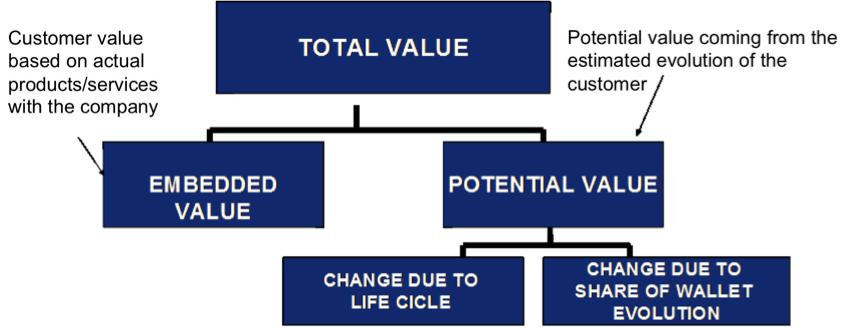
In the article “Data Mining for Advanced Customer Management”, Beatriz Sanz Saiz, Ernst & Young's Global Customer Leader, believes that the transformation from product-centric to customer-centric commercial strategies is an unstoppable trend. She points out that though most CMOs are aware of the importance of big data, many companies are data-rich but insight poor due to their lack of understanding of customers. Strategic customer segmentation is the starting point of driving customer insights, which not only provides descriptive analysis but also the “so what” and future prediction. Traditional segmentation schemes may only focus on the contribution a customer has made, but Sanz Saiz points out that strategic customer segmentation breaks down a customer’s total value into present and potential value. This prediction of customer evolution can guide different commercial strategies to divest underperforming customers or to move customers with great potential up the value chain.


In “Real-Time CRM To Maximize Your Customer Lifetime Value”, Chris Diener, Senior Vice President of AbsoluData Analytics, says that some CMOs are missing great marketing opportunities because “they’re not incorporating real-time flow into models and applications”, partly because some CMOs hesitate to invest in data management system and data mining. He holds the same opinion as Sanz Saiz that Customer Lifetime Value (CLV) provides a clear vision for a company’s CRM program, because knowing your customers’ CLV helps you to build strategic plans to increase customer loyalty and brand value down the road. Diener also suggests CMOs to “build a more social and emotional bond with your customers” by tapping into real-time big data, including valuable data from social media.


Despite the technical nature of data mining, it requires strategic thinking and prioritization from the C-suites. Based on the reviews of these two articles and my related course at Northwestern University, there are three things CMOs need to do in order to help their companies succeed in the “big data” era.

 1)   Break the silo.
CMOs must determine the right information to collect and break the information silos between marketing and IT departments. This may require organizational and system investments.

 2)   Offer analytics team C-level support and mandate.
CMOs should support their analytics team to implement strategic customer segmentation schemes, which evaluate the customer lifetime value to guide future CRM strategies. CMOs play the key role in combining marketing analytics, insights, and big data, including social media and digital data. 

 3)   It’s all about real-time.
      In this “big data era”, identifying customers at different touch points and offering personalized services and communication messages are the key factors of a successful CRM program. CMOs need to think and act real-time by tapping into real-time data to arrive at valuable business insights for their CRM programs.


Yi Zhang is a MS Candidate in Integrated Marketing Communications at Northwestern University, specializing in Marketing Analytics. Follow her on Twitter @Yi_Zhang12

Tuesday, May 15, 2012

Moms Try On A New Hat – Blogger


What television did for Jersey Shore and the Kardashians, the Internet is doing for moms. With almost 4 million moms and counting, mommy bloggers are the next big thing on the web, and as their influence grows, so does the attention of companies looking for new ways to get the all-important mom approval. Most interesting, however, is that these aren’t just your average moms. They’re well educated, high-earning women who have passed up lucrative job opportunities to tell the world about their experiences. Check out some stats H&R Block collected about today’s mommy bloggers:

·      On average, they earn $14,000 more a year than their nonblogging peers
·      They are 52% more likely to have a college degree than the average mom
·      They represent 14% of American moms

And those numbers only tell part of the story. With wide-reaching networks of followers, and affiliations with strong blogging collectives, mommy bloggers wield buying power influence that rivals a celebrity endorsement. Companies from McDonald’s to Kraft to P&G are using mommy bloggers as the new advertisers; replacing generic banner ads with interactive blogger experiences. These multibillion-dollar companies are standing behind their products and letting bloggers write whatever they want about the free products they’re given. Mommy bloggers have tipped the hand of power when it comes to promoting products, and with new moms starting blogs everyday, companies will have to continue to reach out to these networkers and community leaders to gain traction with a target concerned about buying only the best for their families and themselves.

The mommy blogger is no passing fad, like the soccer mom before her, she represents a highly influential purchaser and makes some of the most important family budget decisions. Companies can harness this influential power by partnering with mommy bloggers (who are notoriously picky, but endlessly loyal to a select few companies), giving them the freedom to write about products however they want, and letting them spread the word about those products organically. The mommy blogger typifies the new power consumers hold over companies. No company will be able to force mommy bloggers into endorsing a product they don’t like or want and that’s the key to their power – they don’t need companies, but the Fortune 500 sorely needs them.


Justin Alsop is a graduate student in the Northwestern Medill IMC marketing program. He’s interested in how web influencers are changing the Internet business model and their impact on the future of e-commerce; you can find him at @JDaneA.