Showing posts with label CRM. Show all posts

Tuesday, February 17, 2015

CMOs: 3 steps to integrate big data analytics into CRM

As a CMO, how you integrate big data analytics into your customer relationship management systems could spell the difference between success and failure in today's data-driven marketing era. As a graduate student in the Northwestern Medill Integrated Marketing Communications program, I have found two articles that can help you learn more about CRM analytics and its impact on building a comprehensive understanding of your customers’ needs and preferences. 

The article “The Future of CRM Analytics is AlreadyHere” points out the importance of applying analytics to customer relationship management efforts.In order to gain a 360-degree view of the customer, many companies have blended customer data, operational and transactional data and data analytics to develop comprehensive understanding of their customers. The integration of data analytics and CRM has proved success- the complete views of customers resulting from the integration have enabled these companies to generate meaningful insights about marketing campaigns and put them at a better positioned to identify and act on cross-sell and upsell opportunities.

source: http://crmsolutions.crmnext.com/

In the article “Five Reasons Why CRM Analytics are Essential for Success”, Marianne Cotter explains five reasons companies should integrate data analytics into CRM and use data and CRM analytics to tailor the customer experience for improved engagement and better profits. The five reasons she points out include better customer understanding, better understanding of the customer-facing operations, decision support, predictive modeling and benchmarking.
Based on these two articles and my graduate learning in the Northwestern Medill IMC program, here are three action items I recommend you consider:
  • Adopt real-time and predictive analytics - be aware of real time tools and utilize them to process data in real time to connect with customers more immediately and deliver highly personalized experience. Tie predictive analytics with CRM to learn more about customers' buying behavior.
  • Create expert team -recruit people with complementary skills who can bridge big data analytics with CRM. Have people with analytical skills who can understand structured and unstructured data working with business managers and IT people in a team.
  • Cultivate interaction - besides monitoring customers and conducting big-data analytics on social media, interact with your customers by providing them more customized opportunities.

As a CMO in today’s data-driven economy, you really need to start thinking about harnessing the power of big data and integrating data analytics into CRM to facilitate smarter sales and better customer engagement. I recommend you look at these three action items and use them when develop a future strategy for big data and CRM.


Xinwei Zhang is a M.S. candidate of integrated marketing communication at Medill School, Northwestern University, specializing in Marketing Analytics. She is going to graduate in December 2015. With dual bachelor degrees in Psychology and Consumer Economics, she is passionate about analyzing consumer behavior and synthesizing data to actionable insights, stories and marketing solutions.
Any questions and comments? Contact me on Twitter or LinkedIn.

Thursday, November 13, 2014

CEO's: You must optimize your CRM to create valuable customer relationships

As a CEO, the stronger and more individualized your engagement with customers and prospects, the more likely you are to gain long-term, loyal and valuable relationships with them. CRM systems are so important in helping you to achieve valuable relationships that result in long-term sales, and optimizing this system is key to getting the most from your CRM.

As a graduate student in the Northwestern Medill IMC program, I have been studying CRM optimization strategies and have two articles you may find helpful and insightful.

According to 3 Key Ways To Optimize CRM For Your Business by Meghan Bassett you should focus your efforts in these key areas. First before you start implementing and optimizing your CRM you should identify your goals. It will help you to connect all your processes and know what things you will need in place to meet your goals. Next you should clearly define your business processes to help assure a smooth and efficient flow of information and outline interactions between all people involved. Finally you need take time to continuously evaluate the goals, objectives, and processes that were established to make sure they align with any changes that occur in your organization. With this evaluation you should also always be looking for places where improvements could be made to increase efficiency and improve engagement with consumers.


Another helpful article is CRM Optimization Checklist by Jenna Hanington who outlines the steps to optimize a CRM that will help increase marketing and sales productivity. The steps include: Clean up your data, set goals, train your sales team, explore new features, demonstrate value, start reporting, and gather feedback.

From my graduate studies at Northwestern University and my exploration of CRM systems, here are three action items that I recommend you consider when setting up and optimizing your CRM.

  • Define All Business Processes - If we over look a business process this can result in gaps in the chain of informational flow needed to keep a consumer engaged. Also defining your business processes can help you create the most impactful goals to help your business grow.
  • Set CRM Goals - Having CRM goals will help you integrate your business processes with your overall business goals and identify what you need in place to meet them.
  • Constant Evaluation - With the constant changes that occur within organizations there needs to be someone that takes the time to ensure that all the aspects of the CRM are aligned with these changes. Ongoing evaluation will help you to get the most benefit from your CRM system.

Today CRM systems are a must for organizations that want to maintain valuable relationships with their customers. However, it is not enough to just buy a CRM and turn it on. There are key processes and goals that need to be defined and constant evaluations to ensure that the CRM system is best matched and optimized to meet the needs of the organization and market.

Lucas De Jong is a marketing professional with significant experience within higher education markets. He specializes in strategic communications, content marketing and CRM strategy/ optimization. Lucas is currently pursuing a master’s degree in Integrated Marketing Communications at Northwestern University's Medill School of Journalism. Connect with him on Twitter (@lucasdejong48) and LinkedIn.

Thursday, May 15, 2014

Use Big Data to Make Big Impressions with Consumers in 3 Easy Steps

As a consultant, it is important to evaluate the state of your customer's database. The amount and breadth of information available can drastically change the strategy behind customer service, marketing and even product development. As a graduate student studying Integrated Marketing Communications at the Medill School at Northwestern University, I have found two articles that address the ways that business can use customer data improve service, engage their customers and start taking steps into the big data world.

In 5 ways companies are using big data to help their customers, VentureBeat gives a great overview on how companies should be using big data to help predict customer needs and how utilize feedback to improve pain points. They also note how you can improve customer service interactions by having more robust information such as how the customer has engaged with the company socially or any past purchases. For businesses with a customer services focus, making sure the service metrics are being plugged into your database can help you identify trends as they happen, so you can know what to focus your energies on the most important opportunities in real time.
Image courtesy of David Castillo Dominici / FreeDigitalPhotos.net
Still at a loss on how you can make big data work for you? Nicole Fallon of Business News Daily instructs businesses to leverage their internal information to build out customer loyalty programs in her article Boosting Customer Loyalty with Big Data. The loyalty programs, or even a baseline customer newsletter can help engage customers to buy more of your products and boost sentiments towards your brand. This is excellent advice as most business are probably not utilizing their customer data to its fullest and even simple analysis can help you identify customer that could spend more if they were part of a loyalty program.

After analyzing these two articles, here are three action items you need to implement to start tapping the power of big data:

1. Get your data in order
The usefulness of big data can be hindered by what information you have available on your customers. From contact information to purchase history, be sure that you have an accurate and reliable database solution and try to maintain as much information about the customer journey as possible.

2. Listen to your customers
Now that you have some quantitative data on purchase history, work to include qualitative points based on customer feedback to help move your business forward. You can gain insights from surveys, social media monitoring and even service representatives if available. These insights can help make your products and service better for returning and new customers alike.

3. Communicate with your customers
For the majority of small business, more than half of their annual revenue comes from repeat buyers, which makes cross selling your other products key. In addition to introducing new products and services, useful news and best practices for your specific industry can help create value for your brand. Be sure to set goals attached to your outreach, whether they be to increase sales or even just to improve engagement.

Big data can seem daunting depending upon where you are in the process, but by taking small steps you can get headed in path to better utilizing information you already have. If you haven’t gotten started yet though, consider this your wake up call. If you won’t take action and use data to improve your customers interactions with you company, your competitors certainly will.

Jay Hover is the Senior Manager of Customer Engagement at Rakuten Marketing, an ecommerce marketing services firm specializing in affiliate, display, search and retargeting. He oversees internal client communications and is responsible for engaging more than 2,000,000 partners. Jay is currently pursuing his M.S. in Integrated Marketing Communications from the Medill School at Northwestern University and is a graduate of the University of Wisconsin-Madison.

Follow him on Twitter @jmhover or connect via LinkedIn: www.linkedin.com/in/jaymhover/.

Monday, October 21, 2013

CMOs- How Data Mining Can Help Your CRM Programs Succeed

If you’re a CMO and you don’t think your company should invest in data mining for your CRM programs, think again. As a CMO, you know a successful CRM program contributes to your company's bottom line growth. The two foundations for successful CRM are customer data and powerful analytics. As a graduate student with a concentration in marketing analytics, I have been looking at strategic customer management throughout my graduate courses. I have found two articles providing valuable insights in how CMOs can help their CRM programs succeed through data mining and advanced analytics.

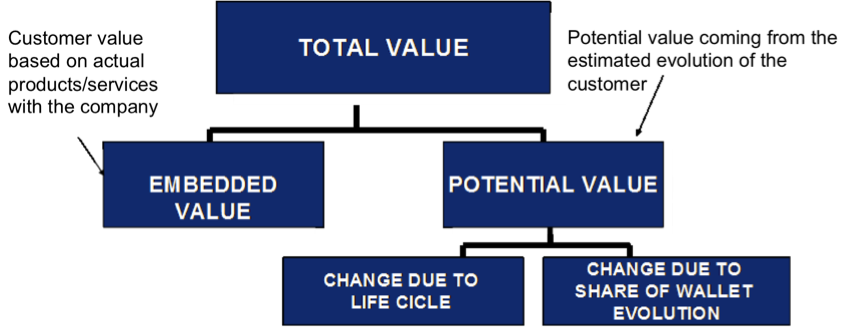
In the article “Data Mining for Advanced Customer Management”, Beatriz Sanz Saiz, Ernst & Young's Global Customer Leader, believes that the transformation from product-centric to customer-centric commercial strategies is an unstoppable trend. She points out that though most CMOs are aware of the importance of big data, many companies are data-rich but insight poor due to their lack of understanding of customers. Strategic customer segmentation is the starting point of driving customer insights, which not only provides descriptive analysis but also the “so what” and future prediction. Traditional segmentation schemes may only focus on the contribution a customer has made, but Sanz Saiz points out that strategic customer segmentation breaks down a customer’s total value into present and potential value. This prediction of customer evolution can guide different commercial strategies to divest underperforming customers or to move customers with great potential up the value chain.


In “Real-Time CRM To Maximize Your Customer Lifetime Value”, Chris Diener, Senior Vice President of AbsoluData Analytics, says that some CMOs are missing great marketing opportunities because “they’re not incorporating real-time flow into models and applications”, partly because some CMOs hesitate to invest in data management system and data mining. He holds the same opinion as Sanz Saiz that Customer Lifetime Value (CLV) provides a clear vision for a company’s CRM program, because knowing your customers’ CLV helps you to build strategic plans to increase customer loyalty and brand value down the road. Diener also suggests CMOs to “build a more social and emotional bond with your customers” by tapping into real-time big data, including valuable data from social media.


Despite the technical nature of data mining, it requires strategic thinking and prioritization from the C-suites. Based on the reviews of these two articles and my related course at Northwestern University, there are three things CMOs need to do in order to help their companies succeed in the “big data” era.

 1)   Break the silo.
CMOs must determine the right information to collect and break the information silos between marketing and IT departments. This may require organizational and system investments.

 2)   Offer analytics team C-level support and mandate.
CMOs should support their analytics team to implement strategic customer segmentation schemes, which evaluate the customer lifetime value to guide future CRM strategies. CMOs play the key role in combining marketing analytics, insights, and big data, including social media and digital data. 

 3)   It’s all about real-time.
      In this “big data era”, identifying customers at different touch points and offering personalized services and communication messages are the key factors of a successful CRM program. CMOs need to think and act real-time by tapping into real-time data to arrive at valuable business insights for their CRM programs.


Yi Zhang is a MS Candidate in Integrated Marketing Communications at Northwestern University, specializing in Marketing Analytics. Follow her on Twitter @Yi_Zhang12

Want to Deepen Your Customer Engagement? Gamification is the key.


According to “The State of Loyalty Programs 2013”, a report from Forrester Research, more than half of companies value their loyalty programs as strategic priorities but the bottom line is that only 16% of their customer bases are motivated by loyalty rewards. For senior executives in the marketing field, the focus of loyalty programs should be shifting from offers and discounts to engagement and emotion. As a graduate student in Northwestern University’s Medill IMC program, I have been exploring the values and strategies of integrating “Gamification” concept into loyalty programs. I found two interesting articles about the “Gamification” concept and made three suggestions for executives who want to gamify your loyalty programs strategically.

Perka post: Five factors that turn your loyalty program into a successful game

Recently, Perka post posted a great article by Zach Grossman: How to “Gamify” Your Customer Loyalty Program. It gave a definition to the “Gamification” concept and also examined the five psychological motivations that made the concept compelling: 1) the social communal factor; 2) the recognition factor; 3) the time factor; 4) the challenge factor; 5) the fun factor. Adding “game mechanics” to the loyalty programs means deeper engagement and measurable changes in customer behavior that impact the bottom line.

Loyalty360TM: Too many loyalty programs look alike and there needs to be differentiation spearheaded by engaging experiences.

Loyalty 360TM recently put up an article: Gamification Isn’t About “Slapping Badges on Everything”, about the inspirational speech given by Kirk, Senior Director Digital Strategy, for Bunchball, at the 6th annual Loyalty Expo. “Gamification” should be a fun thing, Kirk said. He also gave a definition to the economics of fun. According to him, a fun thing should have five key elements: a certain level of difficulty, a certain amount of friends, a certain amount of interesting strangers, a certain amount of reward, and a certain amount of opportunity.

Three Suggestions for Marketing Executives to Gamify Your Loyalty Programs Strategically
 As I digged into these two articles and analyzed other industry “Gamification” practices, I come up with three actionable suggestions that marketing executives need to consider while integrating the concept into your loyalty programs in a strategy way.

1.     It’s not about a game. It’s about engagement.
“Gamification” does not replace your content with a game like Candy Crush. It is about leveraging the psychological motivations of “game mechanics” to engage people with your product in a way that highlights the product’s benefits and adds real value. It just refines the way people interact with your content.

2.     “Gamification” cannot come stand-alone. The “reward” offers should be personalized to reflect customer’s real interest.
To a company, having a loyalty program is just like sitting on the gold line of consumer data. “Reward” offer is not just about transactions and discounts but also presents an opportunity for consumers to experience what they want.

3.     Engagement Measurement and Optimization
The final step is to measure the performance through selected KPIs and identify the areas that could be further refined. Does the game-like interface trigger more responses or viral spread of messages among consumers? Does the personalized offer create real values for the consumers? By answering these questions, you can further maximize your customer engagement.

Engagement is the currency of a digital world. Gamification + loyalty program = maximum engagement. So why still wait? Take actions now and gain an edge over your competitors.


Jessie Guo is a MS candidate in Northwestern’s Integrated Marketing Communications program and anticipates receiving her degree in December 2013. She is passionate about crafting stories based on data analysis and is now seeking job opportunities in marketing analytics and research, especially database marketing/CRM, loyalty marketing, multi-channel marketing/E-commerce and email marketing. Follow her on twitter @jesieguoxiaoxi.