Showing posts with label Samsung. Show all posts

Wednesday, May 14, 2014

CEO's - Are fingerprints and palms the new dollar bills?


As a CEO in digital and mobile world, security is a great concern for everyone involved, most notably the customer.  As a Northwestern student studying Integrated Marketing and a user of mobile payment services, I have found several measures to properly align and prepare oneself in the industry with the most important thing being extremely secure.


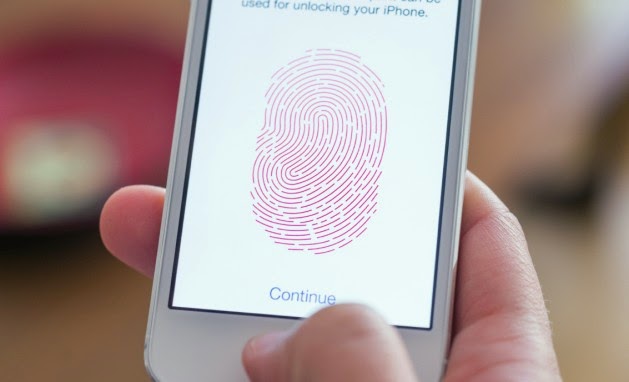
Even your fingerprint isn’t secure enough. Recently the Samsung Galaxy S 5 smart phone introduced a fingerprint scanning technology to access the phone. However there have been some issues that Zach Epstein described in detail. PayPal a mobile payment company doesn’t require a password if the app has already been configured for fingerprint authentication. Just a few weeks old, it has already been hacked. Improved security is a must, but perhaps Samsung rushed into this. It is not clear if this is a minor glitch that can be fixed or if it is a significant problem but what is clear is that we must continue to improve and strengthen the security of personal information.


If some people have their way soon you will not need to go to a psychic to read you palm. As the Wall Street Journal reports some Swedish students have devised another way to expediting and enhancing the mobile payment experience for an individual. Sven Grundberg notes that this new technology is slightly behind fingerprint scanning in terms of development and testing. Although this technology is further behind it is supposed to be just as quick, only taking 5 seconds or so to register, but it has the benefit of greater security than fingerprints.

Based on the insights I received from these two articles there are three action items you should immediately take to be well positioned in the mobile payment world.  The three things that mobile payment companies should do include:

1. Start to move away from old-fashioned passwords – Old fashion passwords with combinations of letters and numbers are ineffective nowadays and can be easily hacked. This is the first step in increasing security is creating more complex passwords.

2. Highly emphasis security and build trust, let a person hold all power - Let’s face it, the person people trust the most is themselves. By allowing the individual customer to control all of the power in terms of securing their information, you are giving the customer exactly what they want. Not only does this increase the security but it builds greater trust with a company. This is the second step in being competitive in the mobile payments world.

3. People want quick accessibility, must be able to keep up with demand – People are always on the go and those companies that can keep up with people are ones who succeed. The average person wants to have immediate access and convenience at the touch of the fingertips. Mobile payments are supposed to be quicker and easier. Typing long and complicated passwords is not what people want. Those who are able to provide instant access will be able to survive and thrive in the ever-changing digital world.

Through research it has been discovered that the most important aspect of mobile payment services that people are concerned with is security. In order for there to be a revolution and mass migration towards the mobile payment industry, people must feel that their information is incredibly secure. Hopefully fingerprints scanners and palm readers can lead the industry to greatness.


Daniel Cohen is a graduating Northwestern student with a focus in Integrated Marketing that will be pursuing a Master’s degree in Management at the Kellogg School of Management next year. If you would like to discuss these issues further please contact him on twitter at @DanCohen102. Thanks.

Monday, May 6, 2013

The Retail Showrooming Ultimatum – Revolutionize or Die


As a marketer for a physical retail establishment, you are facing an overwhelming challenge in an increasingly digital marketplace. How do you convince consumers to purchase from your store when they can buy the same thing cheaper online, with free shipping, and often without having to pay any sales tax? I am a graduate marketing student in Northwestern's Medill IMC program. I am also a showroomer. As a marketer, I feel bad about that. As a consumer, it feels great to keep more money in my pocket. My paradox of emotions has led me to take a serious look at the phenomenon of showrooming, and to focus my studies on leading retailers' attempts to survive the impending retail apocalypse. 

Showrooming is drastically changing the world of retail, and any retailer not willing to proactively evolve is going to go the way of the flip phone. Wal-Mart initially revolutionized big-box retail stores by bringing incredibly low prices to even the small towns of America through a unique supply chain that served all of its networked stores. Amazon further revolutionized consumer shopping behavior by making e-commerce transactions convenient, fast, cheap, and commonplace. These two shopping behaviors no longer exist in a vacuum; consumers are mixing and matching their behaviors at will. Showrooming has become an integral step in the consumer decision journey and it isn’t just going to go away. It’s time for the next retail revolution - which company will revolutionize the way consumers shop and buy products?

Big-box stores desperate to adapt

Both Target and Best Buy have already resorted to price matching in an effort to stave off Amazon. The Wall Street Journal reports that despite efforts to improve service and selection,  price is still the lowest common denominator. But by engaging in price matching, retailers are focusing the showrooming war on price, which is exactly the war you can’t engage in over the long-term. Engage in price wars and you will effectively commoditize your store’s brand. Any brand knows it’s about differentiation in the marketplace. What do you do better that Amazon? What is the unique value inherent in your brand promise? For brick-and-mortar retailers, it’s not going to be price. If that’s all you’ve got in your showrooming battle tool kit, you’re toast.

Best Buy recently announced that they are bringing Samsung mini-stores to 1400 Best Buy locations to combat showrooming. These “boutiques” within the store will be staffed with specially trained employees to mimic the Apple Store experience. Forbes quoted an industry analyst as stating: “This clearly is the death of showrooming at Best Buy. It never was near the problem it was made out to be.” Pardon me, Mr. Analyst, but how is building a smaller showroom within a larger showroom going to be the death of showrooming? I can still go home and buy most Samsung products on Amazon.

Target, on the other hand, has asked vendors to create products exclusively for its stores. Target understands the value of the “expect more” part of its brand promise.  The company already offers many unique and high-quality goods ranging from clothing lines to furniture that you can’t get anywhere else. More exclusive offerings would play well to the chain’s “posh” appeal, and decrease the ability and desire of consumers to showroom in its stores.


How Do You Start A Revolution?
             Start small but think revolutionary, Retail America. It’s not about quick fixes. And it's certainly not about price. It’s about experimenting and innovating and small wins that will spark the retail revolution and win the long-term war. What can your retail outlet learn from analyzing the big guys? Let's take a look:
  1. Target – Target = Experience. People are passionate about being in the store.  I had a friend that gave up Target for Lent. While prices can be beat online, the satisfaction you get from a "Target Run" cannot. To combat showrooming, you (and Target!) must find ways to enhance the experience of your store; and then MONETIZE it. Your store should be a destination. An oasis. People pay for experiences all the time. Besides selling just products, what experience can you sell your customer? What can you offer them through being in the store that they could never get online? 
  2. Wal-Mart – Cheap immediacy is Wal-Mart's best asset. Not all retail outlets can or should be about providing the best "experience". If your store falls into this category, maybe you should stop forcing customers to come in to shop at a physical location. Customers could have a better "experience" shopping and ordering online, and then pick up at a local warehouse. The customer gets online prices, immediate pick-up, and you save a ton of operational costs by not running a storefront. Amazon doesn’t have physical stores. They just have warehouses. And yet people buy things directly from Amazon all the time.  (But have to wait for their items to be shipped!) You could stop showrooming madness by ceasing, literally, to be a showroom.
  3. Best Buy – Without any private label products to promote, the cheapest prices, or the best service, no one is going to give Best Buy up for Lent. Details in the press are fuzzy about the Samsung mini-stores, and their showroom within a showroom idea just sounds like death-by-showrooming. But they might just be onto something with this "boutique" idea. What if they've actually worked out a pricing strategy with Samsung that allows Best Buy to make its money not by selling Samsung products, but by renting out the store's floor space? Samsung, in turn, effectively eliminates the middle man and directly charges customers prices in-store that match or beat online prices. Everybody's making money, the customer gets to see, feel, and experience the products in the showroom, and then can buy the product in store for the best price available. This, my friends, would be the start of a legitimate retail revolution.  
So what are you going to do better than Amazon? Whether you sell experience, replace showrooms with order pick-up warehouses, create boutiques within your store based on innovative pricing deals with manufacturers, or come up with your own revolutionary idea, get started now. The race for the revolution is on. May the smartest retailers win.

   -Carrie Walker, M.S. Candidate in Integrated Marketing Communications, Medill, Northwestern University. Specializing in branding, with a particular interest in CPG, retail, and shopper marketing. @CarrieWalker04