Showing posts with label "Mobile". Show all posts

Tuesday, February 16, 2016

Casino CMOs – 3 Mindsets to Enhance the Customer Experience Beyond the Casino Floor

As a CMO, you know that the customer experience is critical to building strong brand connections and fueling the repurchasing cycle. The same is true for casinos. 

In my research as a graduate student in integrated marketing communication at Northwestern University, I have found two articles that provide deeper insights into how technology can be used to draw in millennials and enhance the casino customer experience:

In his CasinoJournal article “Gamification's wide impact on casino marketing,” guest columnist Aron Ezra, CEO of incentive software company OfferCraft, discusses gamification strategy and how bringing game elements into all areas of casino life could have incremental benefits for both casino operations and the consumers themselves. Gamification has proven to be an effective in changing consumer behaviors across many industries, including casinos. To illustrate his point, Ezra describes real-life applications of gamification in casinos operations, describing implementations in hotel check-ins, email campaigns, and billboard advertising. As Ezra says, “Our customers (and many of our employees) are a self-selected group of people who genuinely want to be around games. Let’s give them what they want. Let’s bring game experiences to everything we do.”


The second article discusses the emergence of mobile apps as a way to enhance casino customer experience, ultimately attracting the desired millennial markets. In the CalvinAyre article, “Marcus Yoder talks using mobile apps to attract millennials” Rebecca Liggero draws from her video interview with Marcus Yoder of Gamblit Gaming, who illustrates the potential power of mobile for casinos. Yoder describes the problem that most casinos are facing with millennials, the fact that 35%of 21 to 35 year olds go to casinos, but only 2% actually wager a bet. His solution? A mobile app. However, Yoder has specific advicefor casino mobile apps: “It can’t be an app that’s all about a slot finder because the millennials don’t even care about the slot machines. It’s got to be, come play this new game that you’re already playing, like Candy Crush, on this table, on that kind of machine. Give them an experience.”

In distilling these two articles, and from my experiences in the Northwestern Medill IMC program, here are three mindsets to help refresh the casino customer experience that every casino CMO should consider.

  • Think Big – Look beyond the casino floor to enhance the customer experience in all areas of casino operations (hotel, spa, restaurants, etc.).
  • Think Games – Casino patrons love games! Be sure to give them what they came for at every possible moment.
  • Think Mobile – Use apps to give customers experiences both inside and outside the casino.

Armed with these mindsets, you’ll be primed to create a customer experience to draw in the elusive millennial and better serve your existing customers. 


ABOUT THE AUTHOR: Anna Klutho is an aspiring brand manager with an undeniable passion for marketing, communication, and big ideas. She is currently pursuing her M.S. in Integrated Marketing Communications at the Medill School of Journalism at Northwestern, aiming to increase her knowledge in the theory, analytical skills, and most effective methodologies required to become a valuable asset to a marketing strategy department in the hospitality, entertainment, or travel industries. You can connect with her on LinkedIn or follow her on Twitter @Anna_Klutho.

Tuesday, May 12, 2015

3 Tips a Marketer Need to Know to leverage the mobile devices to increase sales

Mobile commerce is the trend that no retailers can afford to ignore.  Industry analysts predict that the mobile commerce will increase to 31% of total digital purchase and generate $109 billion of revenue in 2017. As an IMC graduate student in Medill School in Northwestern University, I have done research on how the m-commerce trend affect the fashion retailers, and two articles explaining the industry future integrating the mobile devices catches I attention.

Dylan Richard, co-founder and CTO of a mobile-only e-commerce company, discusses the different consumer purchasing behaviors on mobile platforms, with computers and in stores. Dylan points out that when consumers shopping on mobile devices, like all online shopping experience, they are driven by fear on whether they make the right choice. Unlike shopping with computers, however, they are looking for easier and quicker shopping experience when they shop on their mobile devices, as they tend to shift between different apps and activities fast on their phone or tablets. 

Source: www.ohlalapps.com/wp-content/uploads/header_shopping.jpg
The Guardian article emphasizes on the importance of social networks and apps in m-commerce. While the trend helps small luxury brand to be more cost efficient, it also requires brands to provide a seamless service from seeing a picture on social media app to purchase the product. 

As the previous two articles mentioned, while the m-commerce trend is a great opportunity for fashion retailers, the retailers need to understand the different consumer purchasing behaviors on mobile device and adjust the shopping experience accordingly to generate new revenue. Based on my experience in the IMC program, here are three actions I would recommend to all fashion retailers:
  • Optimize your mobile sites: optimize the mobile shopping experience is not just about a larger button. The customers need to be able to find essential information/graphics they need in the small screens and make purchases within several touches.
  • Link your site with your social media accounts: always provide the links of the product with the pictures you post on social media (or use hyperlink) so consumers can access your mobile site from their social media apps easily. If you are looking for a more creative way to do it, IKEA Russion innovatively use Instagram as a catalog to increase consumers’ engagement and lead them to their website. 
  • Integrate the mobile device into your store: QR code, Geo-fencing etc. are all great way to enhance your consumers’ store shopping experience while leading them to your mobile apps or sites.  
   
Cindy Du is Master of a Master of Science Candidate in Integrated Marketing Communication at the Medill School in Northwestern University. Cindy has studied and worked in Boston for four year in communication and public relations. Cindy now dedicates in delivering actionable digital marketing strategies for fashion retail brands through data-driven methods. Connect Cindy via @Cindy_SiyingDu.

Monday, May 11, 2015

Digital Managers: 3 Tips on Adding a New Dimension to Mobile Ads


               Digital marketers are constantly trying to find the new big thing to attract customers' attention. As a graduate student in the Northwestern Medill Integrated Marketing Communications (IMC) program with an interest in digital and social marketing, I have found two articles on 3D mobile ads that are pushing the boundaries of mobile marketing. 3D mobile ads are a developing trend that allows brands to immerse consumers in a fully interactive experience with their products.

               A recent Adweek article from Lauren Johnson details the 3D mobile ad trend as it goes through an early development phase. There are multiple examples of some recent ads utilizing this technology. There are a couple different styles of ads shown. One is a somewhat basic Jameson ad that makes it seem like a shot of whiskey is being sent down the bar right to the user’s fingertips. Another example is more involved, where users can actually interact and engage with a Ford Mustang to look through 360 degree views of the car.  But as the article mentions, the trend is still young and not everyone has bought in. Moreover, it mentions an Interactive Advertising Bureau statistic that “only 27 percent of mobile marketers have bought programmatic ads.” So while technology companies and brands are testing out the 3D mobile ads, there is still much uncertainty about the viability of the trend.

(source: Mobile Marketer)

               Another article by Michael Barris on Mobile Marketer detailed one of the early attempts at the 3D format from Mazda. It was one of the first experiments with the technology, so as expected the ad was rather simplistic. The article details some of the technology of how the 3D optical illusion is created and lays a great foundation in understanding the process.

              After reading these articles and based on my learning in Northwestern Medill's IMC program, I've created 3 recommendations to help you stay ahead of the game:
Dive into the technology - Companies mentioned like Cxense are the technology experts to help you see if your brand can use this technology to add a new dimension to your mobile marketing.

Try it yourself - Check out Amobee’s website to try it out for yourself! They were responsible for Ford’s Mustang ad, and they have video demos on their website.

Follow 3D - Getting a head start on other companies can help you take full advantage of this new marketing form.   

3D mobile marketing is still a nascent movement, but it is something that can really help your brand stand out amid the marketing clutter!
Alan Wu is a graduate student at Northwestern University’s Medill Integrated Marketing Communications program, with an interest in digital and social media marketing. I received my Bachelor’s degree from Medill in journalism. I spent 3 years in Japan learning a new language and view of life before deciding to come back to Medill to continue my education.

Twitter: @alan2015nu
LinkedIn: Alan Wu

Thursday, February 12, 2015

CEOs & CMOs: Omni-Channel Retailing? Nail it and Win big!

CEOs and CMOs in the e-commerce and retailing business: It’s Now than ever that business executives need Omni-Channel strategies to maximize profits and grow market share. As an IMC graduate student at Medill school of Northwestern University, I’ve been doing research on retailing and online/offline marketing integration, and I have found the following two articles helpful and insightful.

In "Why the online/offline split no longer matters" published by Grey Williams at www.wired.co.uk, the author addressed the significant changes on the UK market (which nevertheless reflected the universal phenomenon of blurring lines between "the bricks and the clicks"), then went on talking about what brands and retailers could do to integrate online and offline shopping for consumers. His ideas of "bring the online experience into the real world", "create a richer in-store experience", "target customers appropriately”, "take advantage of smart pricing", "reward customers for more than purchasing", and "leverage your consumer's tech” are articulated with real-life examples as well as great comments from professionals.  


At warc.comGian M. Fulgoni provided more insights in his article: "Omni-Channel Retail Insights and the Consumer’s Path-to-Purchase: How Digital Has Transformed the Way People Make Purchasing Decisions". With the fast growing e-commerce channel and mobile technology, consumers’ path-to-purchase has varied tremendously. Marketers need to tailor their strategies relative to different channels while maintaining a consistent voice across various platforms. They also need to constantly keep their eyes on the wants and needs of consumers. The author talked about important issues such as "how offline is influencing e-commerce" and "mobile is playing an increasingly significant role in the today’s market".

Based on the reading and my learning at IMC program at Northwestern University, here are three things I would recommend:

1. A Consumer-centric approach is vital - When it comes to put all the pieces together, a consumer-focused approach is fundamental to help marketers retain focused, understand customers’ actual needs, and build close relationships with high value customers.

2. Build on mobile, leverage new technology - Mobile is really the key link of online and offline operation. At the same time, mobile is one of the fastest growing channel worth of significant investment for some retailers. As more and more consumers are engaging with brands through mobile platforms, wise marketers will make sure that they have strong presence there too.

3. Consistency, standardization & flexibility - Different channels provide different opportunities as well as limitations. Marketers need a consistent voice, and it is flexibility helps the voice adapt to  different channels. Marketers also need standardization to ensure efficient management of their operations as well as the quality of services.

By taking those three recommended actions, marketers would largely benefit both consumers and their brands. Here are a few fun take-aways: ten retail and e-commerce stores who are doing great jobs on integrating offline with online , written by Christopher Ratcliff at Econcultancy.


My name is Juliette Chen, I worked as brand manager, creative director, designer and strategic visual planner, both in Europe and China. I am now a graduate student studying Integrated Marketing Communication at Medill School of Northwestern University. If you have further questions, please feel free to contact me on Linkedin and Twitter.

Wednesday, May 14, 2014

CEO's - Are fingerprints and palms the new dollar bills?


As a CEO in digital and mobile world, security is a great concern for everyone involved, most notably the customer.  As a Northwestern student studying Integrated Marketing and a user of mobile payment services, I have found several measures to properly align and prepare oneself in the industry with the most important thing being extremely secure.


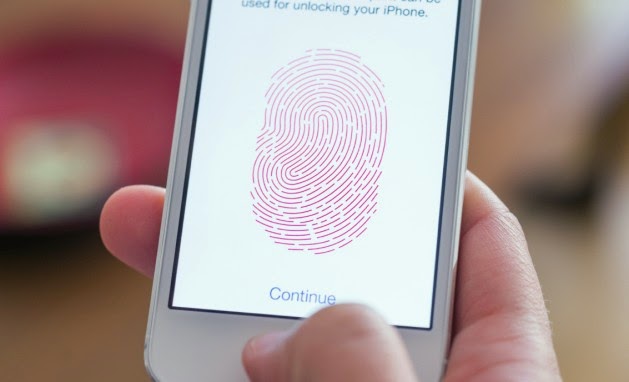
Even your fingerprint isn’t secure enough. Recently the Samsung Galaxy S 5 smart phone introduced a fingerprint scanning technology to access the phone. However there have been some issues that Zach Epstein described in detail. PayPal a mobile payment company doesn’t require a password if the app has already been configured for fingerprint authentication. Just a few weeks old, it has already been hacked. Improved security is a must, but perhaps Samsung rushed into this. It is not clear if this is a minor glitch that can be fixed or if it is a significant problem but what is clear is that we must continue to improve and strengthen the security of personal information.


If some people have their way soon you will not need to go to a psychic to read you palm. As the Wall Street Journal reports some Swedish students have devised another way to expediting and enhancing the mobile payment experience for an individual. Sven Grundberg notes that this new technology is slightly behind fingerprint scanning in terms of development and testing. Although this technology is further behind it is supposed to be just as quick, only taking 5 seconds or so to register, but it has the benefit of greater security than fingerprints.

Based on the insights I received from these two articles there are three action items you should immediately take to be well positioned in the mobile payment world.  The three things that mobile payment companies should do include:

1. Start to move away from old-fashioned passwords – Old fashion passwords with combinations of letters and numbers are ineffective nowadays and can be easily hacked. This is the first step in increasing security is creating more complex passwords.

2. Highly emphasis security and build trust, let a person hold all power - Let’s face it, the person people trust the most is themselves. By allowing the individual customer to control all of the power in terms of securing their information, you are giving the customer exactly what they want. Not only does this increase the security but it builds greater trust with a company. This is the second step in being competitive in the mobile payments world.

3. People want quick accessibility, must be able to keep up with demand – People are always on the go and those companies that can keep up with people are ones who succeed. The average person wants to have immediate access and convenience at the touch of the fingertips. Mobile payments are supposed to be quicker and easier. Typing long and complicated passwords is not what people want. Those who are able to provide instant access will be able to survive and thrive in the ever-changing digital world.

Through research it has been discovered that the most important aspect of mobile payment services that people are concerned with is security. In order for there to be a revolution and mass migration towards the mobile payment industry, people must feel that their information is incredibly secure. Hopefully fingerprints scanners and palm readers can lead the industry to greatness.


Daniel Cohen is a graduating Northwestern student with a focus in Integrated Marketing that will be pursuing a Master’s degree in Management at the Kellogg School of Management next year. If you would like to discuss these issues further please contact him on twitter at @DanCohen102. Thanks.

Friday, May 9, 2014

Ecommerce Entrepreneur: You Can Be the Next “Amazon”

As an Entrepreneur, you know e-commerce has shifted the marketplace and changed customer expectations about the shopping experience. As a graduate student of Integrated Marketing Communications at Medill, Northwestern University I have been investigating e-commerce for startups and have found two articles you will find interesting and helpful.

           Ecommerce is a bear, written by Bonobos CEO Andy Dunn, shows current viable ecommerce strategies and lists out real successful example. Why is bear? Think about Amazon! It is like a bear in this industry – it’s fearless and it’s fierce. The authors observed four strategies in the marketplace to deal with Amazon’s incumbency: proprietary pricing, proprietary selection, proprietary experience, and proprietary merchandise.


(source: bearlegend.com)

           Nowadays everybody is talking about big data. The article “9 Data Sets Every Ecommerce Company Should Measure” written by Scott Gerber gives you the perfect answer about what specific dataset an ecommerce business should focus and analyze. Knowing the strategies of making a good ecommerce business, we need to understand what are the most efficient and effective ways to measure the success. Have a closer look at what user acquisition costs, abandoned carts and ROI are and tweet with your comments!

In reviewing these two articles, I have found three action items you should consider taking.  They are:

• Customer feedback is fundamental and crucial  - Not only does customer feedback help businesses evolve and perfect their product or platform, listening to customers can also have a "juggernaut" effect when it comes to building a business.

 Invest in mobile  - Remember this is a trend. Research shows that 80% of smartphone users use their devices to shop online. In the meanwhile, it’s easy to track customer’s behavior over mobile devices and it is also a better way to communicate with the customers.

• Take advantage of social media   - Building up good networks on social media sites can help you drive traffic and target your customers. What is more powerful is that this is the best way to create word-of-mouth buzz for ecommerce business.

         All in all, customer is always the key to start and improve your business. Try to think and act from the perspective of the customers will always give you a bigger possibility to win the advantages and eventually win the market in ecommerce.


Joshua Chen is an MS candidate in Integrated Marketing Communications at Northwestern University. He has previously worked as marketing specialist at a consulting firm in Australia and a law firm in China. Follow Joshua’s Twitter @joshuaaachennn


Wednesday, May 7, 2014

Luxury Marketers: Big Data from the boutique? New technologies help best serve your customers

  
Digital is radically changing the consumption pattern of luxury goods consumption in every way. As a graduate student studying the Integrated Marketing Communications in Northwestern University, I’ve always been interested in learning the marketing trends within luxury and how the industry would leverage technology as well as digitalization to make the best outcome. For those luxury managers who are poised to offer top-tier services as their merchandise, here I found two inspiring articles that would help you make it happen.

According to a recent report from McKinsey (see "Digital luxury experience: Keeping up with changing customers" by Linda Dauriz), the future of digital luxury hasn’t been bright ever — online luxury sales are growing twice as fast as the overall market. The report demonstrates that, in 2013, digital interactions directly generated more than 13% of offline luxury sales and influenced another 28% of sales. Also it shows that more than 45% of luxury purchases are influenced by what shoppers find in the digital universe. From all these mind-blowing numbers we can obviously feel the power of digitalization in terms of boosting luxury sales in today’s world. But, what’s more noteworthy is that although pure online transactions are growing twice as fast as the sector as a whole, they represent only about 4% of the total luxury goods market. Shoppers use the digital platform more for search and comparing purposes rather than making purchase — especially for luxury consumers who are going for more expensive or custom products. However, engaging, easy-to-navigate mobile platforms would play an important role to drive store traffic to the physical boutiques, since shoppers are more likely to use smartphones for commuting info (shopping or dining). More than half of their searches of products are on mobile devices, and by the time they actually enter the store, they’ve already gathered detailed information about the products they’re about to purchase.


Another way that digitalization could help in in-store sales is through in-store facial recognition. The article Big Data is Watchingby Sophie Doran has introduced the state-of-the-art method of tracking in-store consumer data by following wi-fi signals and by using surveillance softwares to profile customers. As the article elaborates, Nordstrom’s experiment used video surveillance and signals from shoppers’ cellphones and apps to learn information as varied as their sex, how many minutes they spend in various parts of the store and how long they look at merchandise before buying it. Moreover such detailed info would be stored permanently and activate globally through the facial recognition tools. All the data gathered from this “in-store monitoring”, combined with data gathered from digital platform, can provide marketers valuable information about customer preferences so as to guide them to change store layouts and offering more customized services, creating ever satisfying in-store customer experience throughout the world. However, the legal issue has been brought up with it, suspending the experiments in Nordstrom after months. Generally in customers’ minds, personal data is the price they pay online for the ability to quickly compare pricing and arrange convenient delivery. Whereas they feel that this “give to get” mechanism won’t apply when it comes to in-store data collection — When retailers try and collect similar data from consumers in a physical retail environment, they become unnerved, with the key criticism of in-store data collection being lack of consent.

In reading the above 2 articles, I would suggest 3 actions for luxury marketers regarding how to best leverage big data to stay at the cutting edge and generate higher revenue benefited from what you have:
  
    1. Perfect in-store experience & use digital as catalyst. Digital is serving more as the helper for customers to purchase wisely, but boutiques are still where they make purchases. Deeper engagement with customers digitally, however, can increase store traffic to generate higher revenue.

     2. See the value of in-store data. The value of In-store experience for customers determines the value of monitor in-store behaviors for marketers. Combine in-store data with online transaction, marketers can profile best-valued customers more accurately and offer them more satisfying purchase experience.

     3. Never overlook the legitimacy of data collection. The dispute over the legitimacy of gathering user data is more serious than ever. Complaints and criticism around “big data or big brother” have been and will still be the topic. Therefore, marketers have to notify customers before getting any access to data in order to keep away from troubles.


The luxury market is seen as the most passion-driven and customized market. The nature of the industry has already revealed its close relationship with advanced data analysis. As the new technology popularizes in application, the deeper than ever understanding of each customer would open a brand new page in terms of building customer-brand relationship, and thus create a much more efficient business model to generate a win-win situation for both brands and customers. Let’s look forward to it.


Cerise Miao is an MS candidate in Integrated Marketing Communications at Northwestern University, majoring in marketing analytics and brand strategy. Majored in economics in college, she is interested in music, movies, languages and fine arts. She has passion for luxury and for data analysis. 
Follow Cerise @CeriseMiao