Showing posts with label "Consumer Packaged Goods". Show all posts

Tuesday, April 30, 2019

Design Team Leads: 3 Strategies to Lead Your Team Towards Sustainable Solutions

Designers have already begun to lead the sustainability movement, working to develop long term design solutions with sustainability in mind. As a journalism and design student at Northwestern University, I have found two articles that offer valuable insight into sustainable design.


Elizabeth Segran’s article “The shockingly simple way to make packaging more sustainable” published on Fast Company explores the creative way in which many cleaning companies have cut down on waste: removing water. By removing this component from the design of certain cleaning products, companies have been able to reduce the plastic and packaging they must use to hold and transport products. Water is a component that can be added by consumers at home. In cutting this out of the products design companies have been able to reduce the size of products, in turn reducing the resources needed to package and ship them.
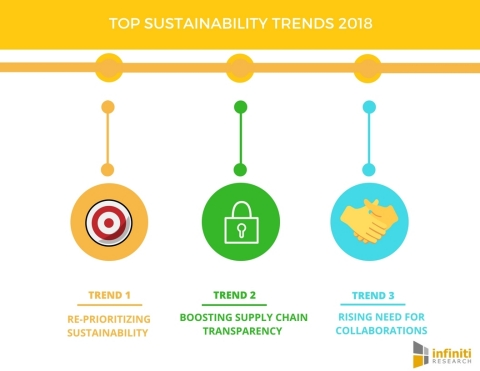

Renee Yardley's article “The state of recycling: What does it mean for paper?” published on Sustainable Brands examines consumer trends in sustainability. Today, consumers care more about recycling and are extremely mindful of their environmental impacts. Nevertheless, the average American still produces more than four pounds of trash daily, according to the EPA. Consumers want to help the environment but don’t necessarily know how to do it most effectively. Yardley also points out that consumers want companies to become leaders in sustainability as well, and hope they will work together to do so.

Based on these articles and my learnings from Northwestern, I have developed three recommendations for design leads to consider when working to lead your team towards a sustainable design solution:
  • Cut components - Reduce waste production by simplifying products through the removal of unnecessary components, such as water.
  • Find a partner - Collaborating with other green partners will allow designers to be more innovative in sustainable design and reduce environmental impact.
  • Educate consumers - It’s not enough to simply create sustainable products, educate consumers on disposal best practices in order to maximize the environmental effect.
Next time you're working on a design project, consider these three recommendations to create more sustainable solutions for the future.

My name is Kelli Nguyen. I am a senior at Northwestern University graduating this spring with a degree in Journalism, Design, Integrated Marketing Communications, and History. My passion lies in the intersection of communication and design. In the past, I have worked for BMW Technology and LinkedIn, and I aim to continue to work in tech improving communication strategies between companies and consumers. Find me on LinkedIn and Twitter.

Wednesday, February 11, 2015

CPG Executives: Branding Authenticity, the Key to Make Your Brand Stand Out Today

As consumers have access to more information about brands in today’s world, brand authenticity becomes a more and more critical point of difference for consumer-packaged goods.  But with consumers gaining more power in their relationships with brands, how to build an authentic brand image in their perception?

As a graduate student in the Northwestern Medill IMC program (@VitaminIMC) with an interest in brand management, I have identified two articles that can help CPG branders to successfully make your brand authentic.

In the article “Customers Demand These 2 Fundamental Aspects of Authentic Brands”, Jim Joseph (@JimJoseph ), the President of Cohn & Wolfe, pointed out that purpose and protection are the 2 aspects consumers care most about brand authenticity, especially for entrepreneurial marketing. Based on his research, 76 percent of U.S. consumers think brands should have a story of what they believe besides making money. For protection, consumers not only want brands help them avoid harms, they also assume brands should protect them. 78 percent of consumers would stop buying the brands when they don’t feel safe with the brands. The conclusion is that to build an authentic brand image, marketers need to show transparency in business practice in consumer communication.


(Picture source: marketoonist @tomfishburne)

While purpose and protection are essential in building brand authenticity, Matthew Hutson’s(@matthewhutson(silverjacket)) article “Quenching Consumers’ Thirst for ‘Authentic’ Brands” argues that heritage, sincerity and commitment to quality are 3 dimensions consumers see as brand authenticity. It is also concluded in the article that these 3 dimensions are linked with each other. To make consumers trust your brand, marketers should figure out a way of telling the brand story so that consumers can feel the connection between them and the brand.

Based on the 2 articles and my graduation study in Medill IMC Program, there are 3 action items I recommend you to consider.
  • Listen To Consumers – Brand authenticity has different meanings to different consumers. Abandon your assumption and listen to what consumers think of it.
  • Tell A Good Story – Authentic brand doesn’t mean being bland. Find a cultural essence of your brand as the heritage and tell consumers a good story to show them a transparent business process.
  • Grow On Your Heritage – For those brands already have heritage, root the communication in it while grow with your consumers as the social environment change. Adjust the meaning of the brand and use social media for efficient communication. 


In this versatile market environment, if your brand is not perceived as authentic, it is fatal. To stand out in the homogeneous world, CPG brands really need to consider the proposals mentioned above. Keep in mind that transparency and openness will always be the base of successful authentic brand building.


 “Rain”, Xinwei Yang is a graduate student pursuing her M.S. in Integrated Marketing Communication at Medill School of Journalism, Northwestern. She will be graduated in Dec. 2015. She is a marketer specializing in branding and interactive marketing with a strong passion in the consumer packaged goods industry. You can reach Rain on Linkedin or follow her on Twitter @Rain_yxw.

Tuesday, May 13, 2014

Brand Mangers: Stay Competitive & Gain Market Share


As a Brand Manager, your brand essence is the leading force in differentiating your brand from competitors and creating a positive perception in the minds of consumers. Through Northwestern University’s Medill IMC program, I have learned the importance of establishing a brand image and voice that will keep consumers intrigued and have found articles reiterating the importance of  these strategies when managing a brand.

One article that gave a deeper understanding of the importance of a messaging strategy is Develop Your Voice: Three Keys to Killer Messaging. This article discusses how marketers must go beyond being noticed has having a great logo and focus on the overall image their brand represents. Strategic messaging needs to be considered when trying to reach prospect consumers. The overall goal is to get these consumers to know, like and trust your brand. If the strategy is implemented correctly, consumers will directly choose your brand when a need arises because they will feel comfortable with your brand voice and image.

While building trust among your audience through messaging strategies, it is also imperative to engage your audience through digital platforms as discussed in Six Tips to Get Your Consumers Talking About Your Brand at the Dinner Table. This article discusses how competitive advantage demands consumers attention. The power of social media enables consumers to feel as if they’re part of your brand. Empowering these consumers will only lead to brand ambassadors who will talk favorably.
www.pinoysalapionlinewithsusana.biz

After reviewing these articles, I have found three key important aspects that will aid you in developing a brand voice that is powerful. These three tips will help you develop a brand image that will connect with your audience and increase your brand awareness:
  • Authenticity Is King: Complete an overall assessment of your current brand and messaging strategy to determine if it’s authentic.
  • Focus on Innovative Messaging: Develop, or continue to develop, a strategic messaging strategy that will help you stand out from competitors and be on the minds of target consumers.
  • Profit from Social Media: Use social media as a tool to foster a deeper relationship with consumers.
As a Brand Manager, every form of content must convey your brand image and build your brand essence. Implementing the above actions items will not only distinguish your brand from competitors, but will build a deeper relationship with your audience. Executing these strategies will ultimately be a reward for your brand because it will create loyal consumers, which will lead to your brand possessing a strong position in the marketplace.


Bianca M. Harris is a graduate student at Northwestern University in Medill’s Integrated Marketing Communications program. She is the Social Media Director of Vitamin IMC. Bianca can be reached on Twitter at @biancamharris.

Monday, May 12, 2014

Innovative Packaging: Can this be the most effective form of food marketing?

As a marketing executive for food items, you understand the importance of packaging and how it enhances the appeal of the product. As a senior in the Northwestern Medill IMC program, I have found two articles that show the importance of packaging when it comes to marketing food products found in grocery stores.


In Effective Food Packaging Design: The Aisle as a Runway, Stephanie Silver brings up various points that reiterate that packaging for food items is of utmost importance when it comes to what drives consumers to make a purchase in the grocery store. This article highlights the fact that most food items in a grocery store are low involvement and most consumers spend less than a few seconds when choosing a food product. Since the average consumer is making many low involvement decisions while in the store, packaging has come to be very important. Packaging can not only attract consumers’ attention, but also promote certain messages that can appeal to the emotional side of consumers. The way a product is packaged is an easy way for food marketers to tell the consumers about the product inside and attract them to buy the product. When there are various options at around the same price for each item in a grocery store, packaging can be the factor that makes the consumer choose your product.


http://nishitau.soup.io/tag/food


Ted Mininni builds an effective argument on the premise that 85% of human decisions are governed by the sub conscious in his article: Appeal to the subconscious through package design. So, it is not effective for food packaging to list feature and benefits, but rather package the product in a way that appeals to the consumer on an emotional and deeper level. This is not an easy feat to accomplish because each brand has a target consumer, but also wants to reach out to consumers who would normally not purchase their product. Food packaging decision makers need to do extensive research in order to get a glimpse into the consumers sub conscious and this can then be translated on to the packaging which is the most tangible representation of a brand.


From these two articles, here are some ways to effectively package food items in order to attract consumer and appeal to their sub conscious emotional side

1. Research – dig deeper into what appeals to consumers emotionally. Find out if consumers value the price, quality, taste, or something else about your product and then highlight that through packaging.
2. Promote Message – use packaging an easy means to show what your product and brand stands for. Packaging can be used to promote a brands values or a certain message that they are trying to relay to consumers. For example, if the brand is moving towards an environmentally friendly stance, they can use sustainable material to package their products.
3. Attract Attention – this may be the most important part of marketing through packaging. When there are many options in a grocery aisle for the same kind of product, your brand should distinguish itself from the others through packaging. By using unique and innovative colors, shapes, fonts, etc consumers will be more likely to quickly decide to make a low involvement purchase.


Without effective packaging, your product will fail on the shelf. Even in the midst of marketing through ads in magazines or TV commercials, the most important form of marketing a food item comes down to the grocery aisle and what will make that consumer pick your product off the shelf. Innovative packaging will communicate a lot about your product and brand without using excessive wording and will also attract the consumer to put your product in their shopping cart.


Devika Ghosh is a senior at Northwestern University. She is studying Economics and also pursuing the Integrated Marketing Certificate. Devika is hoping to explore opportunities in the CPG realm and has had internship experiences with food related companies such as FIJI Water and the Food Group. Contact Devika on Twitter @DevikaGhosh3 or through LinkedIn to continue this conversation.