Showing posts with label Journalism. Show all posts

Tuesday, April 30, 2019

Design Team Leads: 3 Strategies to Lead Your Team Towards Sustainable Solutions

Designers have already begun to lead the sustainability movement, working to develop long term design solutions with sustainability in mind. As a journalism and design student at Northwestern University, I have found two articles that offer valuable insight into sustainable design.


Elizabeth Segran’s article “The shockingly simple way to make packaging more sustainable” published on Fast Company explores the creative way in which many cleaning companies have cut down on waste: removing water. By removing this component from the design of certain cleaning products, companies have been able to reduce the plastic and packaging they must use to hold and transport products. Water is a component that can be added by consumers at home. In cutting this out of the products design companies have been able to reduce the size of products, in turn reducing the resources needed to package and ship them.
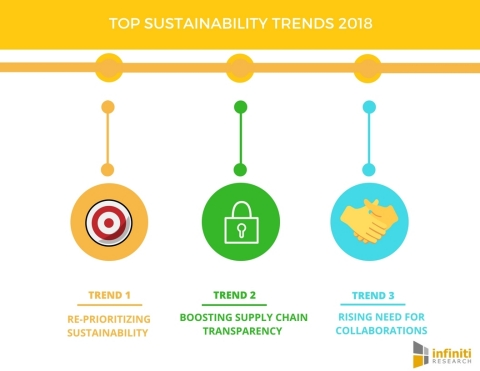

Renee Yardley's article “The state of recycling: What does it mean for paper?” published on Sustainable Brands examines consumer trends in sustainability. Today, consumers care more about recycling and are extremely mindful of their environmental impacts. Nevertheless, the average American still produces more than four pounds of trash daily, according to the EPA. Consumers want to help the environment but don’t necessarily know how to do it most effectively. Yardley also points out that consumers want companies to become leaders in sustainability as well, and hope they will work together to do so.

Based on these articles and my learnings from Northwestern, I have developed three recommendations for design leads to consider when working to lead your team towards a sustainable design solution:
  • Cut components - Reduce waste production by simplifying products through the removal of unnecessary components, such as water.
  • Find a partner - Collaborating with other green partners will allow designers to be more innovative in sustainable design and reduce environmental impact.
  • Educate consumers - It’s not enough to simply create sustainable products, educate consumers on disposal best practices in order to maximize the environmental effect.
Next time you're working on a design project, consider these three recommendations to create more sustainable solutions for the future.

My name is Kelli Nguyen. I am a senior at Northwestern University graduating this spring with a degree in Journalism, Design, Integrated Marketing Communications, and History. My passion lies in the intersection of communication and design. In the past, I have worked for BMW Technology and LinkedIn, and I aim to continue to work in tech improving communication strategies between companies and consumers. Find me on LinkedIn and Twitter.

Sunday, October 28, 2018

Sports Journalists: 3 Tips to Write the Best Investigative Piece

The sports world is full of stories waiting to be written. Some storylines nearly write themselves; others require a journalist to research, challenge and agonize over an issue that may be buried layers beneath common knowledge. As a sports journalist in the Medill School of Journalism at Northwestern University, I have identified two articles that will help you write a strong investigative sports journalism piece.

In a Ringer article titled The Curious Case of Bryan Colangelo and the Secret Twitter Account, author Ben Detrick examines the numerous Twitter accounts that were linked to now-former Philadelphia 76ers president of basketball operations Bryan Colangelo. The Ringer received an anonymous tip about the accounts in February. They ran the story in May after months of scrutinizing and examining archived tweets. Detrick had a story on a longtime NBA executive publicly criticizing his past and present players, debating the decisions of his coaching staff, telegraphing a trade and disclosing players' medical information. It would have been easy to hastily run with the storyline instead of risk another media outlet running the story. But Detrick did his due diligence and contacted the 76ers' organization, even receiving a comment from Colangelo himself which is included in the piece. You can draw your own conclusion from the two exchanges: Not only did the Sixers confirm that Colangelo was the owner of one of the five accounts in question, but the three that were not mentioned simultaneously went dark shortly after he was told of The Ringer's inquiry." Detrick presents the information and lets the reader make their own interpretation based on the evidence provided.


                                                                   Source: The Ringer


In an investigative piece for ESPN titled For Kraft, Brady and Belichick, is this the beginning of the end?, Seth Wickersham writes about a growing rift between the trio responsible for bringing five Super Bowls to New England. Wickersham explores a concept unthinkable to most, the vulnerability of a dynasty. He writes about Brady's desire for his potential successor Jimmy Garoppolo to be traded and Bill Belichick's uneasiness at the decision. "For almost two decades, Belichick has managed to subvert the egos of his best player, his boss and himself for the good of the team, yielding historic results. This year, though, the dynamics have been different." Saying this, Wickersham establishes early that the reader should not doubt the topic of his investigative piece. The rift may not be common knowledge, but it has been existent for years.

Based on these two articles and my experiences as a sports journalist at Northwestern University, I have developed three crucial tips to consider when you embark on your own investigative sports journalism piece.
  • Conduct extensive research. Readers should not question if you are the authority on the topic. Doing the necessary research - and then some - will ensure your investigative piece will answer questions from every possible angle.
  • Relentlessly pursue truth. It is easy to get deterred and discouraged when writing an investigative piece. There will be dead ends and seemingly promising sources will refuse to talk. Keep pushing.
  • Be patient. It is better to be second and publish the correct, best story than to be first and leave out information. Investigative pieces take time. Don't rush. The reward will be worth it.


When you begin your next investigative sports journalism story, remember these three tips throughout the entire process. 


Martin Oppegaard is a senior at Northwestern University studying Journalism, Business Institutions and Integrated Marketing Communications. He covers Northwestern athletics for InsideNU and the San Francisco Giants for MLB.com.

You can connect with Martin on Twitter or LinkedIn.

Restaurateurs: 3 Ways to Make Social Media Work for You

As a restaurateur, understanding how to use social media and appeal to influencers can greatly increase your restaurant’s success and prominence in the over-saturated food market. As a food Instagram influencer with more than 25,000 followers, I found two articles on the foodie influencer scene that can help you navigate the digital space. 

The first piece, “Instagram has completely changed the way we eat and that's not a good thing” comes from INSIDER’s Food vertical. In it, Joanna Fantozzi details the ways in which Instagram has changed what, and where, we eat. Fantozzi cites recent trends like rainbow bagels, over-the-top milkshakes, unicorn themed food and excessively cheesy burgers. In the Instagram age, aesthetically-pleasing food has become somewhat of a status symbol (waiting in a two-hour line for a bagel), as well as a huge factor consumers consider when deciding where to get their next meal. Though these “Instagram dishes” often don’t taste as good as they look, the aesthetic of food is now a serious consideration for many chefs who hope to go viral and drive foot traffic. 

Source: Hinterhaus Productions / Getty Images

In the second article, “Restaurants rise to fame over Instagramable food,” Kaya Yurieff of CNN Business expands on the importance of Instagram in restaurants’ success. Yurieff writes, “The restaurant business isn't just about how good the food tastes – atmosphere and service are important, too. But increasingly, social media is taking on a bigger role and influencing food options offered, restaurant design and marketing.” The best way to stand out, according to this piece, is to serve outrageous, out of the ordinary dishes that actually taste good. To continually stay relevant, restaurants must keep innovating and creating new stand-out, trendy foods – as well as have strong branding and design. If done right, “a strong social media presence can help restaurants and other businesses engage with a much wider audience and attract new customers they may not have had access to before.” 

Based on these articles and my experience as a food influencer, I’ve developed three action items you should consider when trying to optimize your restaurant for social media. 

Be Original – By now, foodies have seen a million crazy milkshakes on their feed; instead of following in the footsteps of past trends, create an innovative dish that hasn’t been done before.

Make It Tasty –  Obviously, the food has to look good, but that doesn’t mean taste doesn’t matter; beautiful food will bring customers in, but delicious food will keep them coming back.

Don’t Skimp Elsewhere – Just as important as the pretty food is the décor and ambiance of your restaurant; add a cool mural, make the bathroom eye-catching or use unique table clothes for even more social coverage.

The next time you’re thinking about leveraging Instagram for your restaurant, remember the above tips to creating a lasting social impact.   

Lucy Dwyer is a senior at Northwestern University studying Journalism, Integrated Marketing Communications and Sociology. You can find her on Twitter and LinkedIn, or follow her food adventures on Instagram as @thefoodiefriend.  

Tuesday, May 8, 2018

Game Designers: 3 Recommendations to Improve Diversity & Inclusion Through LGBTQ+ Representation


            For game designers, creating narratives that appeal to the diversifying audience of gamers is crucial to building and maintaining a strong audience.  As a Northwestern student specializing in journalism and marketing for digital media (and a lover of video games for nearly my whole life), I have found 2 articles on LGBTQ+ representation in particular which will interest you.

            Nielsen conducted a study in 2015 analyzing how marginalized communities perceive and evaluate the representation of their identities in games.  According to their article, "How Diverse are Video Gamers - and the Characters They Play?," which published data on the study, 65% of LGBTQ+ gamers disagree with the statement that “all sexual orientations have ample representation in games.”  Furthermore, despite their dissatisfaction with representation, the article also states that 65% of LGBTQ+ consumers play video games, edging out heterosexual consumers (63%).  Finally, the article suggests that “considering all demographics when creating video game characters, as well as in marketing efforts, may help the gaming industry reach their audience in more meaningful and personal ways.” 

            
A still from the LGBTQ+-friendly game "Night in the Woods."  One of the characters is shown saying "I think my total gayness comes through to the discerning reader."
A still from the LGBTQ+-friendly game NIght in the Woods. 
(source: 
  https://medium.com/anomalyblog/night-in-the-woods-generational-divide-and-queerness-55b89269891f )

            The second article, “Why I’m afraid video games will continue to ‘bury its gays,’” was published more recently – August 2017 – on Polygon.  Here, the author Khee Hoon Chan analyzes several tropes found in using queer characters in video games.  She examines queerbaiting, the tactic of pairing off same-gender characters as a “potential” couple to satisfy LGBTQ+ audiences, and “burying your gays,” or killing off LGBTQ+ characters at an unbalanced rate compared to straight characters.  She ends the article by urging for more “hopeful and uplifting” narratives for LGBTQ+ characters.  

            Based on my review of the two articles and my studies at NU on audience development in marketing, I have created 3 recommendations to use when you are thinking of how to better serve the LGBTQ+ community in your games.
1.     Know Your Audience – the LGBTQ+ gaming community is strong (and getting stronger by the day) - It’s time more triple-A games reflected that representation.
2.     Hire Diverse Designers – Who better to design authentic LGBTQ+ narratives than members of the community itself?
3.     Emulate Indie Talent – Plenty of massively successful indie games (Gone Home, Undertale, Night in the Woods) center LGBTQ+ characters; recognize good talent and take notes!

            As a game designer use these recommendations next time you’re thinking of inclusion and diversity in your games!


Jayden Zvonar is a graduating senior at Northwestern studying Journalism with a certificate in Integrated Marketing Communications.  He also specializes in sociology & gender and sexuality studies.  Please feel free to reach out to him on Twitter or LinkedIn!