Showing posts with label "Design". Show all posts

Tuesday, April 30, 2019

Design Team Leads: 3 Strategies to Lead Your Team Towards Sustainable Solutions

Designers have already begun to lead the sustainability movement, working to develop long term design solutions with sustainability in mind. As a journalism and design student at Northwestern University, I have found two articles that offer valuable insight into sustainable design.


Elizabeth Segran’s article “The shockingly simple way to make packaging more sustainable” published on Fast Company explores the creative way in which many cleaning companies have cut down on waste: removing water. By removing this component from the design of certain cleaning products, companies have been able to reduce the plastic and packaging they must use to hold and transport products. Water is a component that can be added by consumers at home. In cutting this out of the products design companies have been able to reduce the size of products, in turn reducing the resources needed to package and ship them.
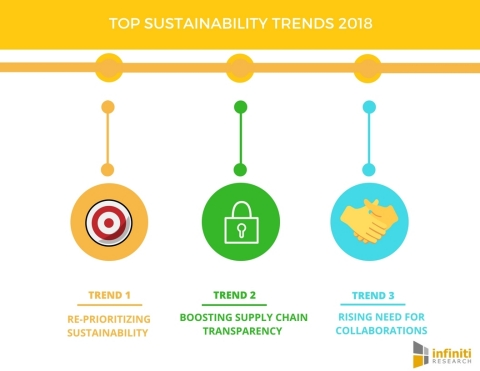

Renee Yardley's article “The state of recycling: What does it mean for paper?” published on Sustainable Brands examines consumer trends in sustainability. Today, consumers care more about recycling and are extremely mindful of their environmental impacts. Nevertheless, the average American still produces more than four pounds of trash daily, according to the EPA. Consumers want to help the environment but don’t necessarily know how to do it most effectively. Yardley also points out that consumers want companies to become leaders in sustainability as well, and hope they will work together to do so.

Based on these articles and my learnings from Northwestern, I have developed three recommendations for design leads to consider when working to lead your team towards a sustainable design solution:
  • Cut components - Reduce waste production by simplifying products through the removal of unnecessary components, such as water.
  • Find a partner - Collaborating with other green partners will allow designers to be more innovative in sustainable design and reduce environmental impact.
  • Educate consumers - It’s not enough to simply create sustainable products, educate consumers on disposal best practices in order to maximize the environmental effect.
Next time you're working on a design project, consider these three recommendations to create more sustainable solutions for the future.

My name is Kelli Nguyen. I am a senior at Northwestern University graduating this spring with a degree in Journalism, Design, Integrated Marketing Communications, and History. My passion lies in the intersection of communication and design. In the past, I have worked for BMW Technology and LinkedIn, and I aim to continue to work in tech improving communication strategies between companies and consumers. Find me on LinkedIn and Twitter.

Monday, May 9, 2016

Graphic Designers: 3 Ways To Rethink Your Work Process

As a graphic designer, you know the importance of developing your unique workflow and process. Some art classes I’ve taken have taught specific, almost formulaic ways to approach work. Others have emphasized forming your own ways of working through experimentation. I’m interested in how different this work process can be for two graphic designers. As a Northwestern undergraduate student interested in design, I found two articles that discuss the relationship between design and work process.

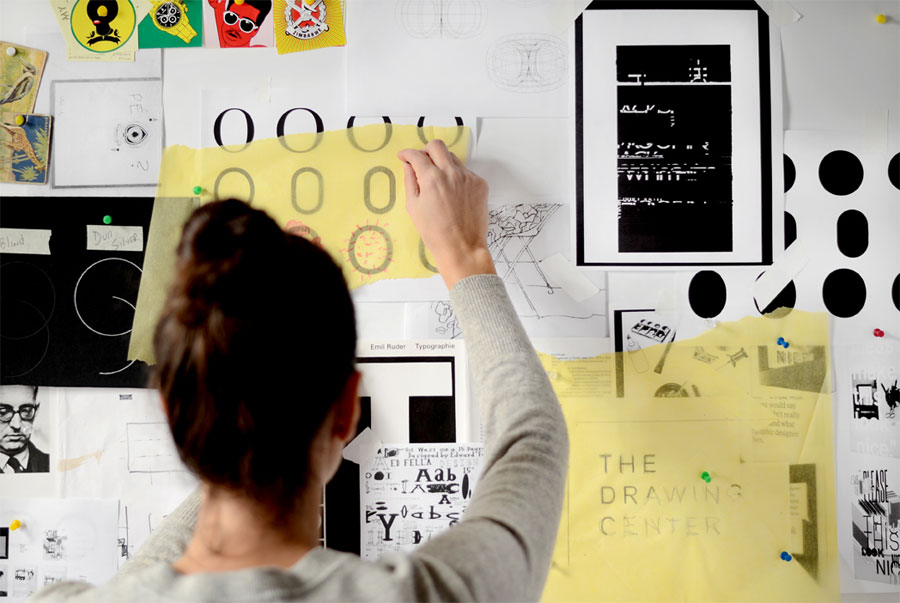
An AIGA review by Laura Bolt discusses an interesting exhibition at The Drawing Center called “Please Make This Look Nice.” The exhibition explores the design process. There is the logical process clients are presented with. Then there is the real process that’s taking place with each project, one that usually doesn’t conform to a clear step-by-step progression. That’s the process that is most interesting because it’s so influenced by every designer’s “personal quirks.” Making things is often illogical. It involves tangents, and this exhibition explores embracing the process behind the process. It calls attention to the fact that making things doesn’t have to be so precise, and embracing the way you naturally work is important.


A second AIGA article by Madeleine Morley features Tribero design studio partners David Heasty and Stefanie Weigler, who give their advice about branding. They emphasize the importance of iterations and trying out different solutions to problems to see what sticks. Heasty and Weigler also emphasize how important concept is, which can be difficult to grasp when the outside world is so focused on aesthetics. Concept should drive the work, especially in branding. Branding, they say, is about creating an entire visual experience for the consumer. Your process has to start with concept to succeed — it can’t just look pretty.
After reading these articles, I started thinking more about my own process. I developed the following three action items based on my undergraduate experience and the information in the articles:
  1. Try multiple solutions - Approach the design problem from multiple angles, then build off your best option.
  2. Trust your process - Embrace oddities in the way you work — it can lead you to unique solutions.
  3. Concept is everything - Remember your work should be visually compelling, but always lead back to something crucial about the brand.

Ali Tomek is a student at Northwestern University studying history and integrated marketing. She is currently studying digital media in a social marketing specialization course, and plans to attend SAIC after graduation to study visual communications design. You can find her on Twitter.

Monday, May 12, 2014

Innovative Packaging: Can this be the most effective form of food marketing?

As a marketing executive for food items, you understand the importance of packaging and how it enhances the appeal of the product. As a senior in the Northwestern Medill IMC program, I have found two articles that show the importance of packaging when it comes to marketing food products found in grocery stores.


In Effective Food Packaging Design: The Aisle as a Runway, Stephanie Silver brings up various points that reiterate that packaging for food items is of utmost importance when it comes to what drives consumers to make a purchase in the grocery store. This article highlights the fact that most food items in a grocery store are low involvement and most consumers spend less than a few seconds when choosing a food product. Since the average consumer is making many low involvement decisions while in the store, packaging has come to be very important. Packaging can not only attract consumers’ attention, but also promote certain messages that can appeal to the emotional side of consumers. The way a product is packaged is an easy way for food marketers to tell the consumers about the product inside and attract them to buy the product. When there are various options at around the same price for each item in a grocery store, packaging can be the factor that makes the consumer choose your product.


http://nishitau.soup.io/tag/food


Ted Mininni builds an effective argument on the premise that 85% of human decisions are governed by the sub conscious in his article: Appeal to the subconscious through package design. So, it is not effective for food packaging to list feature and benefits, but rather package the product in a way that appeals to the consumer on an emotional and deeper level. This is not an easy feat to accomplish because each brand has a target consumer, but also wants to reach out to consumers who would normally not purchase their product. Food packaging decision makers need to do extensive research in order to get a glimpse into the consumers sub conscious and this can then be translated on to the packaging which is the most tangible representation of a brand.


From these two articles, here are some ways to effectively package food items in order to attract consumer and appeal to their sub conscious emotional side

1. Research – dig deeper into what appeals to consumers emotionally. Find out if consumers value the price, quality, taste, or something else about your product and then highlight that through packaging.
2. Promote Message – use packaging an easy means to show what your product and brand stands for. Packaging can be used to promote a brands values or a certain message that they are trying to relay to consumers. For example, if the brand is moving towards an environmentally friendly stance, they can use sustainable material to package their products.
3. Attract Attention – this may be the most important part of marketing through packaging. When there are many options in a grocery aisle for the same kind of product, your brand should distinguish itself from the others through packaging. By using unique and innovative colors, shapes, fonts, etc consumers will be more likely to quickly decide to make a low involvement purchase.


Without effective packaging, your product will fail on the shelf. Even in the midst of marketing through ads in magazines or TV commercials, the most important form of marketing a food item comes down to the grocery aisle and what will make that consumer pick your product off the shelf. Innovative packaging will communicate a lot about your product and brand without using excessive wording and will also attract the consumer to put your product in their shopping cart.


Devika Ghosh is a senior at Northwestern University. She is studying Economics and also pursuing the Integrated Marketing Certificate. Devika is hoping to explore opportunities in the CPG realm and has had internship experiences with food related companies such as FIJI Water and the Food Group. Contact Devika on Twitter @DevikaGhosh3 or through LinkedIn to continue this conversation.