Showing posts with label advertisements. Show all posts

Tuesday, May 8, 2018

CMOs: Three Action Items to Improve Your Marketing to Millennials

Choosing a target market to advertise to can sometimes be challenging. With their immense and ever-growing purchasing power, millennials are becoming more and more of a target for advertisers. How can we best market products and services to a generation of consumers with short attention spans, expressive tendencies, and little interest in traditional ads? 

By KellyEhlers – featured on Forbes, June 27, 2017

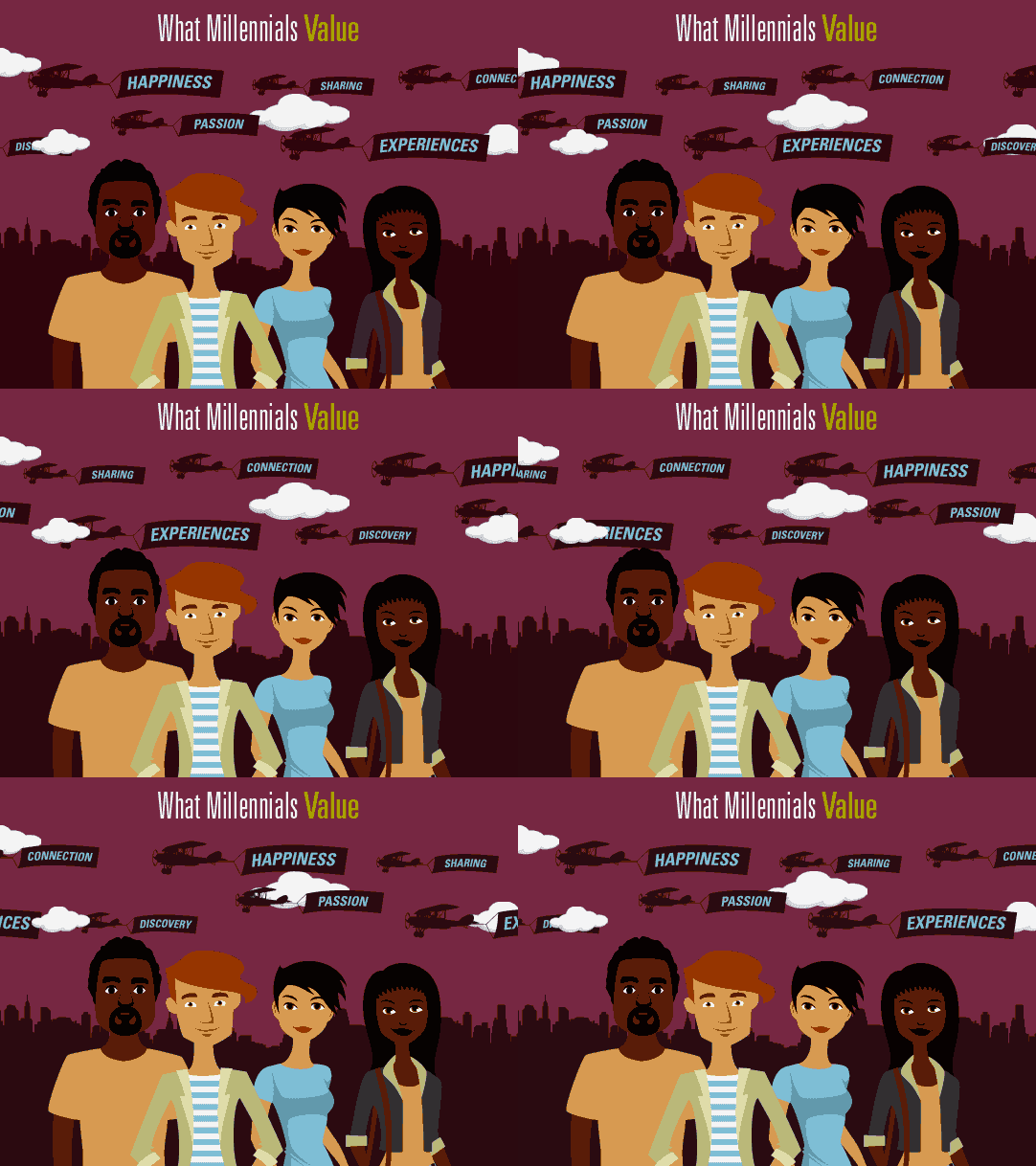
Millennials are digital natives who grew up with technology. They are a very distracted group, but their tendency to multitask might be a positive – they are constantly switching between platforms, which makes it more likely that they’ll see an advertisement. Because they’re a very diverse group, it’s a challenge to catch all of their attentions at once. When it happens, though, it’s all worth it.

Source: giphy.com

By azfar – featured on SEOPressor, December 29, 2016

This article considers some of the characteristics of millennials. They look up to individuals instead of brands; reject traditional ads; are skeptical, socially-influenced, expressive, anti-establishment; and have short attention spans. They value honest advertising, reviews, and when ads are created specifically for them. They don’t just trust any ad, so we have to cater to their wants and needs.

Based on my review of the two articles and my studies at Northwestern, I've created three action items to remember the next time you think about marketing to millennials. 

      Pay attention.
o   We need to constantly be aware of how millennials’ preferences are changing and focus on what they want.
·      Advertise smartly.
o   Millennials do research, read reviews, weigh pros and cons, and go to their friends for advice when purchasing – we need to be honest and open when we advertise to them.
·      Trust the youth.

o   Millennials are the largest generation in the world, and we need to listen to what they want.


      Estie Gelman is a junior at Northwestern University studying Psychology, Integrated Marketing Communications, and Business Institutions.

Monday, May 11, 2015

Battle for the Social Screen: The Future of Facebook, YouTube, and You

As our culture moves quickly to video content over print, brands must face the reality that choosing the wrong video platform could make or break their future. Video content isn’t just a plus for a consumers; it has now become a requirement. Brands are expected to have hours of online video content from witty commercials to product demonstrations to “about us” films. From my experience studying Integrated Marketing Communications at Northwestern University and my time at a digital agency, I have seen the incredible results video content can produce. However, these results can vary drastically if the right content is in the wrong place. Your need to determine where the best place for your content is or your brand could be left in the dust. 

Right now there are two key players in video content: YouTube and Facebook. YouTube is the historically dominant platform. It is the second largest search engine in the world and completely revolutionized video content. For most brands, this is where their content is being shown and uploaded. Advertising prices are cheaper and with YouTube’s immense user base, they are likely to be seen by more people. While YouTube may cheaper and bigger now, Facebook is on the rise. Facebook is growing its video capabilities and has three times more videos with over 1 million views. While it isn’t the go-to video platform (yet) and has fewer videos, more videos tend to go viral. This is partly because Facebook has more advanced targeting technology. This is partly why advertising comes at a premium cost six times that of YouTube.


The key difference between the two at the moment is the difference between YouTube’s skippable feature for advertisements and Facebook’s autoplay. Experts say while YouTube visitors are more likely to sit through an ad because they are there to watch videos, watching an ad on Facebook means they are signed into their account, which means you can learn a lot more about them. This means a view on Facebook gives far more information than one on YouTube. However, this information comes at a price. On Facebook you may end up paying for people who aren’t actively watching your ad, whereas on YouTube the skippable feature means you only pay for what people actually watch.

When it comes time to pick a platform you need to ask yourself these three questions:

  • Which is more important to me, an accurate cost per view or accurate targeting?
  •  What is the goal of this content? Just number of views or is there a call to action?
  • Where is my audience now? Are they staying there or moving elsewhere?
If your organization is new to video and want to get the most bang for their buck, YouTube is the sensible choice. You can reach a big population of people and only have to pay for what they’re seeing. Because it is the more established video platform, more customers are more comfortable using it to interact with branded content. However, if your brand is has already conquered YouTube and is looking to create more dynamic content with greater results, Facebook is the way to go. With its elite targeting capabilities, its premium price will deliver premium results. The important thing is to keep experimenting. Not all campaigns will work for your go-to platform. Keep asking yourself those three questions and you will find the path to virality and video success.
           

I am film major turned advertising nerd who loves talking about life changing commercials and donuts. I am currently studying Integrated Marketing Communications at Northwestern University and hope to pursue a career in advertising upon graduation. Follow me on Twitter @Emily_Ryles and see more of my work on my website.