Showing posts with label wom. Show all posts

Tuesday, May 5, 2015

CMOs, Digital and Ecomm Leaders: 3 Easy Steps to Harness the Power of UGC

As a digital marketing leader, you're challenged to position your brands to align with your consumer interests and needs, ensuring they remain engaged and buying into your brand. Some of the more 'progressive' brands today are trusting their customers to co-create their marketing content, and it's paying off with increased consumer engagement and loyalty. However, I can share their secret in three simple steps that will help you focus on building the right UGC strategy. As a graduate student of the Northwestern University, Medill IMC program, and a Client Strategy Director working with major global corporations to build and maximize their UGC content, I aim to help brands understand how critical UGC and word of mouth is to a marketing strategy. So below, I've provided two articles that outline the growth of UGC and its ever-present importance as well as the steps that any brand can take to harness it's power. 

The first article, "User Generated Content – Why Companies Will Make the Most of it in 2013" (and beyond), by Shreya Ashok explains the benefits of developing a strategy around collecting and displaying user generated content, as well as the different types of UGC and its power to influence purchase decisions, brand affinity and loyalty. Consumer content is a growing phenomenon with the explosion of social platforms allowing the consumer to express their opinions openly, and with a mass audience. Marketers can no longer afford to ignore the need to integrate UGC into their marketing mix.
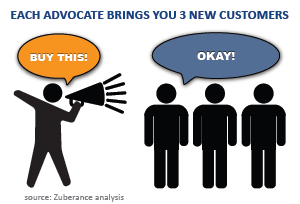


"UGC: 3 Tactics for Converting Customers into Brand Advocates," by Nicole Fallon discusses how the marketing landscape is changing, and the need to co-create your brand message with your customers is essential in remaining effective and top of mind. Today’s most progressive (and often most successful) brands are actively encouraging their customers to share their experiences, and transmitting it back out for others to see. Furthermore, if you consider your brand ahead of the curve, then possibly consider visual media to further grow engagement.  Consumers respond best to visual UGC, and a few methods to best integrate this into your plans are through product interaction, integration, and contests.

Now that you've read about the growing importance of UGC, I've listed 3 easy steps that I recommend my clients start in order to put a UGC strategy into practice. They are as follows: 
  • Ask – Develop and ongoing dialogue and proactively encourage your customers to provide their feedback and experiences about your brand. You won’t get the best content unless you pursue a strategy around building content volume.                            
  • Amplify – Once you’ve gathered the consumer content, magnify the strongest points for your brand out into the marketplace to influence others. “95% of consumers need social validation before making a purchase,” so amplify your positive content in all marketing platforms.                                                                                                          
  • Take Action - UGC is an opportunity for product/brand development. Your UGC is a 24/7 focus group, and you need to ensure you’re addressing your customers concerns.
So when you’re developing your brand’s annual plans and have to prioritize your marketing mix, please remember that almost all consumers need social validation before making a purchase. The more you can communicate the positive feedback you receive, the higher your conversions will be.

Amanda Sime is a graduate student in the Northwestern University, Integrated Marketing Communications (IMC) program. She currently lives in Austin, TX and works at Bazaarvoice as the Director, Client Strategy on Enterprise accounts and focuses on integrating WOM and UGC best practices into Account's marketing strategies in order to help drive business performance and consumer engagement. Feel free to comment, repost and follow her on Twitter: @asimetime 

Friday, May 9, 2014

Execs, It's Time to Face Your Social Media Fears


It’s no secret—your employees are talking about your company, and they have been for years. Word of mouth is nothing new, but today’s digital and social tools magnify, for better or worse, the impact your employees can have. As a Master’s candidate at Northwestern University, I came across two articles recently that are must reads for executives who aren’t sure how to channel employees’ energy in the social media area.  

In a recent study, “Employees Rising: Seizing the Opportunity in Employee Activism,” Weber Shandwick found that half (50%) of employees share employer-related content on social media in the form of posts, pictures, or videos. The good news from this study:  20% of your workforce is likely acting on behalf of your company as “employee activists,” and another third have great potential to. The bad news, though: Only 42% of employees can actually describe to others what their company does, and even less can recount their company’s goals. So, while companies are eager to capitalize on this “employee activist movement,” as Weber Shandwick calls it, it seems abundantly clear that a huge portion of employees are unprepared for the brand ambassador job in this social era.  The idea of thousands of employees running around tweeting and posting inaccurate or unfavorable information for investors, customers, and prospects to see is indeed a scary prospect for any executive.


Source: http://www.brandingpersonality.com/category/social-media/social-media-restaurants


But the shift towards embracing employee use of social media is actually a good thing, as Weber Shandwick and others, including Rebecca Feldman of Linkedin, have noted.  Your employees represent major untapped source of brand-building power. Feldman recently shared several tips to help companies trying to make this shift. In order to begin leveraging the power of employees as social brand ambassadors, she stresses that companies need to create a corporate culture that is accepting and supportive of employee participation on social media.

Based on my own communications experience as well as insights from these two recent articles, I recommend the following three tips as a starting point for executives who are debating how to tackle the opportunities and fears of employee use of social media.


  •  Invest in Training Your Employees.  Chances are that your company is not exclusively comprised of Millennials that eat, sleep, and breathe social media. Be mindful that your employees, even Millennials, will have varying degrees of knowledge and comfort. If formal training isn’t in the realm of possibilities, identify a group of employees who naturally gravitate toward the subject and ask them to share tips with their teams through informal emails, team meetings or informal training sessions.
  • Make it Simple. As those unfortunate findings from both Weber Shandwick and Gallup demonstrate, your employees aren’t as knowledgeable about your company and its brand promise as you might hope, so one of the best defenses is to arm them with simple, approved content that can be shared. This can be as simple as sending an email that includes a few key messages about the latest initiative and suggested posts that they can simply copy and paste for Facebook, LinkedIn, and Twitter. This approach will help the company establish a consistent voice and eliminate any confusion about what’s appropriate to share.
  • Trust Them. While it may be necessary and wise for companies to have some kind of official policy regarding appropriate representation of the company on social media, those policies should not be the primary focus of your trainings or communications. Let go of that instinct to control, and manage from a position of trust, rather than fear. As long as you are clear with your employees about what is appropriate, they will rise to the occasion and act accordingly. And, on the off chance that an employee goes rogue, you can rely on one of those “employee activists” to help reinforce your corporate values.

As Weber Shandwick has shown, employees are already talking about their companies on social media, so it’s time for you to face your fears, execs, and embrace the potential of the situation at hand. By creating a positive social culture that seeks to proactively empower and educate employees, companies on the forefront of this movement stand to gain a considerable competitive advantage in this world where electronic world of mouth reigns as king.


Keri Garman is a marketing communications professional with expertise in strategic communications, content marketing, and digital social strategy. She is the former Marketing Director of Gallup’s Management Consulting Practice and is currently pursuing her Master’s in Integrated Marketing Communications at Northwestern University. 

Continue the conversation with Keri on Twitter @KeriEGarman.


Wednesday, May 2, 2012

Will you find your beauty in a box? – an amazing box can help Marketers to create WOM


Have you ever thought you will find your beauty in a box? Women in the town are subscribing a little box called Birchbox, which will send out a box of 5 sample beauty products for $10 each month. This little box has becoming the most popular and amazing little box among women that roaming around word-of-mouth, tweeter and Youtube.

Receiving this Birchbox is like a gift. It probably gets you a latest series of SMASHBOX powder, or a lipstick of NARS. You don’t know what you will receive every time, but Birchbox will always surprise you. Check out the youtube, you will find lots of unboxing videos on it. People enjoy the unboxing moment to find out what Birchbox give them this time.

When you subscribed the Birchbox, you fill out a beauty profile. A beauty editor in Birchbox will choose monthly samples for you in your box. The success of the business caught many beauty brands attention. Brands like Smashbox, Stilla, Kiehl’s…. you name it, are scrambling to give away their sample to Brichbox subscribers. If you like the sample, you can go click on the item on Birchbox website and purchase the full-size one.

By sending a delicate box with beauty samples which might suit different person’s beauty profile, Brichbox creates a two-way communication and another sales channel for brands and consumers. Consumers enjoy the discovery process and try new stuffs. Brands seek as many touch points as possible with consumers. Beyond that, Birchbox creates a place for both consumers and brands to build a further relationship with each other. Consumers can share their comments online or through Birchbox, Marketers can receive feedbacks and collect data from both consumers and Birchbox.

The box is so hot that forbes, Mashables and Insiders all wrote a story for Birchbox. Because not only women can receive this “gift”, but men can also have it now. However, as forbes covered in the article, my question is, while it garnered great success among female consumers, will Birchbox gain success among men since their shopping behaviors are different from women?

But, hey, if you are a brand marketer, you may think about using Birchbox to communicate with your consumers. If you are obsessed with make-up, well, subscribe a Birchbox for yourself!


**Li-Chia Huang is a graduate student in the Northwestern Medill IMC marketing program and is specializing in beauty industry marketing trends. Li-Chia Huang will be graduating in December 2012. Li-Chia can be reached on twitter using the handle @Lycahuang0621.