Showing posts with label "Branding". Show all posts

Monday, October 21, 2019

CREATIVE SPECIALISTS: 3 Action Items to consider when adding building and emphasizing your companies brand


by Bill Massey and Emily Parris, AthleticBusiness.com

·      Be consistent – All content should be consistent across the board in order to establish a brand. 
·      Pay Attention to Detail – The little things make the biggest difference, don’t overlook details in the design. 
·      Embrace a theme – Embracing a theme allows the building of a brand and keeps content consistent.


By Domique Jackson, Sproutsocial.com  

·      Develop Voice – Who or what does your company represent?
·      Be Authentic – Make sure you aren’t trying to be someone you’re not! 
·      Build a Network – Creating a network of influencers and supporters is important to the growth of your brand. 


Monday, May 9, 2016

Graphic Designers: 3 Ways To Rethink Your Work Process

As a graphic designer, you know the importance of developing your unique workflow and process. Some art classes I’ve taken have taught specific, almost formulaic ways to approach work. Others have emphasized forming your own ways of working through experimentation. I’m interested in how different this work process can be for two graphic designers. As a Northwestern undergraduate student interested in design, I found two articles that discuss the relationship between design and work process.

An AIGA review by Laura Bolt discusses an interesting exhibition at The Drawing Center called “Please Make This Look Nice.” The exhibition explores the design process. There is the logical process clients are presented with. Then there is the real process that’s taking place with each project, one that usually doesn’t conform to a clear step-by-step progression. That’s the process that is most interesting because it’s so influenced by every designer’s “personal quirks.” Making things is often illogical. It involves tangents, and this exhibition explores embracing the process behind the process. It calls attention to the fact that making things doesn’t have to be so precise, and embracing the way you naturally work is important.


A second AIGA article by Madeleine Morley features Tribero design studio partners David Heasty and Stefanie Weigler, who give their advice about branding. They emphasize the importance of iterations and trying out different solutions to problems to see what sticks. Heasty and Weigler also emphasize how important concept is, which can be difficult to grasp when the outside world is so focused on aesthetics. Concept should drive the work, especially in branding. Branding, they say, is about creating an entire visual experience for the consumer. Your process has to start with concept to succeed — it can’t just look pretty.
After reading these articles, I started thinking more about my own process. I developed the following three action items based on my undergraduate experience and the information in the articles:
  1. Try multiple solutions - Approach the design problem from multiple angles, then build off your best option.
  2. Trust your process - Embrace oddities in the way you work — it can lead you to unique solutions.
  3. Concept is everything - Remember your work should be visually compelling, but always lead back to something crucial about the brand.

Ali Tomek is a student at Northwestern University studying history and integrated marketing. She is currently studying digital media in a social marketing specialization course, and plans to attend SAIC after graduation to study visual communications design. You can find her on Twitter.

Wednesday, May 4, 2016

CMOs: The Right Way to do Inbound Marketing


As a CMO, you know today’s consumer is more empowered than ever. Not only are they finding more and more ways of avoiding disruptive marketing, but actively seeking the media content that they do want to consume. As an undergraduate at Northwestern in Medill School of Journalism’s Integrated Marketing Certificate program,  with an interest in Inbound Marketing, I have found two articles detailing the do’s and dont’s of effective inbound marketing. Based on these two article, I have drawn three recommended action items that I think would truly maximize your company’s marketing efforts.
       In “5 Key Inbound Marketing Considerations for Marketing Managers”  Kerry Butters from XEN life discusses five essential strategies and tactics to employ for a successful inbound marketing campaign. She encourages (1) high quality blogging to drive cross-channel traffic and build trust with consumers, (2) developing a well-informed and holistic strategy, (3) implementing marketing analytics to prove ROI and inform budget allocation, (4) mobile advertising to reach the widest audience, and (5) using banner ads that are valuable to the consumer, visually attractive, and relevant to a particular site’s visitors.  

bit.ly/1SGugLgbit.ly/1SGu

On the other hand, in  “5 Catastrophic Inbound Marketing Mistakes That Can Risk Your Brand in 2016” Vibhu Satpaul from iamwire highlights some of the mistakes to avoid when it comes to inbound marketing. He writes against (1) publishing content that is not directly relevant to your consumers, (2) ignoring the importance of keywords in consumer search queries, (3) not blogging regularly enough or disregarding it  from your inbound marketing strategy altogether, (4) excluding call-to-actions or links to further information to help consumers in their decision process, and (5) not basing an inbound marketing campaign on an appropriate buyer persona.
Screen Shot 2016-05-04 at 4.43.55 PM.png
After reviewing these two articles, and from my experience with this topic as an undergraduate in Northwestern’s IMC program, I have developed three recommended actions items to help make your marketing campaigns more effective and increase profitability:
  • Educate and entertain. Aim for high quality blogging by educating and entertaining your audience with thoughtful pieces, avoiding self-promotion, having industry expert or specialist writing your content, and posting fresh content regularly (in order to increase your site’s visibility).
  • Construct a persona. Develop an appropriate buyer persona by seeking to understand the unique needs and challenges of your target audience and develop a focused content strategy based on these insights.
  • Use smart keywords. Make sure to insert the keywords that you know your customers are using in trying to find solutions to their concerns.

About the author: Tania Argüello is an undergraduate student at Northwestern majoring in Communication Studies and pursuing the Medill School of Journalism’s Integrated Marketing Certificate. Upon graduating in June 2016, she is interested in pursuing a marketing position in a creative, advertising or branding agency. For more content or just to chat about the marketing, branding or communications, you can contact her at LinkedIn or Twitter.

Monday, April 25, 2016

Social Strategists, 3 reasons Snapchat is the Next Big Thing


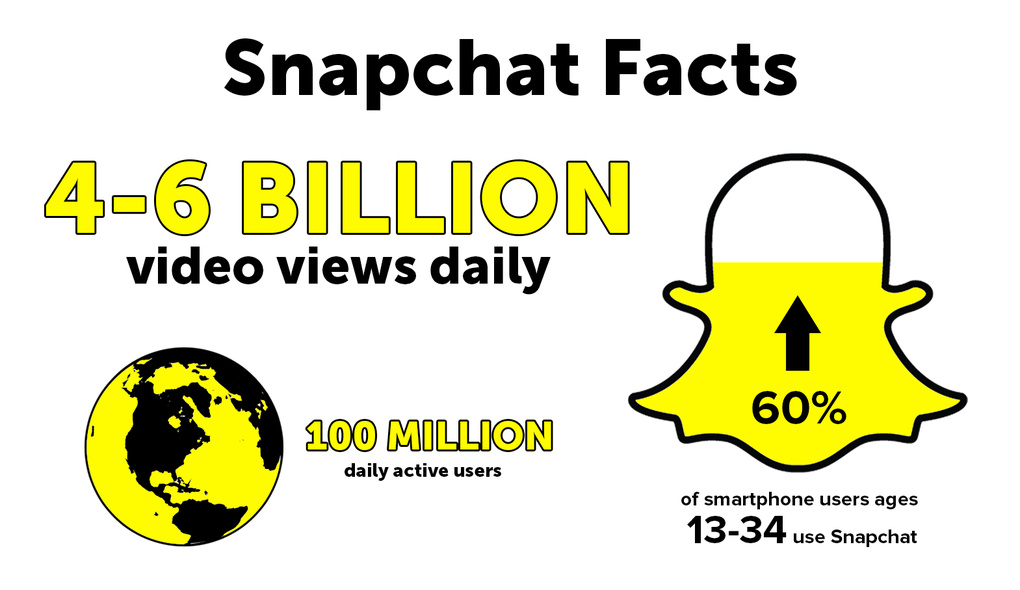
With more than 100 billion daily active users it is imperative for any social strategist trying to reach millennials to understand why Snapchat is the next big thing. As a student of the Integrated Marketing Communication Program at Northwestern University and a Social Strategy intern at 360i, I lookout for the new trends.


Written by Matthew Tyson for Huffpost Business, 'Snapchat: The Thing You Should Be Doing in 2016' looks at Snapchat from a marketer’s perspective. It insists that whether one uses it or not, every brand trying to target millennials needs to be present on it. Millennials are looking for brands to interact with them on Social Media and traditional advertising does not do that. The one attribute setting Snapchat apart from the host of Social Media platforms is the authenticity it offers. Not only is the mode of delivery personal, to view another's snaps, you have to follow the account which means the follower is already interested in the content.
snapchat_facts_statistics.jpg


Written by Hope King for CNN Money, 'Snapchat is Growing Up' talks about the new features of Snapchat and its growth. Recently, Snapchat released a host of new features including audio calls, video calls, video messages and stickers in the chat box. From a brand that was once looked at as the ‘new kid on the block’, Snapchat is now an equal player on the table with Facebook, Instagram and Whatsapp. The company has to be on its feet at all times since its competition is continuously upgrading to similar features.


Based on my review of these three articles and my work at Northwestern University, here are three actions you should be taking on Snapchat.


  1. Offer Authenticity - Every snap is in real-time and hence is authentic content in context. Forbes reported that 43% of millennials rank authenticity over content.
  2. Build Relationships - Every follower on Snapchat already values your brand which means they are a valuable consumer you should build a relationship with.
  3. Grab Attention - Snapchat is now competing with Facebook, Instagram and twitter and is leading the competition in terms of attention on mobile phones.


Using the three action items, you can use Snapchat to find a niche for your business. As we move ahead and social strategy becomes increasingly important, attracting millennials and engaging with them is a challenge you face. So understand Snapchat and use it!


I am Prarthana Gupta, a Communication Studies and Integrated Marketing Communications student at Northwestern University. I believe that technology today encourages global, real-time communication like never before and there are new trends to watch out for everyday. Apart from actively following the development of the social and digital world, I am also a HCI and IoT enthusiast.

Reach out on twitter @prarthana_g

Tuesday, May 5, 2015

Brand Managers: 3 Tips To Creating An Effective Multicultural Marketing Strategy


As a Brand Manager, your ability to engage different cultures with every marketing effort is critical to your firm's success. As an Integrated Marketing Communications (IMC) Graduate Student at Medill-Northwestern University, I came across these two articles that discuss the importance of Multicultural Marketing as well as what Brands should be doing to successfully reach and engage this market.

The first article is titled “Your Next Big Opportunity: The U.S. Hispanic Market” and is written by Lisa Gevelber, VP of American Marketing at Google. This article points out that U.S. Hispanics are an underserved market despite the fact that they will make up “ 30% of the population by July 1, 2050” and that they are also leaders in adoption of digital technologies. Also, the article explains that most brands don’t have a marketing strategy for Hispanic audiences and most agencies  “Were advising clients to invest in reaching them either somewhat or not at all.” Therefore, to secure long-term growth, brands should take action and leverage the opportunity to reach them through digital channels and with cultural relevant messages.


Source: http://www.permanentculturenow.com/

The second article “The Digital Marketing Revolution's Multicultural Core”  is from the Huffington Post Blog and is written by Cesar Melgoza, the CEO and Founder of Geoscape. The author explains that even though, marketers are starting to understand the importance to leverage digital media to reach and engage audiences, they still need to understand the importance of making multicultural audiences a key component of their digital marketing strategies. For example, Hispanics are not only the single-fastest growing population of young buyers in America but they “over-index on smartphone ownership and digital media streaming” and are “the leaders of today’s digital marketing revolution”.

Based on these two articles and my graduate learning in the Medill IMC Program, these are the three tips I recommend to creating a multicultural marketing strategy:

·       Integrate Multicultural - Make these influential cultural groups an essential component of your marketing strategy

·       Research Cultures - Study multicultural audiences to speak their "cultural language" and engage them in relevant ways

·       Leverage Digital - Reach and engage multicultural audiences where they are

Multicultural audiences like the Hispanic Market will keep growing in the U.S. gaining more economic power and cultural importance. Therefore it is imperative for Brand Managers to leverage this opportunity and make Multicultural Marketing a central component of their Marketing Strategies. Furthermore, by studying the different market segments within and leveraging digital and mobile technologies, Brands will be empowered to create “cultural relevant” messages that successfully reach and engage these Multicultural Audiences across effective channels.


Author: Isabel Mora

I am an Integrated Marketing Communications (IMC) Graduate Student at Northwestern University and I have over eight years experience working with clients from a wide range of industries. I am passionate about uncovering powerful consumer insights to help brands tell more meaningful and relevant stories. You can follow me on Twitter @Icmora or connect with me on LinkedIn

Wednesday, February 11, 2015

CPG Executives: Branding Authenticity, the Key to Make Your Brand Stand Out Today

As consumers have access to more information about brands in today’s world, brand authenticity becomes a more and more critical point of difference for consumer-packaged goods.  But with consumers gaining more power in their relationships with brands, how to build an authentic brand image in their perception?

As a graduate student in the Northwestern Medill IMC program (@VitaminIMC) with an interest in brand management, I have identified two articles that can help CPG branders to successfully make your brand authentic.

In the article “Customers Demand These 2 Fundamental Aspects of Authentic Brands”, Jim Joseph (@JimJoseph ), the President of Cohn & Wolfe, pointed out that purpose and protection are the 2 aspects consumers care most about brand authenticity, especially for entrepreneurial marketing. Based on his research, 76 percent of U.S. consumers think brands should have a story of what they believe besides making money. For protection, consumers not only want brands help them avoid harms, they also assume brands should protect them. 78 percent of consumers would stop buying the brands when they don’t feel safe with the brands. The conclusion is that to build an authentic brand image, marketers need to show transparency in business practice in consumer communication.


(Picture source: marketoonist @tomfishburne)

While purpose and protection are essential in building brand authenticity, Matthew Hutson’s(@matthewhutson(silverjacket)) article “Quenching Consumers’ Thirst for ‘Authentic’ Brands” argues that heritage, sincerity and commitment to quality are 3 dimensions consumers see as brand authenticity. It is also concluded in the article that these 3 dimensions are linked with each other. To make consumers trust your brand, marketers should figure out a way of telling the brand story so that consumers can feel the connection between them and the brand.

Based on the 2 articles and my graduation study in Medill IMC Program, there are 3 action items I recommend you to consider.
  • Listen To Consumers – Brand authenticity has different meanings to different consumers. Abandon your assumption and listen to what consumers think of it.
  • Tell A Good Story – Authentic brand doesn’t mean being bland. Find a cultural essence of your brand as the heritage and tell consumers a good story to show them a transparent business process.
  • Grow On Your Heritage – For those brands already have heritage, root the communication in it while grow with your consumers as the social environment change. Adjust the meaning of the brand and use social media for efficient communication. 


In this versatile market environment, if your brand is not perceived as authentic, it is fatal. To stand out in the homogeneous world, CPG brands really need to consider the proposals mentioned above. Keep in mind that transparency and openness will always be the base of successful authentic brand building.


 “Rain”, Xinwei Yang is a graduate student pursuing her M.S. in Integrated Marketing Communication at Medill School of Journalism, Northwestern. She will be graduated in Dec. 2015. She is a marketer specializing in branding and interactive marketing with a strong passion in the consumer packaged goods industry. You can reach Rain on Linkedin or follow her on Twitter @Rain_yxw.

Sunday, November 23, 2014

What Businesses Should Learn from Fast Casual Success

The fast casual restaurant industry continues to steal market share from QSR concepts, which have either plateaued or declined in customer traffic in the past five years.

Fast casuals, a market lying between fast food and casual dining on the restaurant spectrum, one-up their QSR rivals with more customized meals, healthier options, and more counter service. They’re not going anywhere anytime soon, with consumers choosing to spend a little extra for perceived fresher, healthier, and more natural ingredients. 

Forbes reports that fast-casual chain sales rose 11% in 2013 due to higher guest count and average ticket spend, while fast food sales rose only 2%. In latest news, Habit Restaurants Inc. more than doubled in their trading debut, according to a recent Reuters article. Five concepts raised $486 million in U.S. IPOs in one year, four of which were fast-casuals, reports Reuters’ Neha Dimri and Sruthi Ramakrishnan.

Photo courtesy of Nation's Restaurant News


So what’s the key to their success?

The fast casual concept’s business model is the way of the future. A Northwestern University IMC student and industry insider with a focus in brand management, my interest is in restaurant concept development and forecasting trends in the fast casual field. Fast casual concepts have proven, both within their industry and in the consumer packaged goods space holistically, that consumers expect so much more out of brands than simply the receipt of an exceptional product.

There’s an increase in consumer demand to “do more.” Restaurants like Chipotle Mexican Grill, Sweet Green, and Panera are not only praised for their food, but also their operations, marketing and sustainability efforts. Fastcasual.com points to Panera which now focuses on three verticals: people, community, and planet, by expanding their recycling team, decreasing energy use, seeking emerging technologies, building non-profit partnerships, removing artificial foods, and investing in its people.

Photo courtesy of Fast Company


Consumers’ expectations for their food have only increased. The most successful brands combine, sustainability, community engagement and social service, as well as perceived wholesome foods to create an unbeatable experience that fits in line with the consumer’s morale. The restaurants who show they are committed to these three initiatives, will continue to see growth and increased guest loyalty.

Rule #1: Health and hygiene trump cost. People are showing they’re willing to pay more for higher quality ingredients and fresher preparation.

Rule #2: Make sustainability a priority. Discover how sustainability can fit into your company culture. Live it, breathe it, and promote it to your consumers.

Rule #3: Devote time to a non-profit cause that fits with your brand’s goals and devote yourselves to them – quality trumps quantity here. Create partnerships that last so your company can really make an impact, driving consumer engagement to this cause.

Consumers stand behind brands that fit in line with their social, environmental, and health standards. The fast casual industry is a perfect example of consumers’ greater expectations. In the restaurant industry and outside it, companies need to reassess their priorities and create value outside of the product itself. The idea that you can only be as good as your taste, is no more.


Lauren Neuschel is a part-time IMC Masters student at Northwestern University and Brand and Communications Manager for one of the Top 20 Fastest Growing Small Chains in America. In her current role, Lauren led the vegan restaurant concepts recent re-branding efforts, selected and managed multiple digital agencies, executed public relations initiatives, and built content across social platforms. Lauren has a strong background in branding and creative content creation with a bachelor’s degree in journalism from Northwestern’s MedillSchool of Journalism.


Wednesday, May 7, 2014

Brand Managers--Tailor your Content or Lose Market Share

Brand Managers of packaged goods companies, I'm sure you've noticed the declining percent of household spending on consumer packaged goods over the last few years and this isn't something predicted to stop. As a graduate student in Medill School of Journalism’s Integrated Marketing Communications program, I’ve become aware of this problem as well and have found a few articles for you to read to help you stand out and convince your consumers to spend.

In the article “Why Acquisitions Make Sense In Consumer and Retail,” author Ryan Caldbeck discusses how brand equity can be built through mergers and acquisitions in the CPG and retail industries. While tech companies tend to depend on IPOs to grow, the CPG and retail industries do not depend on the same stimuli to grow their brands. What I find most interesting in this article is not only the comparison of the consumer/retail and tech industries but also the fact that the returns on acquisition in the consumer/retail space yields higher returns that those from tech deals. 


The article “Latinos are the Comeback Kids for Breakfast Cereal Market," based on Packaged Facts reports, discusses how Hispanic households are more likely to spend money on breakfast products and are expected to play a key role in the turnaround of the declining breakfast cereal market. What I think is an interesting finding in this article is that Hispanic households without children are almost twice as likely as non-Hispanics without children to consumer cold cereal. For a brand manager of packaged goods companies, this finding could mean the difference between selling half or double of a certain product.

After reviewing these two great articles, I have developed three action items for you to consider in developing your future marketing efforts.  They are:

  • Consider targeted acquisition--Improvement of a packaged goods brand can be effective through targeted acquisitions.

  • Hispanic markets matter now more than ever--If you don’t target the Hispanic market already and you’re in the breakfast cereal business, it’s time to start.

  • Advertise to Hispanic households with children--If you have been targeting the Hispanic market already, increasing advertising in that area, especially toward Hispanic households with children.

To help your brand grow and stay above the competition, these three key steps are necessary for your company. As marketers within such a key industry, it is in your hands to better target the key individuals and companies to help your brand be successful. Acquiring the best customers and other companies are just the beginning steps but taking these steps can help ensure your success moving forward.


Angela Lee is a M.S. candidate in Integrated Marketing Communications at Northwestern University’s Medill School of Journalism. Her passion for marketing lies in utilizing data analytics to redefine brand strategies to connect with target consumers.