Showing posts with label customer centric. Show all posts

Monday, October 21, 2013

CMOs- How Data Mining Can Help Your CRM Programs Succeed

If you’re a CMO and you don’t think your company should invest in data mining for your CRM programs, think again. As a CMO, you know a successful CRM program contributes to your company's bottom line growth. The two foundations for successful CRM are customer data and powerful analytics. As a graduate student with a concentration in marketing analytics, I have been looking at strategic customer management throughout my graduate courses. I have found two articles providing valuable insights in how CMOs can help their CRM programs succeed through data mining and advanced analytics.

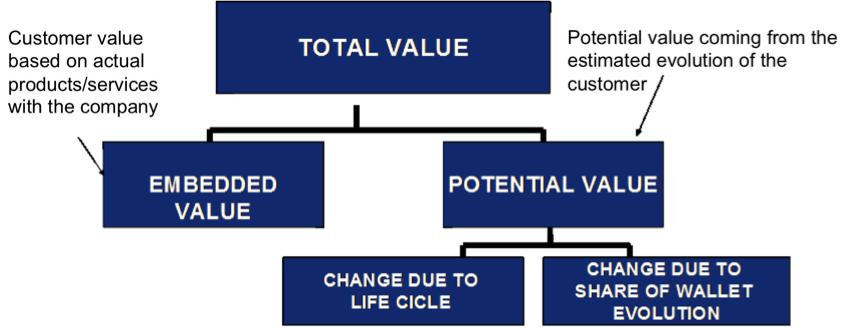
In the article “Data Mining for Advanced Customer Management”, Beatriz Sanz Saiz, Ernst & Young's Global Customer Leader, believes that the transformation from product-centric to customer-centric commercial strategies is an unstoppable trend. She points out that though most CMOs are aware of the importance of big data, many companies are data-rich but insight poor due to their lack of understanding of customers. Strategic customer segmentation is the starting point of driving customer insights, which not only provides descriptive analysis but also the “so what” and future prediction. Traditional segmentation schemes may only focus on the contribution a customer has made, but Sanz Saiz points out that strategic customer segmentation breaks down a customer’s total value into present and potential value. This prediction of customer evolution can guide different commercial strategies to divest underperforming customers or to move customers with great potential up the value chain.


In “Real-Time CRM To Maximize Your Customer Lifetime Value”, Chris Diener, Senior Vice President of AbsoluData Analytics, says that some CMOs are missing great marketing opportunities because “they’re not incorporating real-time flow into models and applications”, partly because some CMOs hesitate to invest in data management system and data mining. He holds the same opinion as Sanz Saiz that Customer Lifetime Value (CLV) provides a clear vision for a company’s CRM program, because knowing your customers’ CLV helps you to build strategic plans to increase customer loyalty and brand value down the road. Diener also suggests CMOs to “build a more social and emotional bond with your customers” by tapping into real-time big data, including valuable data from social media.


Despite the technical nature of data mining, it requires strategic thinking and prioritization from the C-suites. Based on the reviews of these two articles and my related course at Northwestern University, there are three things CMOs need to do in order to help their companies succeed in the “big data” era.

 1)   Break the silo.
CMOs must determine the right information to collect and break the information silos between marketing and IT departments. This may require organizational and system investments.

 2)   Offer analytics team C-level support and mandate.
CMOs should support their analytics team to implement strategic customer segmentation schemes, which evaluate the customer lifetime value to guide future CRM strategies. CMOs play the key role in combining marketing analytics, insights, and big data, including social media and digital data. 

 3)   It’s all about real-time.
      In this “big data era”, identifying customers at different touch points and offering personalized services and communication messages are the key factors of a successful CRM program. CMOs need to think and act real-time by tapping into real-time data to arrive at valuable business insights for their CRM programs.


Yi Zhang is a MS Candidate in Integrated Marketing Communications at Northwestern University, specializing in Marketing Analytics. Follow her on Twitter @Yi_Zhang12

Tuesday, May 15, 2012

Be the Change You Want to See In Your World


We’ve all heard the old adage ‘What’s mine is yours.’ As an aspiring brand manager within the packaged food and restaurant space, I decided to think of it in a way that we are taught to think at Northwestern University – from the customer’s point of view. In that case then, it would read more like ‘What’s yours is mine.’ But just how well are we as marketers making the issues of the consumer our issues in the organization?  And by issues, I don’t mean product-related needs, I mean issues – the hard-core, societal issues that affect each and every one of us and the communities within which we live.

The society we live in today is unfortunately dealing with nationwide crises like childhood obesity and child/adult hunger. Our communities are in desperate need for our help. The call to action couldn’t be any clearer. The time is now to take these serious issues and turn them into meaningful philanthropic programs within our organizations. As food marketers, we need to think about how we can truly adopt CSR programs into our organizations while contributing to the health and well-being of our communities. It could be through the donation of excess food, free workshops on healthy eating, volunteering at shelters and Food Banks, or a variety of other nutrition-related activities. But the challenge is that these programs can no longer just be a line of copy we write on our websites and expect customers to swoon over. Customers will call us on our bluff if we don’t show authenticity and belief in the cause we are promoting. By making consumers’ issues our issues is to weave these into the fabric of our organizations and recreate a focus from the inside-out.

Restaurant operator Darden Restaurants was recognized last month by NBC’s Rock Center with Brian Williams for their efforts to make a difference in their local Orlando community through their “Harvest” program. Darden, who owns well known brands like Olive Garden, Red Lobster and Long Horn Steakhouse, started their local philanthropic program in 2004 after employees at their restaurants started donating excess food to local food banks and hunger relief organizations. The program has been successfully employed throughout the entire organization where processes have been adopted by their 1900 locations to safely handle, package and store the food before it gets picked up by food bank partners. The food is then transported to local charities including the Boys and Girls Club of America afternoon programs where kids who don’t have easy access to nutritious foods are treated to balanced meals from these restaurants. President and COO of Darden Restaurants, Drew Madsen, admits that while it would be cheaper to just throw the food away, they see it as their company’s mission to nourish the community and this is evident in the dedication that Darden Restaurant employees have in making the philanthropy their own personal mission.

Get your organization thinking about promoting healthy lifestyles, donating excess food, teaching the youth about healthy food decisions or other ways to make a difference in your community today by following these three easy tips:
1.    Think locally
A great way to get started is to identify ways that your organization can make an impact within your local communities. If the philanthropy you identify is food or health related, start with local food banks, homeless shelters, local Boys and Girls of America chapters and other organizations that could truly benefit from the excess product and donations that you can provide.
2.    Unify the organization around the cause
The philanthropy needs to be worked into the entire fabric of the organization and customers need to feel the authenticity of the company’s passion for the cause. It cannot be something you do for show and consumers will know the authentic cause from the fake cause. From top-down and bottom-up, the entire organization needs to be aligned around promoting, believing and acting for the cause.
3.    Follow regulations for donating food
If you choose a path to donate excess food to charities, it will be critical to ensure that there are strict policies in place to follow ‘sell by’ and ‘use by’ regulations. The food that you do donate needs to be in compliance with health codes in order to keep all those involved healthy. Most importantly, give excess food that will promote healthy and nutritious food choices for all, don’t give food that just contributes to the health problems of our society.


Tara Gupta is a graduate student in the Northwestern Medill IMC marketing program and spent six years in interactive strategy and user experience design.  Tara is passionate about brand management in the CPG space and health & fitness. Tara will be graduating in December 2012. 
Follow Tara on Twitter @tbg1230 or on LinkedIn