Showing posts with label innovation. Show all posts

Monday, April 29, 2019

Innovation Strategists: 3 Ways to Drive Innovation at Your Organization

One of the biggest threats to companies across industries is disruption, and thus, innovation becomes the crucial factor that determines whether an organization can survive and thrive. As a journalism student at Northwestern University with an interest in business design, I have found these two pieces of content that offer great insights for innovation strategists.

The first piece is an article titled “How to Set the Conditions for Innovation,” published on IDEO’s blog and co-written by IDEO designers Sean Tang, David Aycan and Kateryna Romanova. This article shares five ways for organization leaders to develop the work environments most conducive to their teams’ creativity. These recommendations are proven by empirical evidence from IDEO’s Creative Difference (C∆) platform. According to results from over 100 companies, IDEO confirms that creative and innovative teams “tend to outperform teams that stick to the status quo.”
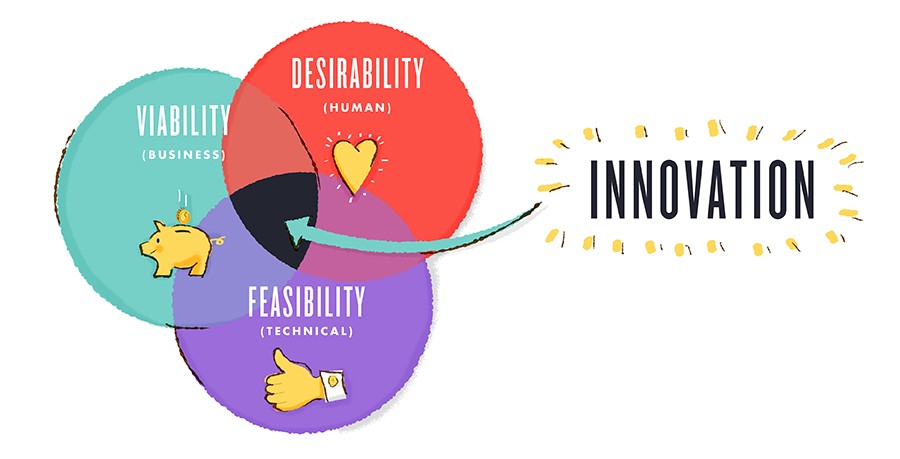
Image Source

The second piece is a TEDx talk by the legendary evangelist Guy Kawasaki, titled “The Art of Innovation.” Inspired by his remarkable careers, Kawasaki succinctly explains what innovation is and how to be innovative in 11 maxims. His advice are very practical and cover different aspects of innovation. He also offers specific examples to support his arguments.

Based on my learning from Northwestern and my reflection on these two pieces, I have developed 3 recommendations for innovation strategists looking to drive innovation at their organizations:
  • Define Your Purpose – An innovative company should clearly define its purpose and communicate it to everyone on the team.
  • Actively Encourage Experiments – To propel innovation, a company should encourage its employees to experiment and create an environment that celebrates not only success, but also failure.
  • Share Your Learnings – To innovate effectively, a company should establish a system that allows people to learn from each other, which will significantly reduce repeated efforts.

An effective innovation strategy is no longer a nice-to-have, but can make or break an organization. I hope these resources are helpful to you, and I’d really appreciate it if you could share your thoughts in the comments section below!


Hi there! My name is Cathy He, and I’m a senior at Northwestern University studying Journalism, Comparative Literature, Marketing and Design. My career goal is to work at the intersection of business, design and innovation. In my free time, I enjoy reading, boxing, cooking and baking. I am also a connoisseur of tea!

Monday, October 29, 2018

Beauty Industry CEOs: 3 Recommendations to Improve Your Environmental Practices

Beauty industry CEOs should address increased concern about beauty products' negative impact on the environment. While receiving the Integrated Marketing Communications Certificate at Northwestern University and interning for a beauty PR company two summers ago, my interest for the beauty industry's environmental practices has grown; the two following articles are particularly useful when considering the topic.

Giselle La Pompe-Moore’s article The Beauty Industry’s Plastic Problem: What Exactly Being Done About It?, featured in byrdie.com, discusses the beauty industry’s large impact in the world’s over-use of plastic. La Pompe-Moore explains that beauty products’ excess packaging, plastic containers, and single-use functions contribute to the ocean’s pollution, leading to the death of fish, marine mammals, and sea birds. The article then moves to the progress being made in the UK and the beauty industry. The UK government banned plastic microbeads and has discussed banning single-use plastic items such as cotton buds and wet wipes. Meanwhile, brands like Garnier, Origins, and Tata Harper are limiting packaging, making it easier for consumers to recycle packaging, and creating reusable glass packaging.


source: https://intothegloss.com/2016/05/how-long-do-beauty-products-last/

In Why Eco-Friendly Beauty Packaging is on the Rise in 2017 featured in allure.com, writer Candace Bryan explores the rise of the trend to go green within the beauty industry. Bryan explains what makes packaging sustainable; while no exact definition exists, renewable, recycled, or biodegradable materials, a simple shape that leaves no leftover space, a lighter weight, and use of less energy during the manufacturing process are all features that contribute to sustainable packaging. Bryan explains that beauty brands have trouble going green because their retailers impose packaging guidelines on them, the products are delicate, and products can go bad (like food) if not packaged correctly. Moreover, plastic is cheap and sustainable packaging is usually more costly. Regardless, starting in 2017, many big name brands are joining the ranks of Tata Harper, Juice Beauty, and Lush -- pioneers of the green movement. The reason Bryan gives for this movement is that consumers care more than ever about their consumption’s impact on the environment and are more aware of what goes into their products – ingredients and packaging wise.

Based on these two articles and my experience at Northwestern University, I have developed 3 action items you should consider the next time you're thinking about your beauty brand's environmental impact.

  • Think Reusable Packaging -- When designing packaging, brands need to consider ways that would make consumers want to reuse the packaging as containers or a way to hold brushes.
  • Invest in Innovation -- Companies need to invest in research in how to create packaging that avoids plastic and other ingredients that harm the environment.
  • Educate Consumers -- After creating reusable packaging and investing in packaging innovation, brands should educate consumers on the importance of refilling or reusing their products' packaging and opting to buy from brands that are attempting to use eco-friendly packaging.

Next time you're thinking about your beauty brand's environmental impact, remember these three points.


Emma Hodge is a student at
English Literature and Integrated
Marketing Communications. 

You can connect with her on 


Monday, February 20, 2017

Education Leaders: 3 Initiatives To Keep Up With The Demand Of The New Era

In the age of digital technology when more alternatives are becoming available to non-traditional students, one of the biggest challenges facing education strategists is to sustain their business models and reinforce value propositions. As a graduate student at Northwestern University with an interest in education and marketing strategies, I find myself regularly involved in conversations over the impacts of digital disruptions across industries and reflect on my educational experience. I recently found two insightful articles discussing the future of education and thought it would be useful to share with you the key take-aways to prepare better for any challenges that may come your way.

In his Huffington Post article “Welcome to the Campus of 2019,” Dr. Scott D. Miller of Virginia Wesleyan College discussed how technology influenced the way students perceive the world today, how this in turn emphasized the need for campus facilities to retool and for academic departments to restructure. His argument was that technology would redefine students’ role as curriculum drivers and knowledge regenerators. Therefore, the new academic model will require departments to collaborate, offer inter-disciplinary course offerings to add dynamic skill sets to the mix. He also proposed that the campus of the future will fully bloom as a center of marketing, where those institutions with clearly defined missions, markets and audience insights, communication strategies and operational efficiencies would come out on top.

Source: Carleton

While the above article envisioned the overall future education landscape, “Three trends that will influence learning and teaching” by Debbie Morrison examined specific themes with real life examples and key drivers statistics. Morrison strongly suggested that MOOCs facilitated a large variety of learning options that disrupted higher education and more institutions would be joining the movement to create more alternative learning pathways. She supported the “reinvention of teaching models and learning spaces” as the appropriate response to digital technology and culture, where the approach will shift from instructors-focused and passive to students-centered and active.

Reviewing these articles from the perspective of an aspiring marketing strategist, I have developed 3 action items you could consider now to make technologies work for you and sustain your institutions’ business models: 
1. Put students first - Design the educational experience around the needs of digital-age-students. Use technologies such as interactive video exercises to free up classroom time spent on lectures (instructors-focused) and instead focus on mentoring interaction and even peer-to-peer coaching (students-centered).
2. Personalize learning - Make use of big data (comprehensive dashboard) and small data (real-time interaction) to monitor performance and progress. While this allows students to be in control of their learning goals and pace, it helps ensure appropriate intervention to each student’s learning pattern.
3. Redefine achievement - The future of transcripts will likely be more similar to portfolios: projects involved, products built, people helped… Rethink achievements - give employers reasons to believe and your students reasons to be proud.
Changes are inevitable, and education leaders should be the ones well prepared enough to navigate the radically changing environment and support students to thrive in the digital age. The above 3 initiatives could be the core to a compass system that will help education leaders keep up with the dynamic development of demand for educational services.


Amy Dang is a digital technology enthusiast and lifelong learner. She is currently pursuing her Master’s degree in Integrated Marketing Communications at Medill - Northwestern University. She will be graduating in December 2017 with specializations in Brand Strategy and Media Strategy. Amy has 4 years of professional experience in marketing and aspires to work on higher education development strategies.  You can get in touch with her on Twitter @a_myzing

Friday, February 10, 2017

Mobile Strategy Manager: 3 Action Items to Lift Your ROI


Many mobile strategy managers struggle to better understand the role social advertising plays but what most of you don’t know is how to break out from the clutters.  As a marketing strategist in Northwestern Medill IMC, I have found two articles, which address the subject of lifting return of mobile investment.

According to Pelleri, people spent 80% of their time on apps and only 20% for browsing, which gives a huge opportunity to invest or advertise on mobile. The concept of “Internet of Customers” address the importance of consumers who decide the way that brand should reach them. Hence it is important to avoid negative user experience before you implement any mobile strategy like implanting advertisement or launching an app. Today’s customers want to play an active role in company operation through social media which enable the marketers to listen to real-time and authentic demand.


The second article from Bechar addressed the importance of mobile strategy in rebranding process. Marketers should think about firstly if the mobile is a good fit for the brand and target market: the one-fit-all model does not work anymore. Mobile is a good place to put your new logo, new value proposition and new language so make sure to invest on a mobile-friendly and responsive app and acquire more customers.

Based on my review of these 2 articles and relevant studies I have done at Medill IMC, Northwestern University, here are 3 items you should keep in mind whenever you come out with a new mobile strategy. They are:

1.    Engage to Profit – Identify customers pain points in mobile and manage your Omni Channels in the most effective way.

2.    Test before Invest – recruit a sample of participants and test overall usability and ensure the functions and designs are easily understood.

3.   Leverage Personalization Features – Forget about one-size-fits-all strategies and maximize the ability of customization for each user.

The ultimate goal to invest on mobile is to better serve your customers and be a part of their life, not because other brands have launched their mobile plan.


As a storyteller I'm passionate about transforming data into strategy and decisions. I've worked at Advertising Agency to communicate with Mobile, Programmatic Buying and SEO team about Market Research and Talent Acquisition.
Phyllis Chen
@phyllis_xc


Monday, May 9, 2016

To FinTech Executives: Three actions to bolster your IoT strategy


To FinTech Executives: Three actions to bolster your IoT strategy
To ride the impending FinTech wave, IoT has emerged as a fruitful possibility. As a FinTech and startup enthusiast, I always look out for new possibilities and ideas to create value and spur innovation. To stay ahead of the curve, I have identified three key strategies to maximize your possibilities of success.

João-Pierre S. Ruth, in his recent Xconomy.com article, covered one of the leading technology startup accelerators in the country, Techstars, opening a new accelerator in New York that will solely focus on the development of IoT (Internet of Things) primarily at with an interesting focus on B2B. The key will be to tap into a market that will be focused on IoT at an industrial level as this is a far less regulated market than that at a consumer level. Furthermore, the prospect of harnessing the power of industrial data, especially in the FinTech industry can be immense. 

Sarah Kocianski of Business Insider, debriefs us on the latest in FinTech investments in her recent article. We are continuing to see new investments in the insurance technology market particularly highlighting the importance of tapping into industrial markets that are relatively less regulated. It discusses the combination of IoT in insurance tech particularly with wearables and the possibility of trackers in cars to monitor and structure effective auto insurance policies.

Based on these articles and my interest in the industry here are three action items I foresee for the coming cycle of innovation that you can leverage to be ahead of the curve:
●      Thinking Industrial - Thinking about IoT at an industrial level
●      Bigger Data, Faster Analytics - B2B and an industrial focus widens the scope for data collection at humongous scale. It is imperative that this be met with smarter, more efficient analytics infrastructure
●      B2B is Scale - Operating in B2B markets will lead to scale and faster adoption/growth


Innovation through technology excites me and I am always eager to see the development and creation of new markets by groundbreaking ideas and products. I am a senior at Northwestern University, tech enthusiast and in pursuit of unique opportunities in the San Francisco Bay Area. Nihar Bobba is a tech enthusiast and aspiring tech entrepreneur. Feel free to reach out to him on LinkedIn or Twitter.