Showing posts with label mobile payments. Show all posts

Monday, October 27, 2014

Restaurateurs: When do Smartphones Have a Place at the Dinner Table?

Today, the way we pay our bills continues to evolve as mobile alternatives are increasingly gaining traction in the market and even at the dinner table.  As a marketing professional who works in the payments industry as well as a graduate student in Northwestern University's Integrated Marketing Communications (IMC) program, I'd recommend two articles to help you learn more about what's developing in this space.

In The Washington Post, Hayley Tsukayama recently wrote about the popular website and mobile app OpenTable's roll out of mobile payments in the article, "Sick of waiting for your check? OpenTable's smartphone app will allow you to pay and leave."  Although it has traditionally been known as a place to easily make reservations, search for restaurants and even read reviews, OpenTable is now expanding its capabilities.  Tsukayama discusses how this new feature will improve the dining experience, as consumers will no longer have to wait for their check.  It also frees up servers' time, as this app alleviates the time consuming responsibility of correctly timing presenting the check to diners.  The service, which started in New York and San Francisco, is now rolling out in the DC area.  Popular restaurants like Top Chef superstar Bryan Voltaggio's Aggio and Family Meal are participating in the program.
EasyPayDirect.com
The article "Restaurants poised to accept Apple Pay," in Nation's Restaurant News, Ron Ruggless discusses additional insight into the evolving payments options for restaurants.  This article emphasizes the quick adaption of Apple Pay at fast food restaurants like McDonald's and Panera.  It also discusses that Apple Pay is already on its way to integrate with OpenTable as an option for independent restauranteurs.  Like other mobile payment systems, Apple Pay is designed to improve the customer experience to expedite the payment process.  In this case, it can be beneficial to both casual and more upscale restaurants.

After reviewing these two articles and based on my professional experience, here are three recommendations to make sure your customers have a positive experience when they pay their check.

1. Talk to your customers.  This might be the most important recommendation.  These are the people that you care about the most and are crucial for your success.  Find out what they're looking 
for and their likes and dislikes when they go to pay their bill.

2. Check out your competitors.  It's always important to stay ahead of the competition.  If you attract a younger demographic, as you know, mobile is becoming increasingly important.  Get ahead of the curve now to see what type of systems you should consider.

3. Do your homework.  No, I am trying to bring up calculus nightmares, but rather encourage you to do research!  If you already use OpenTable for reservations, consider talking to them about their payments platform or see if there are other mobile offerings in the marketplace that might be of interest.  Your customer and competitor research will also help with this.

Although food and ambiance are always important, customers often care about more.  Make the end of the dining experience as impressive as the host's initial greeting.  Get started now and explore new mobile payment options in the marketplace.

Outside of her cubicle job in the payments industry, Lisa Silverman enjoys eating her way around Chicago's neighborhoods.  A Baltimore area native, she's currently pursing a master's degree in Integrated Marketing Communications through Northwestern University's Medill School.  Connect with Lisa @las0107.

Wednesday, May 14, 2014

CEO's - Are fingerprints and palms the new dollar bills?


As a CEO in digital and mobile world, security is a great concern for everyone involved, most notably the customer.  As a Northwestern student studying Integrated Marketing and a user of mobile payment services, I have found several measures to properly align and prepare oneself in the industry with the most important thing being extremely secure.


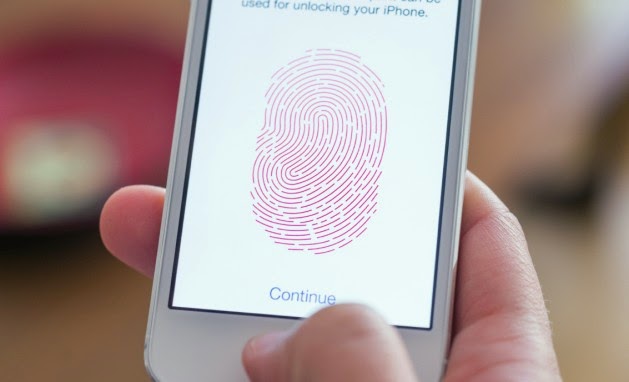
Even your fingerprint isn’t secure enough. Recently the Samsung Galaxy S 5 smart phone introduced a fingerprint scanning technology to access the phone. However there have been some issues that Zach Epstein described in detail. PayPal a mobile payment company doesn’t require a password if the app has already been configured for fingerprint authentication. Just a few weeks old, it has already been hacked. Improved security is a must, but perhaps Samsung rushed into this. It is not clear if this is a minor glitch that can be fixed or if it is a significant problem but what is clear is that we must continue to improve and strengthen the security of personal information.


If some people have their way soon you will not need to go to a psychic to read you palm. As the Wall Street Journal reports some Swedish students have devised another way to expediting and enhancing the mobile payment experience for an individual. Sven Grundberg notes that this new technology is slightly behind fingerprint scanning in terms of development and testing. Although this technology is further behind it is supposed to be just as quick, only taking 5 seconds or so to register, but it has the benefit of greater security than fingerprints.

Based on the insights I received from these two articles there are three action items you should immediately take to be well positioned in the mobile payment world.  The three things that mobile payment companies should do include:

1. Start to move away from old-fashioned passwords – Old fashion passwords with combinations of letters and numbers are ineffective nowadays and can be easily hacked. This is the first step in increasing security is creating more complex passwords.

2. Highly emphasis security and build trust, let a person hold all power - Let’s face it, the person people trust the most is themselves. By allowing the individual customer to control all of the power in terms of securing their information, you are giving the customer exactly what they want. Not only does this increase the security but it builds greater trust with a company. This is the second step in being competitive in the mobile payments world.

3. People want quick accessibility, must be able to keep up with demand – People are always on the go and those companies that can keep up with people are ones who succeed. The average person wants to have immediate access and convenience at the touch of the fingertips. Mobile payments are supposed to be quicker and easier. Typing long and complicated passwords is not what people want. Those who are able to provide instant access will be able to survive and thrive in the ever-changing digital world.

Through research it has been discovered that the most important aspect of mobile payment services that people are concerned with is security. In order for there to be a revolution and mass migration towards the mobile payment industry, people must feel that their information is incredibly secure. Hopefully fingerprints scanners and palm readers can lead the industry to greatness.


Daniel Cohen is a graduating Northwestern student with a focus in Integrated Marketing that will be pursuing a Master’s degree in Management at the Kellogg School of Management next year. If you would like to discuss these issues further please contact him on twitter at @DanCohen102. Thanks.