Showing posts with label Apple. Show all posts

Tuesday, November 11, 2014

Marketers: The Top Trends of 2014 That Will Change What You Know!


The world of marketings is always evolving, but in 2014 and onward, things are going to start to change ranging from new trends to even new technology that will be used that will definitely change the way we all view our high value target markets! As a graduate student in the Northwestern Medill IMC program with an interest in technology and innovation, I have found two articles on 2014 tech trends and technology that you will find interesting and beneficial for your future campaigns.


In this article, The Top 7 Online Marketing Trends that will Dominate 2014 by Forbes, written by Jayson DeMers, he definitely tries to demonstrate the Top 7 trends that will change the way marketers think of digital marketing.  To be honest, these are his predictions, but at the same time these are things that I have even personally seen being used by other brands and marketers as of late.  
He provides a deep-dive of the new dominate technologies that will dominate the world of marketing in 2014.  They range from content marketing, diversity in social media marketing, image-centric, mobile-friendly content as well as ad retargeting methods throughout advertising.  So much has happened in the world of digital marketing in the past few years, but 2014 is the year that things will definitely change.  Are you ready? Let me know what you think of these new dominate advertising items! Tweet me!


Apple will soon be releasing the long awaited...APPLE WATCH at the end of 2014/start of 2015!  In this article posted by Tech Radar, Apple Watch release date, news and features by Matt Swider, provides us with some insights on how this watch could revolutionize the way we see Apple and its apps!  The Apple Watch is by no means revolutionary since Motorola and Samsung have released a watch, but everyone has been talking about it and waiting for the release of it.  Everyone is excited about it because they will be the first to have a variety of styles and format in comparison to others.  The Apple Watch will definitely change the world of applications and how they are viewed.  A lot of marketers and brands will need to change the way their apps are formatted or viewed, but either way...the Apple Watch will definitely disrupt the world of technology and marketing!  What do you think of the new Apple watch? Will it disrupt the app world? Tweet Me!

As you can see, marketing has definitely made a huge turn for the best in 2014! It seems like every year marketers are having to change their mind-set on how marketing works and new fun different ways to create campaigns.  Marketing campaigns from 2010 are not the same ones used in 2014 and moving forward.  Thus, I think we need to do the following:

LEARN  
Learn about the new trends that are dominating brands in 2014...we have to know how they work in order to properly execute winning campaigns/content.

TEST
These are new trends that some marketers have been using but it doesn't mean we all know how to use it for our brands.  So test it out! See what works and what sticks to your campaigns! Don't be afraid to test before you execute.

EDUCATE
Well, aside from us learning about these trends and technology, we need to educate everyone around us.  There is always that one person that doesn't understand how it works...so, learn it so you can educate your team and/or department

Follow these three steps: Learn, Test and Educate before its too late! This should hopefully help every new and old marketer with their brand/service future planning.  Things are always changing and I believe, as a digital marketer and a graduate student at Northwestern IMC that we all need to follow these steps in order to ensure the success of our own brands.  If you are happy with plateau results and staying and using the same content and technology...then go for it! But if you want to be part of the trend...learn, test and educate yourself and spread the word about these trends and technology.  Things are changing but things are changing for the best! Hopefully these two articles will help you think of how you can utilize these trends for future campaigns.


Hivan Herrejon is a native Chicagoan who enjoys exploring the city and learning of great new restaurants and bars around the city!  In order to continue his exploration adventures around the city, he is currently enrolled as a part-time graduate student at Northwestern's Medill IMC program specializing in brand strategy and management.  Aside from being a graduate student, he is currently working for Oracle Marketing Cloud division that specialized in cross-channel marketing and digital orchestration. Feel free to tweet him at @hherrejon23


Sunday, May 4, 2014

Analytics Managers - Today, Real-time Marketing Analytics Rules

Marketing Analytics Managers are now able to track market trends and insights of the last minute by utilizing real-time analytics techniques. As a graduate student at Northwestern University, Medill IMC with the specialization of Marketing Analytics, I have been following the news and papers of the practice of real-time marketing and I am happy to share two articles I like.

Big companies are the first ones to put the real-time analytics into practice. Paid more than $200 million for Topsy, Apple's acquisition of this real-time social media analytics start-up is considered as a long-term strategic investment. In Adam Satariano's article "Apple Buys Real-Time Access to Twitter's Feed With Topsy Deal", Debra Aho Williamson, an analyst with EMarketer Inc., believed that Apple will use the real-time social media analytics for analytics of the iAd mobile-advertising service, to make purchase recommendations from iTunes and App Store, or other marketing acts. Instead of getting market reports from the analytics group once a week, real-time analytics will easily provide more accurate insights for analytics managers to tailor messages to target audience.


http://www.businessnewsdaily.com/4456-real-time-marketing-benefits.html

Real-time marketing analytics is not only desirable for technology companies like Apple, Coca-Cola and Pepsi are both touching the area of real-time analytics. The article "Big Marketers Have Real-Time Data for Just About Everything" by Christopher Heine 
shows us how the real-time analytics company, Bottlenose engaged with big names like Coca-Cola and Pepsi. Bottlenose monitors and analyzes data includes all brand mentions that is collected from most of TV and radio around the world. They can even visualize the market-leading sentiment analysis at real time. "Bottlenose does real-time trend intelligence for brands across social, television and radio in one system. We figure out what's trending across all media in real time and show you what drives what." says Nova Spivack, CEO of Bottlenose.

Based on my study and review of these two articles, here are 3 things marketing analytics mangers should do to have the best performance of real-time analytics.

1. Analyze Best-of-Breed Examples. Learning from real cases is always a good way to learn and improve, especially for new techniques. Analyze the big companies' real-time marketing acts will help us understanding better about how to drive the most benefit for our company from real-time analytics.


2. Identify real-time analytics demands. Even if your company is not using real-time analytics now, you should pay attention to the times when real-time analytics could help you improve your marketing performance. Knowing that will make you have a better use of real-time analytics.


3. Explore new real-time marketing strategies. Not only to improve the performance of existing marketing acts, it is also useful to take a look at the real-time data and come up with brand new real-time strategies.


Data are everywhere the whole time. When we gradually started to benefit from big data, real-time data is now the time to be the new weapon for Marketing Analytics Managers.


Jason Zhixun Wang (@jasonzhixunwang) is a marketing analyst who is passionate in utilizing data mining techniques to interpret mess big data into actionable marketing insights. He learned and practiced restructuring, aggregating big data with analytical tools such as SAS, R and SPSS and interpreting the data. He has done marketing analytics projects for companies with professors at Medill IMC Spiegel Digital & Database Research Center.

Sunday, April 28, 2013

Why You Shouldn’t Care About Apple’s Current Stock Price


Apple’s stock nosedive is no longer breaking news.  As an Integrated Marketing Graduate student, I have been closely following Apple's successes and failures and am always curious what those Cupertino lads are up to.  And when I first heard this, my reaction was one of selfish consumerism: does that mean the "new iPhone" will start being....less awesome?  Are they going to start making inferior products that I can no longer stand in line for?  Selfish. But likely a common reaction among Apple junkies or even baby boomers who just learned how to turn off their iPad with the little rectangular lever at the top.  What does this information mean to the Apple using public?  

Not much.  
http://mattlevan.blogspot.com/

Stock prices are a finicky thing, especially in the technology sector.  Balaji Viswanathan, writer for Forbes and founder of Zingfin, reminds us that in “2005, Microsoft appeared that invincible Goliath, but has now slipped below the media radar.”  Also, it’s important to remember that stock prices often reflect the public’s perception of the value of a company and not necessarily the actual long term value.  When looking at Apple’s actual revenue, The New York Times reports that “analysts expect the company to report another solid quarter next week.  It has been making so much money, it is having a hard time figuring out what to do with all that cash.”  (Think Walter White's wife in the last episode of Breaking Bad.  So...Apple could rent a storage space?) Problems that most companies would like to have.  Most importantly, look at why Apple is where it is today: product innovation. Steve Jobs believed that you could create an appeal for a product that didn’t exist.  


Artist rendering of the rumored iTV.
Guitherme Martin Schasiepen
After ingesting this bit of news, I realized there are three things, you, as consumers and perhaps Apple Fans, can do to make sure nobody doubts the future of Apple, Inc:

1. Do not return your iPad.  No matter how much you want to give it back for fear that those less fortunate never had the chance to experience swipes that cut fruit with an imaginary sword...don't....do it.

2. Do look forward to future Apple launches.  Don't get sad about Apple's latest financial hiccups.  Be happy about their future profit platter that includes every continent and Texas. 

3. Do NOT...Definitely do NOT go back to the PC.  For the love of everything that is intuitive and drag and drop...please, stay with your MacBook, MacBook Air, Mac Mini...whatever it is, just don't turn the dark side.  

As Jobs famously said “the best way to predict the future is to invent it." Apple is said to be launching an iTV and an iWatch sometime in 2013. Two products that will undoubtedly help shape Apple’s own future.  A future nobody should lose any sleep over.   

So if you hear about the struggling behemoth that you should pity, don't.  

Grant Jones is a Integrated Marketing Master's Student at Northwestern University. He has 8 years of experience in marketing and creative video production in New York City. Follow him at @grantwjones.


Sunday, November 20, 2011

Dignifying the Next Tech Messiah

The author is a graduate student of Integrated Marketing Communications (IMC) at Northwestern University’s Medill School, focusing on innovative techniques in the field of marketing analytics, and direct and interactive marketing.

The clock started: three months and fours days. Time’s still ticking, only six and a half weeks to go. The day is almost here: 12 days and counting. The anticipation’s building with only 3 days left. Finally, in what would be only two hours and 36 seconds our lives would be forever changed! For months, speculation would be building as to Apple’s newest and greatest invention, with only rumors of stolen prototypes to substantiate the buzz. Still no one would be sure what to expect, except for one thing: Steve Jobs would be dressed in his signature black turtleneck and jeans. He would confidently walk the stage accompanied by the biggest game changer to date. No matter what it was, consumers would be ready; they would be ready to be apart of it, camped by their computers with their finger anxiously on the track-pad. They would buy it the second it hit Apple’s homepage.  In only two hours and now 12 seconds, Steve Jobs would present to the world a gift from the gods.”

Adapted from http://morguefile.com/ 
With the passing of Steve Jobs, it is as if the Dark Ages has come upon us. The excitement over the possibility of the newest and greatest has lessoned. People are struggling to find his successor, struggling to find someone to follow. Already Business Insider (link) has speculated, and possibly even named, the next Steve Jobs, Jeff Bezos of Amazon. According to Matt Rosoff, Jeff Bezos is a lot like Steve Jobs. He too is an innovative thinker who dreams of changing the world (link). Like Jobs, he detests dissenters and feels compelled to control (link). Every creation, as well as every thought is sealed under the highest level of secrecy (link). Even the way they both came into the world, contained similarities. Both thinkers were born to young mothers, and both were adopted either by one or both parents (link). Maybe these similarities are enough for Rosoff to dub Jeff Bezos the next Steve Jobs. Maybe Jeff Bezos will be the next Steve Jobs, but do we need another Steve Jobs? Do we, as tech followers, need a Messiah to believe in? Do we need someone to bestow upon us that same magic? Does the excitement of the next great thing die without a Tech Messiah?

We need innovators; we will always need innovators, but more importantly, we need the magic that comes with the innovator.  Steve Jobs was able to give us both. Does that mean we need another Steve Jobs? No. Innovation is not about being cookie-cutter or copying a predecessor; it is about defining and creating one’s own magic. This isn’t to say that people don’t need a Tech Messiah, because they do. Excitement will die without one. People must find the next Messiah. People need a Messiah to rally behind, to create that buzz and exhilaration. It’s the drug that drives people to be the first adopters of technology; it is what pitches tents on sidewalks 11 hours before the store opens. The next Messiah will only resemble his/her predecessor in lineage alone, as a descendant of both the innovator and marketing gods. Innovation is lackluster without the excitement it brings. Whoever the next Tech Messiah is, he/she must have more than innovation; he/she must have that magic to electrify[1] us!

Rachel Greenberg
Graduate student at Northwestern IMC
·    Twitter Tag: @Ragreenbe


[1] When I say “electrify”, I don’t mean shock effects from faulty tech wiring.

Tuesday, November 15, 2011

Apple vs. Aztec: Ask Consumers For The Questions, Not For The Answers.

We talk about Apple a lot in the IMC program.  As over 5 milliion iPhone 4S users can attest, the company makes delightfully intuitive products.  They work right out of the box, no instructions needed. One can argue that using a phone is pretty simple, but the difference between my old Droid and my new iPhone is remarkable.  Yes, the Droid worked.  But I had to adapt to it, not the other way around.  Same difference between my new MacAir and my old PC laptop.  How does Apple know me so well?  The company claims to design for themselves, not their customers, no market research needed.  Are the developers in Cuppertino that good?  Do they really share the exact same taste as all of the self-described Mac geeks of the world? And why would a program like IMC, that is driven on consumer insights and data, want to study them? Maybe they aren’t doing formal research, but they are definitely asking the right questions and answering them well. 


Henry Ford was famously quoted as saying, “if I asked people what they wanted, they would’ve said a faster horse.” Or, as Pontiac discovered some 70 years later, they would’ve asked for the Aztec. The car fell famously flat, selling about 3,000 units short of its required breakeven number and failed to meet projected demand by 30,000 cars.  Yet all consumer testing and focus groups were off-the-charts-positive. The product was designed using sophisticated computer data modeling, tweaked to satisfy each and every potential SUV owner in the market.  Unfortunately, trying to please everyone usually has the opposite result. While numbers don’t lie, people sometimes do, often unconsciously. Good marketers must be able to interpret the data, but also to take a step back, ignore their egos and other biases, and think about whether this new product or campaign actually makes sense- for the company and for the consumer.  It takes courage to ask the right question, and if the answer is no, even more to speak up.

Of course customers wouldn’t have described a Model-T.  Invention is not their job.  While the Ford quote does acknowledge that the customer wanted to go faster, it ignores the other need that Ford noticed; horses were inconvenient. His solution, the “horseless carriage,” made sense. People could wrap their heads around a product that did the same thing as a carriage, but with the advantage of being horseless.  Sometimes the right questions are not asked, but observed.  Intuition comes from paying attention and reading between the lines.  The purpose of research should be to uncover the consumer’s tension, to reveal the problem that needs to be solved and to confirm that you actually solved it.  That said, it takes judgment to make sure that your solution hasn’t created new problems, for instance, creating an ugly car that few people really want. The iPhone developers asked important “what if” questions- what if there was no keyboard (touch screen), how can we make searching for things more convenient (Siri). Other Smartphone makers seem to be asking themselves “how can I make an iPhone that doesn’t violate copyright laws.”  Instead, they should be trying to solve problems that the iPhone might not solve for certain segments of users.  It’s amazing what they might discover if they only asked and observed.

Amanda Weller


M.S. Candidate 2011 | Integrated Marketing Communications
Twitter: @amandaweller|email

Sunday, November 6, 2011

10 Years Later: How the iPod Changed Our World

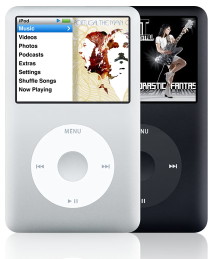
Do you own an iPod? I do (I've actually owned several over the past couple of years), and chances are you do too. Well, the ubiquitous product only just recently celebrated its tenth birthday, and its unquestionable success is nothing short of amazing. To a small group of reporters in California, Steve Jobs first announced the 'iPod', a device that could fit your entire music library in your pocket, on October 23, 2001. It was an event of little fanfare, and while Jobs’ claim that the tiny gadget would revolutionize music may have sparked one’s imagination, it wasn’t one that people necessarily believed. Not only were there already a number of MP3 players in the market at this point, but Apple’s offering was essentially little more than small hard drive with headphone jack: what about the iPod was so special? This sentiment was reflected by sales figures from the first few years. Today, however, it’s difficult to imagine life without an iPod, and with a share of over 70% of the MP3 market, it’s clear that Apple struck a chord with consumers.

Credit: MySchizoBuddy, Wikimedia Commons


Credit: RoughlyDrafted

The iPod was released at a time when there were few options to listen music on demand. Individuals could either play the albums they purchased or illegally downloaded in a media player on their personal computer, or they could carry around a bulky CD player and CDs that typically held, at most, 20 songs. Needless to say, these options weren’t especially convenient. MP3 players existed but didn’t hold many songs and never reached critical mass. The iPod was the best of all worlds, combining the compactness of other MP3 players with the storage capacity akin to home computers. And with the introduction of the iTunes store, Apple had not only changed how we listened to music, but also how we consumed it, and consequently, the music industry itself. People now had legal, à la carte access to practically any song at the click of a mouse and could listen to it wherever they wanted. 


Credit: Apple

But the iPod wasn't simply a compact storage device, and it didn't just reinvent the music industry. It sparked a revolution. It changed what consumers came to expect from products and the brands that produced them. The iPod is more than music player: it is a door into the world of music. And as a result, today people don't want to just buy a thing--they want the experience that comes with it; just take a look at some of the most successful consumer products recently, such as smartphones and tablets (both of which coincidentally--or not--were also spearheaded by Apple). Additionally, at at time when function dominated form, the sleek design of Apple’s MP3 player demonstrated that these two components complemented one another. And the iPod's customizability, inherent in its name, was unique at the time as well. Inside of their packaging, all iPods are the same, but as user adds more and more of their music, it becomes their own. I wouldn't want anyone else's iPod for an extended period of time, and I'm sure no one would want mine, either. Although many these features may not seem hugely innovative today, that is because the iPod revolutionized consumer products to make them the standard. And if the iPod itself didn’t change society, at the very least it reflects a changed society.


Image Credit: Adweek


Dal Ackerman
Undergraduate Northwestern IMC
Twitter: @Dal_Ackerman