Monday, November 10, 2014

Shopper Marketers: Understand the Data Today or Lose the Market Tomorrow

Today shopping has transformed into an omni-channel experience integrating online to offline at multiple touch points. As a graduate student in Northwestern University's Integrated Marketing Communications (IMC) focusing on marketing analytics,   I have found the following two articles insightful for shopper marketers. They respectively explain the big data utilization in shopper marketing and precision marketing analytics.

“Big data is a journey that every company must take to close the gap between the data that’s available to them, and the business insights they’re deriving from that data.” quoted from the article Shopper Marketing Filling the Cart with Big Data which draws the line form  Lisa Klauser , president of shopper marketing at IN Marketing Services. According to the article, the integration of online activities and offline in-store shopping experiences creates tons of opportunities for brick-and-mortar marketers to track and measure the shoppers in more aspects than ever. By collecting and connecting more data variables together, marketers can more precisely detect the causality. Tracking the patterns in data is almost like keeping abreast of millions consumers from their online engagement to their offline purchase journey, while linking the patterns together could even lead to a map of specific decision-making process of each target segments. More importantly, technology enables marketers to track individual shoppers and connect multiple devices to in-store shopping. In other words, understanding data would help us to unveil the real identity of the consumers, estimate consumer lifetime value and take immediate actions.
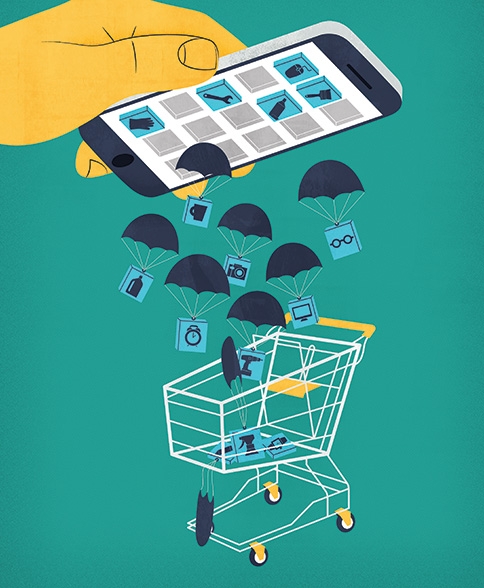
                                      Illustration: Mitch Blunt
Source:http://www.adweek.com/sa-article/shopper-marketing-filling-cart-big-data-158332 

More often than not, marketers use constant parameters regression (CPR) modeling to estimate advertising effectiveness, which is acceptable in revealing an overall effect which has been averaged out over time and different instance. In the article Precision Marketing Analytics: Working withTime-Varying Parameters from Accenture, the author compares the CPR modeling with the more advanced time-varying parameters (TVP) modeling. TVP modeling is able to discriminate the actual difference in advertising effectiveness at a granular level over time. Thus, it allows marketers to measure the real ROI of certain marketing activity separated from other actions across the time. As the example of a fictional FCMG company given in the article, using TVP model can especially help retailers and CPG brands attribute marketing efforts to real sales in a more accountable way considering the seasonality, geographic differences and other factors resulting in the volatility of this industry.

Connecting these two articles with my studies of marketing analytics at Northwestern, there are three actions you should consider in your next analytics project. They are as following:

1.     Leap to insights - This not only requires the analyst to carefully examine the availability and quality of data, but also put the analysis in certain context and even from a personalized perspective. The leap from data to insights is usually propelled by finding the connections between consumers’ wills and their actual behaviors.
2.     Deal with complexity. Simply average out the effect in analytics is dangerous in terms of both precise prediction and appropriate interpretation. Including time varying parameters is vital for marketers to discover the real unusual patterns.
3.     Anchor analytics to strategy. Actually, the most effective marketing analytics is an eco-system creating the self-sufficient circle from data collection, personalized interaction with consumers through multiple channels, to measuring marketing effectiveness.

The transformation that is taking place in the CPG and retail industry is just as fast as the increase of data everyday. Always being innovative and analytical, professionals in shopper marketing would never let go of such a great opportunity of boosting their business to another level with data.


Amy Zhou is a marketing analyst who has experience in formulating stories for several CPG and retail brands through data analytics and market research. She is now pursuing her masters’ degree majoring in IMC at Medill Northwestern, with the concentrations in marketing analytics and digital marketing. She is strongly interested in work opportunities in related areas.

Connect with her on LinkedIn or Twitter @Amy__Zhou.

Saturday, November 8, 2014

Nonprofit Marketers: Cause Marketing is here to stay!

With online fundraising not reaching the targets nonprofits expect, cause marketing can help make the difference. From an Integrated Marketing Communications perspective, cause marketing is a  two way street. People and businesses are not expected only to donate and not get anything in return,  but with cause marketing, they get an unlimited access to an entirely new database and audience. As graduate students in Northwestern University's Medill Integrated Marketing Communications [IMC] program, here are two articles which address Cause Marketing and its importance to nonprofit marketers today. 

Nonprofits get an F for online fundraising. 
The article written by John Godfrey accurately covers some of the very basic but grave mistakes made by nonprofit marketers which drive donors away and leave them feeling unappreciated. Donors are inundated with a slew of presentations from different nonprofit organizations. 

Another fact for nonprofit marketers to consider: Consultants Dunham and Company looked at 151 nonprofit websites and found most were not optimized for mobile and many expected would-be donors to click through at least three links to make a donation and finally, when it comes to thanking donors, the majority could not be bothered thanking the donor by name. 


This article written by reporter Sarah Gantz of Baltimore Business Journal highlights how cause marketing should be considered more frequently by nonprofit marketers because of the various benefits both the businesses and nonprofits can receive from it. Cake Fundraiser, a startup is developing a virtual marketplace where businesses and nonprofits can connect for cause marketing campaigns. 

From my review of these two articles and my work as a graduate student at Northwestern University, here are three important takeaways for Nonprofit marketers:
  • Give to Get: Give your donors, stakeholders, supporters a valuable return and you will have their consistent support. It is key that what the stakeholders receive is of value to them and not solely the nonprofit.
  • Focused Targeting: Selecting your right partner and business is key if this needs to be a long term relationship. Common aspirations, goals and wants should be discussed and prioritized.
  • Engage: Tell stories, show the difference donations have made. Very often (like article one points out), donors receive only a thank you, a late thank you note, or no thank you at all. Nonprofits need to add value and engage with the donors. How has the donation made a significant difference?
Nonprofits often focus all their efforts solely on fundraising and asking donors directly for donations, it is sometimes easy for the organization to get lost in the clutter of people ‘needing money.’ Set yourself apart. Identify your brand, identify what your stakeholders desire and how your brand/nonprofit can fulfill that desire.


Karishma Gundewadi: Marketing communications professional with five years of international experience, primarily in public relations, corporate communications, crisis management and recruitment. Specializing in social media and content marketing and a great passion for helping nonprofits find their one voice. I am currently pursuing a master’s degree in Integrated Marketing Communications at Northwestern University’s Medill School. Connect with me  on Twitter (@Kari_gundewadi) and LinkedIn

Source: http://www.nonprofithub.org/ 

Digital Strategic Analyst – 3 ways to boost the visitor engagement time on your websites


As a digital strategic analyst, making sure that the web visitors are fully engage in your websites is important. Being a graduate student in Integrated Marketing Communications program at Medill Northwestern University and specializing in digital analytics, with the experience of being a B2B website planner, there are two articles that I found them insightful in better understanding the mystery of engagement in websites. 


The first article Easy Ways to Keep Visitors on Your Website Longer by Eric Siu who is the CEO of San Francisco-based digital marketing agency introduces some principles to keep visitors on the website longer. If you see a bounce rate higher than 50 percent of your visitors, or an average time-on-site that's less than one minute, he suggests that the website should add more multimedia content, add internal pages, make the content more readable and install a 'Related Posts' plugin to your blog. 
.

    ↑ The heat map of websites provided by ClickTale shows which areas on the websites drive the most attention and provides the detail of interaction with the content.

The second article is Time on Page vs Visitor Engagement Time, written by Sam Green who is the Chief Content Editor for ClickTale. This article is to differentiate the time on page and visitor engagement time. The length of time on page sometimes is not accurate to judge the engagement level for a website because visitors might do something else while keeping the browser open, which is still counted as time on page. The aggregation time of actions like mouse move or scroll reach can better represent the time of engagement which can measured by ClickTale, which is a digital analytic service company. For example, ClickTale provides heat map of websites to detect which part of the website attracts more attention. (picture above)


From these two articles and my graduate studies of social marketing in the Medill IMC program, here are three action items to help you boost the engagement time on the website by focusing on the actual engagement.
  •    Ask For Action- If people don’t know what to do on that website, then they will just leave. Add the action buttons on the sites. A clear navigation of a flow toward to a destination page also can let visitor know what to do.
  •    Site Related Posts- If people like A, they are more likely to like something relevant to A. Therefore, putting a related post beside the content or adding internal links to the sources will make the visitor continue to dig in the topics with deeper engagement with the community.
  •   Make It Readable- Shorten the paragraph and add bold subtitles. Visual graph is always better than a bunch of words. People will leave the page if the first glance of the page is not appealing.

These tips should help you improve your site’s engagement time. Note that evaluation of time on page is not enough to evaluate the website’s performance. Instead, you should look at action-related metrics. If you have enough budgets, it’s worthy to invest an advanced analytic tool which can identify the real behaviors of the visitors when staying on the page. When your websites are in low engagement, try these three tips to increase the engagement time on your page. 


Jean Chang is M.S. Candidate of Integrated Marketing Communications at Medill, Northwestern University. She specializes in digital marketing and marketing analytics. Prior to IMC, she has worked for a candy & gift company as a marketing planner for 2 years. Her passion in digital industry began with the experience of being a B2B website planner, being in charge of providing content of the website and organizing the function and flows. Welcome to contact her by LinkedIn and Twitter@JeanIMC with any questions or comments.

Friday, November 7, 2014

Big Data Scientists: Netflix is not maximizing its recommendation systems, are you?


As a Big Data Scientist, it is imperative today to develop recommendation systems which turn insights about customers and prospects into relevant recommendations and quality leads. As a graduate student in Northwestern University's Medill Integrated Marketing Communications program, I have been researching big data issues and have found two articles which address this challenge - using Netflix as an example.


In the article "Putting Big Data in Context", Scott Gnau(@Scott_Gnau), president of Teradata labs pointed out that best decisions and recommendations are made with a combination of data analytics and human intuition. Two mistakes companies tend to make when dealing with big data are: 1. over-reliance on what data tells us; 2. become too enamored with certain types of new data, or look at data in silos. For example, Netflix's recommendation system relies too much on past behavior data while failing to incorporate context data such as real-time emotion and situation individuals are experiencing.


Nestor Bally(@NKBailly)  mentioned the restrictions of current recommendation system in "Build A Better Algorithm(With A Little Help From Your Friends)". He said rudimental recommendation algorithms made largely ineffective predictions based on similarities in items and the premise that people with similar historical preferences are likely to share future preferences. However, this led to a low degree of diverse content and a self-amplifying vicious cycle. For example, Netflix does not recommend films based on film fanatics' watching list or what friends are watching, and thus restricts the spectrum of the recommended content. To build a better algorithm, companies should leverage the power of social influence. 


Based on my analysis of these two articles and my classes on social marketing and big data analytics in the Northwestern Medill IMC program, there are three actions you need to consider when developing your social and contextual recommendation system.  They are:


1. Think in context. Consuming content online is an emotional behavior as well as a rational one. You need to get data about people's current emotions, like what Spotify does, and incorporate the contextual data into the recommendation algorithm.  

2. Leverage social. You can provide more personalized recommendations without entering the self-amplifying vicious cycle by integrating the power of social influencers such as experts and friends.

3. Data is not the problem. As a big data scientist, you should not let what data you have restrict what question you can answer. It is critical for your team to think out of the box and disruptively innovate your recommendation system by integrating more varieties of data. 


A better recommendation algorithm can become the competitive advantages of any companies in the long run. HBO just announced that it will join the digital distribution space along with Hulu, Amazon and Apple, Netflix's future will largely depend on whether they can disruptively innovate the recommendation algorithms to provide a more customized and social network for digital content consumers. As a big data scientist, your company may face similar challenges as Netflix. It's time to reinvent your recommendation algorithms and stand out in the big data competition.


Joyce Liu, a marketing wiz and film fan, is pursuing a Master degree of Integrated Marketing Communications at Medill, IMC. I specialize in digital marketing and social analytics. I have helped financial and CPG companies transform their marketing practice in the digital space. Connect with me on Twitter(@Joyce_xinranLiu) and LinkedIn.


Agency Strategic Planners: 3 steps to better connect with your target audiences using storytelling.

As a strategic planner, it is becoming increasingly difficult to stand out and make an impression in consumers' mind. As a graduate student in Northwestern University's Medill Integrated Marketing Communications (IMC) program, I have been research making connections and have found two articles with key insights to consider".   

In a recent article from AdAge "Starbucks Launches First Brand Campaign 'Meet Me at Starbucks'"Columnist Maureen Morrison explained that the coffee giant made an unusual move by not directly featuring its products in the spot. Rather it used a slice of life technique to document a  day in starbucks lovers life. Shot in 59 different stores across 28 countries, the documentary demonstrated the broad appeal and universal community bond that Starbucks stands for. The touchy documentary also illustrated people from different background and different life path, but united by one single brand, and how they incorporate Starbucks as a ritual in their daily lives. The video offers a great content piece to connect its seemingly remote and unrelated customers around the world. Most importantly, with this movie, people identify themselves with others and embrace starbucks community. 


Similarly, Ogilvy & Mather New York did a stunning job in their ``A Ticket To Visit Mom” campaign for British Airways. Using documentary as the format of storytelling, the spot touched the heart of millions Indian migrants in North America by the imagery and sound of their childhood memory. The featured ad also went to won the Chiat Day award 2014. The key concept here is that British Airway did not just sell the product attribute of ``Most Frequent Fight To India From North America Than Any Other Airlines”. It told a story of reunion and love that evoked the deepest human connection in its target audiences. Such strategy produced a significantly favourable result that differentiates British Airways from competitors. 

Based on my assessment of above articles and draw from my experiences as a graduate student in Northwestern University Medill IMC program, here are three action items I recommend you to implement immediately to strengthen the connection with your key audiences:   
  1. Trigger Emotions - As ad agencies are in the business of persuasion, there is nothing more important than triggering an emotion among consumers therefore create a point of difference in their mind. By making documentaries, in which nothing is staged or scripted but pure human emotions, brands connect individuals in a genuine way that every consumer can identify themselves with. This is especially true for global brand and category leader, documentaries provides a narrative that brand aficionados can reconfirm their own community and share the passion and enthusiasm they have alike the emotion embedded in the customer experience becomes the center of the conversation.
  1. Think of Higher Level Needs - Michael Porter said that only cost leadership and brand differentiation create value for a company. Storytelling enables brand differentiation. Brands need to create sentimental value for the audiences - not only to satisfy their physical, emotional needs, but also spiritual needs. As members of the society, people desire peer recognition and community connection. They are in a journey of constantly redefining the brand and themselves - it is not a simple consumption relationship anymore.
  1. No Hard Selling - The product should not be in the center stage but the people who interact with the brand and make their own story. In other words, tell the story through consumers words. The principle here is to create authentic, genuine emotions that will resonate with customers and not pushing the product directly. By helping customers to achieve their mission, brands will receive credits automatically.
All in all, consumers are looking for genuine connections that they can trust and rely on, rather than the conventional transactional relationship. In both Starbucks and BA commercials, the center piece is the customers personal journey. No more words needed to be explained, by the storytelling, the brand will be inked in their subconscious thus influence their future behavior.


Lynn Lin previously worked in global consulting firm Protiviti Inc. as a risk management consultant. Currently she is pursuing her Masters degree in Integrated Marketing Communications in Medill School of Journalism at Northwestern University. As a aspiring strategic planner, Lynn Lin specializes in brand management and digital marketing strategy. She also holds a Bachelor degree in Business and Management from Aston University in United Kingdom.
Questions and comments? Please contact me:Twitter @lynnlinimc  Linkedin 
Website: www.istrialin.com

Monday, November 3, 2014

CMOs: 3 Steps for an Early Holiday Campaign That Customers Actually Like

Most people are just getting used to the onslaught of all things pumpkin flavored, but CMOs and planners know the importance of championing another season that's quickly approaching: holiday shopping season. As a graduate student in Northwestern Medill's IMC program, I'm concerned with focusing in on consumer behavior and needs, and have found two great articles that show the importance of engaging your customers with early holiday campaigns, even as we're just wrapping up Halloween.

A recent Adweek article explored the results of Google’s Holiday Shopper Intentions survey and found that 26 percent of all shoppers start searching for gift deals before Halloween. That’s right, over one-quarter of your customers are already looking for gifts. So the challenge, then, is creating an early holiday campaign that doesn't feel out of place in early November.


Stuart Elliott, advertising columnist at the New York Times, tackled this challenge in a recent article, "Autumn is in the Air, but for Marketers, Christmas Has Already Begun." He cites examples of companies like Kmart and Betabrand that have proven a healthy dose of humor can go a long way in winning over consumers. For example, FCB Chicago recently produced a clever Kmart spot entitled “Not a Christmas Commercial” The ad confirms, “It’s way too early for Christmas, so just to be clear, this is not a Christmas commercial.” But Kmart jokes with the viewer that perhaps they’ll have some sort of event in late December that requires a lot of gifts. “Like maybe your entire family is having a birthday on the same day.” In that case, it’s the perfect time to visit Kmart and put your gifts on layaway.


If a brand is able to poke fun at its early campaign, customers can appreciate the humor instead of getting annoyed. Elliot refers to this as "meta" marketing — a trend in which the brand or company itself makes wry comments about its own campaigns in a self-aware manner.

From my consumer insight work at Northwestern, combined with the findings in these two articles, here are three action items you need to consider in planning your upcoming holiday campaigns:
  • Start early – As pointed out in both of these articles, a large portion of consumers are already out there looking for gifts. Make sure your brand doesn’t miss out on the opportunity.
  • Use humor – You better believe most people aren’t looking for Christmas music or over-the-top holiday stories in early November. Keep it light. Don’t be afraid to poke fun at your own campaign.
  • Utilize extra time – Starting a holiday campaign early gives you the option for a longer campaign that could include multiple parts. It also gives you more time to build up a stronger relationship with consumers before the market is saturated with holiday ads. 


So don’t be late to the holiday party. Consumers are out there and ready to find gifts – it would be silly not to reach out to them. And if you can be silly while reaching out to them, even better.


Lizzie Bartek is pursuing her M.S. in Integrated Marketing Communications at Northwestern University, focusing on digital marketing, strategy and content. She is passionate about discovering fresh consumer insights and translating them into awesome strategies and compelling stories. After graduating in December '14, she hopes to work in planning. In her spare time, she runs, writes, explores and manages social media for Vitamin IMC. You can find her on LinkedIn or Twitter.