Wednesday, May 14, 2014

Brand Managers - Essentials of building customer relationship on social media

As a brand manager, social media seems to be an ever changing world of new site, new capabilities and new ways to engage with your high value markets.  As graduate student pursuing Integrated Marketing Communications at Northwestern University. I have been studying digital & social media and have found two articles that you might find interesting.

Relationship building has been regarded as a critical success factor for business in academic literature. The article "The Art of Business Relationships Through Social Media", refers to concepts of 'social network theory' in establishing how strong and weak ties provide companies and individuals with competitive advantages.  Further it talks about the impact of technology and how it has now become a requirement for brands to develop relationship based associations with their customers especially to build and maintain brand loyalty and to manage or at least influence what is being said about them online.  


No doubted social media has bridged the gap between brands and customers, but how to use this bridge to establish relationship with the consumers remains a challenge for managers. In an article "Brand Building: Connecting With Consumers Through Social Media", Jose Costa (President of MAACO, previously VP of marketing, R&D and Supply Chain at Burger King)  talks about his screening factors for all social media communications. He argues that all social media communications should be authentic, remain relevant, be persistent and be consistent.

From my analysis of these two articles and other material I have been working on at Northwestern, here are the three action items I recommend you to incorporate in to your social media development efforts

  • Listen - Hear the consumers dialogue; what they have to say about their needs                             
  • Converse - Develop a two way dialogue. Converse with; about what they need and provide it to them                                                                                                                                    
  • Develop - Develop content that resonates with consumers on emotional level
Social media is becoming a critical component in building customer relationships and brands have a great opportunity to utilize it for their advantage.


Muhammad Umer is a graduate candidate enrolled in MS. Integrated Marketing Communication program at Northwestern University with emphasis in Branding strategy and Digital, Social & Mobile advertising. Previously, Umer worked as media buyer at Starcom Mediavest and a Media Investments Analyst at Private Equity fund.

Follow: @umerjaffer Linkedin: Muhammad Umer

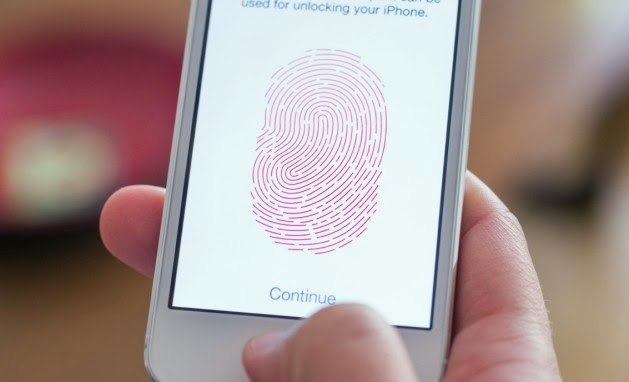
CEO's - Are fingerprints and palms the new dollar bills?


As a CEO in digital and mobile world, security is a great concern for everyone involved, most notably the customer.  As a Northwestern student studying Integrated Marketing and a user of mobile payment services, I have found several measures to properly align and prepare oneself in the industry with the most important thing being extremely secure.


Even your fingerprint isn’t secure enough. Recently the Samsung Galaxy S 5 smart phone introduced a fingerprint scanning technology to access the phone. However there have been some issues that Zach Epstein described in detail. PayPal a mobile payment company doesn’t require a password if the app has already been configured for fingerprint authentication. Just a few weeks old, it has already been hacked. Improved security is a must, but perhaps Samsung rushed into this. It is not clear if this is a minor glitch that can be fixed or if it is a significant problem but what is clear is that we must continue to improve and strengthen the security of personal information.


If some people have their way soon you will not need to go to a psychic to read you palm. As the Wall Street Journal reports some Swedish students have devised another way to expediting and enhancing the mobile payment experience for an individual. Sven Grundberg notes that this new technology is slightly behind fingerprint scanning in terms of development and testing. Although this technology is further behind it is supposed to be just as quick, only taking 5 seconds or so to register, but it has the benefit of greater security than fingerprints.

Based on the insights I received from these two articles there are three action items you should immediately take to be well positioned in the mobile payment world.  The three things that mobile payment companies should do include:

1. Start to move away from old-fashioned passwords – Old fashion passwords with combinations of letters and numbers are ineffective nowadays and can be easily hacked. This is the first step in increasing security is creating more complex passwords.

2. Highly emphasis security and build trust, let a person hold all power - Let’s face it, the person people trust the most is themselves. By allowing the individual customer to control all of the power in terms of securing their information, you are giving the customer exactly what they want. Not only does this increase the security but it builds greater trust with a company. This is the second step in being competitive in the mobile payments world.

3. People want quick accessibility, must be able to keep up with demand – People are always on the go and those companies that can keep up with people are ones who succeed. The average person wants to have immediate access and convenience at the touch of the fingertips. Mobile payments are supposed to be quicker and easier. Typing long and complicated passwords is not what people want. Those who are able to provide instant access will be able to survive and thrive in the ever-changing digital world.

Through research it has been discovered that the most important aspect of mobile payment services that people are concerned with is security. In order for there to be a revolution and mass migration towards the mobile payment industry, people must feel that their information is incredibly secure. Hopefully fingerprints scanners and palm readers can lead the industry to greatness.


Daniel Cohen is a graduating Northwestern student with a focus in Integrated Marketing that will be pursuing a Master’s degree in Management at the Kellogg School of Management next year. If you would like to discuss these issues further please contact him on twitter at @DanCohen102. Thanks.

Marketers – Wearable Tech is the Future so Prepare Now or Perish!

        As a marketing manager, you are beginning to see the use of wearable tech and know it will soon become embedded in the culture of your high value markets. Because wearable technology field is fast evolving and is increasingly relevant to consumer groups, it is a puzzle for all of us to solve. The key is to find the right pieces at the right time.  As a graduate student in Integrated Marketing Communications program at Northwestern University, I found two articles to help clarify wearable tech challenges and bring the pieces of this puzzle together.

      The recent Nielsen survey, Tech-Styles:Are Consumers Really Interested in Wearing Tech on their Sleeves? touches on both the research about the existing wearable customers and the consumer insights of potential users.  “Seventy percent of consumers are already aware of “wearables,” and about one in six (15%) of them currently use wearable tech—such as smart watches and fitness bands—in their daily lives” which is the reason why as marketers we have to keep an eye on this market. “The majority of wearable owners are young, with nearly half (48%) between 18-34 years old.” And   "what motivates consumers to purchase wearable tech depends largely on the type of device and the benefits each offers for their everyday lives" proving that marketers need to deliver the beneficial content that they are looking for in these devices.  Overall, this survey helps determine the relevance of wearable gadgets in your target consumer groups.


http://www.wired.com/2013/12/wearable-computers/
        Christianna Giordano’s article WearableTechnology at SXSWi: Every Brand’s New Best Friend? points out the important future sales opportunities for brands through new wearable products.  "Consumers are beginning to see the benefits of wearable technology and will start purchasing and that there are so many models coming out that avid fans will want the latest and greatest" and seeing this trend lead to the future expectations as mentioned in the article; “Juniper Research has predicted that worldwide spending on wearable technology will hit $1.4 billion in 2014 and $19 billion by 2018.” These numbers are similar to the smartphone market, so no one would like to miss such an opportunity.  

When considering the wearable tech puzzle, we have to first think about consumer insights and the benefit to us as the marketers. Based on these two articles, here are 3 action items you need to implement:


1. Understand Your Customer’s Wearable Interest - Does your target audience match with the existing or potential wearable device users? If you understand the similarities and differences, you can know whether you need to compete in this market or not.

2.  Find the Right Wearable Content - A common mistake is to duplicate the same type of content to various platforms disregarding the fact that consumers are using different gadgets for unique experiences.  Your consumers want to see something that fits in with their wearable device experience, not the same mobile content squished into a smaller device.

3. Get Ready To Empower - Wearable devices won’t help you if you still have a traditional marketing mindset of pushing the message out. Instead, look for ways to engage with your audience. Let them create their own content via their wearable device and share it with you.  Most importantly, use your content to empower the consumers leading them to their goals. 

Wearable devices will get you as close to your audience as possible, so use this chance to connect with them.  The key is not only to be at the right place at the right time, but also to be there in the right way.  Don't miss the wearables party, all the cool kids will be there...   

Burcu Agma
M.S. in Integrated Marketing Communications
Northwestern University
Digital Marketing | Content Marketing | Media Management

Contact me on Twitter @BurcuAgma
http://www.linkedin.com/in/burcuagma/  

Tuesday, May 13, 2014

Digital Media Strategists: How Shopper Behavior Insights Can Optimize UX Design

As a digital media strategist, your job description today, let's face it, is no longer confined to the world of digital. As platforms converge, disciplines like consumer insight and shopper behavior are being added to the already exhaustive list of subjects in which digital strategists must be well-versed. As marketing graduate student at Northwestern University studying to become a digital strategist, I've uncovered numerous applications of shopper marketing on enhancing digital interfaces. I summarize tenets from the radically consumer-centric shopper marketing primer "Inside the Mind of the Shopper" by Herb Sorenson--and apply them to optimize online grocery retailer Peapod.com. 

1)    80% of shopper time is spend in search of items in the store, not actually shopping. If retailers can reduce the time shoppers spend looking for items (thereby increasing the ratio seconds per dollars), then the shopper will spend more money.

2)    The three retail moments of truth: reach, stopping, and close. Shortening time and decision-making between each of these stops is crucial. Visual elements are extremely important as each moment is dictated by shoppers’ ability to discern desired products among others.

3)     The three currencies of shopping: money, time, and angst. In retail environments, shoppers will make trade-offs between all three in their decision-making. Retailers, however, largely ignore the last two. Reducing the amount of selection and open space can decrease time and angst spent and subsequently boost sales.


4)     Shoppers will not generally change their habits and preferences in navigation. Therefore, retailers must practice active retailing and place products in front of shopper paths and accommodate their established patterns of behavior. 


Optimizing Peapod.com


*Disclaimer: Peapod.com is a great service with surprisingly fresh produce. I'm just nit-picking the website because it's my future job. And tip their drivers.


"Browsing the Aisles" at Peapod.com

While aware of that the properties of a physical space cannot be exactly transferrable to one online, I do have several suggestions for the Peapod.com that will reduce the amount of time and angst spent searching for items, cut down the amount of time between each retail moment of truth, and reflect already established online shopper behavior that have been ingrained in consumers by common online retailer sites like Amazon.com and those that shoppers exhibit in a physical grocery store.

Navigation


1)    Label items with how shoppers mentally categorize the products, especially when shoppers traditionally rely on visuals. Because the shopper is accustomed to a very visual experience while shopping, the online grocery shopping experience should also reflect consumer expectation of spacious visual design. Colorful and graphic navigation bars would be a better alternative to purely text.


2)    Order items intuitively, with most commonly accessed categories on top. The site could better utilize consumer insight by arranging the most popular produce categories on top instead of alphabetically.

3)    Accommodate handedness for tasks requiring frequent click activity. As a right-handed user, I would highly prefer it to be on the right side of the page in order to reduce the amount of mouse-dragging across the screen with each selection. In my ideal arrangement, the navigation bar would be on the right and the purchase totals on the left. 

Search        


Have a long and spacious search bar located in the center or top of the page. Google and Amazon.com have trained us to expect intuitive search bars that have been designed for ease of access and use. 

The "Apples" sub-label under "Fresh Fruit"

User Interface        


1)    The physical, visual retail environment should be mirrored as closely as possible online. Peapod's current shopping environment resembles the back-end of a manufacturer’s stock order sheet. The actual picture of the product is very small on the page while most of the white space is spent on item description and pricing. Visuals should dominate.  

2)    Give the online shopper what they're used to. Trained from retail and Amazon along with physical grocery vendors, users are accustomed to horizontal product layouts with product pricing on the bottom and large, hover-over product images. Such a layout also resembles product stacking in physical grocery stores. 

3)    Avoid the need for excessive precision clicking. The quantity boxes and its green arrows are not very user-friendly, adding additional time and effort in the buying process. Shoppers should be able to click on the product image and enter a number for quantity desired for purchase for fast and intuitive shopping. 
f
Beryl Zhao is currently pursuing a M.S. degree in Integrated Marketing Communications at Northwestern University with a concentration in marketing analytics. She aims to become a digital media strategist at a digital agency where she hopes to use both her creative and analytic skill sets in designing and optimizing seamless customer experiences in the digital and mobile sphere. Find her on LinkedIn or follow her on Twitter.

Marketers: Learn How to Handle International Markets

Marketers: Learn How to Handle International Markets

When you are addressing how to take your marketing strategy worldwide, there will be the temptation to use a cookie cutter approach; this temptation must be squelched.   As a student in integrated marketing at Northwestern University, I have seen how understanding a nation’s cultural values will allow your strategy to truly flourish.

A Look At Marketing In Brazil
           
            Finding the right product for a unique marketplace means having to invest far less in your offering, as the product will match up with the wants and needs of your target market.  For instance, open a new page to look at Metro’s article on this Brazilian offering: http://bit.ly/1mYdoSi. Outsiders see a ridiculous luxury item.  Brazilians see a chance to cherish their heritage in their beautiful game.  The upcoming 2014 World Cup will sell a unique souvenir: Pele’s hair crystallized into diamond form.  The soccer superstar’s hair is taken and transformed into 1,283 diamonds (equaling his goal tally) and will be on sale for £4,500. 

Brazil's spending on Consumption Shows Great Promise

            Coca-Cola shows a second example of understanding an international market, more specifically the feelings of said market.  Coca-Cola plans on scaling back its upbeat marketing campaign leading up to the World Cup.  Coca-Cola realizes that if there is a discord between their campaign and the overall sentiment of Brazil, their company image will suffer.  Take a second to look at Fox’s article on this strategy in a new page: http://fxn.ws/1iuunpI.  As a result, Coca-Cola moves stride in stride with their target market.

            So, marketing internationally must align the values of the market with the offerings of the company.  When looking at how to move forward, a CMO and marketing department must work to fulfill these points:
1.     Market Towards Specific Markets: Like Pele's diamonds, if you find a way to focus on what your target market desires, the selling point becomes much easier
2.     Capitalize on Current Events: Partnering your company with major events in your market is a great way to permeate the market
3.     Sync marketing strategy with market emotions: Consumers want to see that the company they are buying from understands them.  Take a page out of Coca-Cola's book and partner your company's status with the state of your target market


Seamus Naughton is an Economics and Integrated Marketing Communications student at Northwestern University.  He is interested in both business internationally and more specifically in the Lusophone world.  He studies the Portuguese language and operates a twitter feed on the topic.  Follow him at @Lusophonenews on Twitter.

Brand Mangers: Stay Competitive & Gain Market Share


As a Brand Manager, your brand essence is the leading force in differentiating your brand from competitors and creating a positive perception in the minds of consumers. Through Northwestern University’s Medill IMC program, I have learned the importance of establishing a brand image and voice that will keep consumers intrigued and have found articles reiterating the importance of  these strategies when managing a brand.

One article that gave a deeper understanding of the importance of a messaging strategy is Develop Your Voice: Three Keys to Killer Messaging. This article discusses how marketers must go beyond being noticed has having a great logo and focus on the overall image their brand represents. Strategic messaging needs to be considered when trying to reach prospect consumers. The overall goal is to get these consumers to know, like and trust your brand. If the strategy is implemented correctly, consumers will directly choose your brand when a need arises because they will feel comfortable with your brand voice and image.

While building trust among your audience through messaging strategies, it is also imperative to engage your audience through digital platforms as discussed in Six Tips to Get Your Consumers Talking About Your Brand at the Dinner Table. This article discusses how competitive advantage demands consumers attention. The power of social media enables consumers to feel as if they’re part of your brand. Empowering these consumers will only lead to brand ambassadors who will talk favorably.
www.pinoysalapionlinewithsusana.biz

After reviewing these articles, I have found three key important aspects that will aid you in developing a brand voice that is powerful. These three tips will help you develop a brand image that will connect with your audience and increase your brand awareness:
  • Authenticity Is King: Complete an overall assessment of your current brand and messaging strategy to determine if it’s authentic.
  • Focus on Innovative Messaging: Develop, or continue to develop, a strategic messaging strategy that will help you stand out from competitors and be on the minds of target consumers.
  • Profit from Social Media: Use social media as a tool to foster a deeper relationship with consumers.
As a Brand Manager, every form of content must convey your brand image and build your brand essence. Implementing the above actions items will not only distinguish your brand from competitors, but will build a deeper relationship with your audience. Executing these strategies will ultimately be a reward for your brand because it will create loyal consumers, which will lead to your brand possessing a strong position in the marketplace.


Bianca M. Harris is a graduate student at Northwestern University in Medill’s Integrated Marketing Communications program. She is the Social Media Director of Vitamin IMC. Bianca can be reached on Twitter at @biancamharris.

Women in Engineering and Success in the Automotive Industry

Though women have traditionally had a small presence in most engineering fields, the numbers are astonishingly low for women in the automotive industry where we make up only 5% of the engineers in the field. As a senior undergraduate student at Northwestern University studying Mechanical Engineering, with a job lined up in Transmission and Drive-line Engineering, I aim to understand why women are hesitant to break into the automotive industry and what we can do to retain the women who have already chosen a career in automotive.

Alexa Kurzius addressed this topic in an article titled "What’s driving women away from engineering and auto?” and took an in-depth look at the many obstacles that  may cause women to turn away from a career in the automotive engineering industry or why women do not stick with a career in it. Kurzius names educational disparities, sociological pressures and the reputation of the auto industry as the main deterrents for women, but recognizes some of the women who have broken into the industry and serve as "valuable inspiration for future females". The article does a very nice job of examining how women in STEM fields find success and what is being done to encourage more women to pursue STEM fields in the first place.

The women behind the all new 2015 Ford Mustang. 
 Another article in USA Today written by Jayne O’Donnell also focuses in on the careers of four prominent women in the industry, Alicia Boler-Davis, ChrisBarman, Rebecca Seilier and Jennifer Shaw, and their successes in the field. The women in the article have been involved in many different aspects of the industry including the development of advanced safety technologies, and manufacturing plant management. O'Donnell also takes a look at the various programs and policies that the automotive industry has started to implement in an effort to recruit and retain female engineers.

From these two articles I have come up with three action items to help you as you explore your career in the automotive industry!
  • Find a mentor or positive role model – There may not be a lot of women that you work with directly, but seek out someone in the company that you respect or admire and use them as a resource to help you navigate your career. Some companies may have mentor-ship programs or networks already in place that you can take advantage of!
  • Know that your work is influential – Your work has a very obvious influence on the world and has the opportunity to positively affect people’s lives. You are in a position to directly make an impact on the world around you, that's something to be proud of!
  • Remember that work isn’t everything –I’m not saying that work isn’t important, but finding a balance between work and our lives outside of work is also crucial to being healthy and happy. It can be challenging, but taking time for yourself and your family can help you feel more confident and prepared to put forward your best work.  

Even though women are still a minority in the world of automotive engineering, it’s important to remember that we’re not alone! Seeking out support networks and reaching out to other women in the field is the best way to encourage and inspire women in our industry.


Kelly Hartzell is an undergraduate student at Northwestern University and is on track to graduate in June 2014 with a degree in Mechanical Engineering and a certificate in Integrated Marketing Communications. She will be moving to Michigan in the Fall to start a full-time job in Transmission and Drive-line Engineering. Questions or comments? Find her on twitter @KellyAnn_5280, Linkedin, or Google+